What Meat Do Mongolians Eat? Mongolian Meat Guide (2026)
Tengrism is the pre-Buddhist religion of the Mongols, centered on the veneration of Tenger (Eternal Blue Sky) as the supreme deity and Etugen (Mother Earth). It is a shamanic, animist belief system that shaped Genghis Khan's worldview and influenced the religious tolerance of the Mongol Empire. Tengrism is experiencing a significant revival in Mongolia today.
Long before Buddhism reached the Mongolian steppe, before the first monastery rose from the grasslands, a vast and ancient spiritual tradition held the people of Central Asia in its embrace.
Tengrism — the worship of Tenger, the Eternal Blue Sky — is one of humanity's oldest continuous religious traditions, with roots stretching back at least 4,000 years and possibly much longer
It shaped the worldview of Genghis Khan, influenced the extraordinary religious tolerance of the Mongol Empire, and continues to be practiced and revived across Mongolia today.
Unlike the great codified world religions, Tengrism has no single founding figure, no written scripture, and no centralized institution. It is a living tradition, rooted in the relationship between the nomadic people and the natural world around them — the sky, the earth, the mountains, the rivers, and the animals that share the steppe. To understand Mongolia, its festivals, its sacred sites, and its people, understanding Tengrism is essential.
Tengrism (also written as Tengrism) is the indigenous shamanic and animist religion of the peoples of the Mongolian and Central Asian steppe. It is not a religion in the Western institutional sense — there is no clergy hierarchy, no unified theology written in canonical texts, and no weekly congregation. Instead, it is a set of beliefs and practices centred on the relationship between human beings, the natural world, and the spiritual forces that inhabit it.
At its core, Tengrism holds that all of nature is animated by spirit — rivers, mountains, trees, animals, the wind, and above all the sky and the earth possess spiritual power and personhood. Human beings must live in respectful relationship with these forces, maintaining harmony through ritual, offering, and ethical behaviour. Transgression brings misfortune; correct relationship brings protection and abundance.
Tengrism has been practiced for at least 4,000 years across the Eurasian steppe. It is not uniquely Mongolian — versions of the tradition were practiced by the Turkic, Hunnic, Tungusic, and Magyar peoples, and its influence is traceable in the religious cultures of Russia, Turkey, and Hungary. But it is in Mongolia that it has been most continuously practiced and where its revival today is most visible.
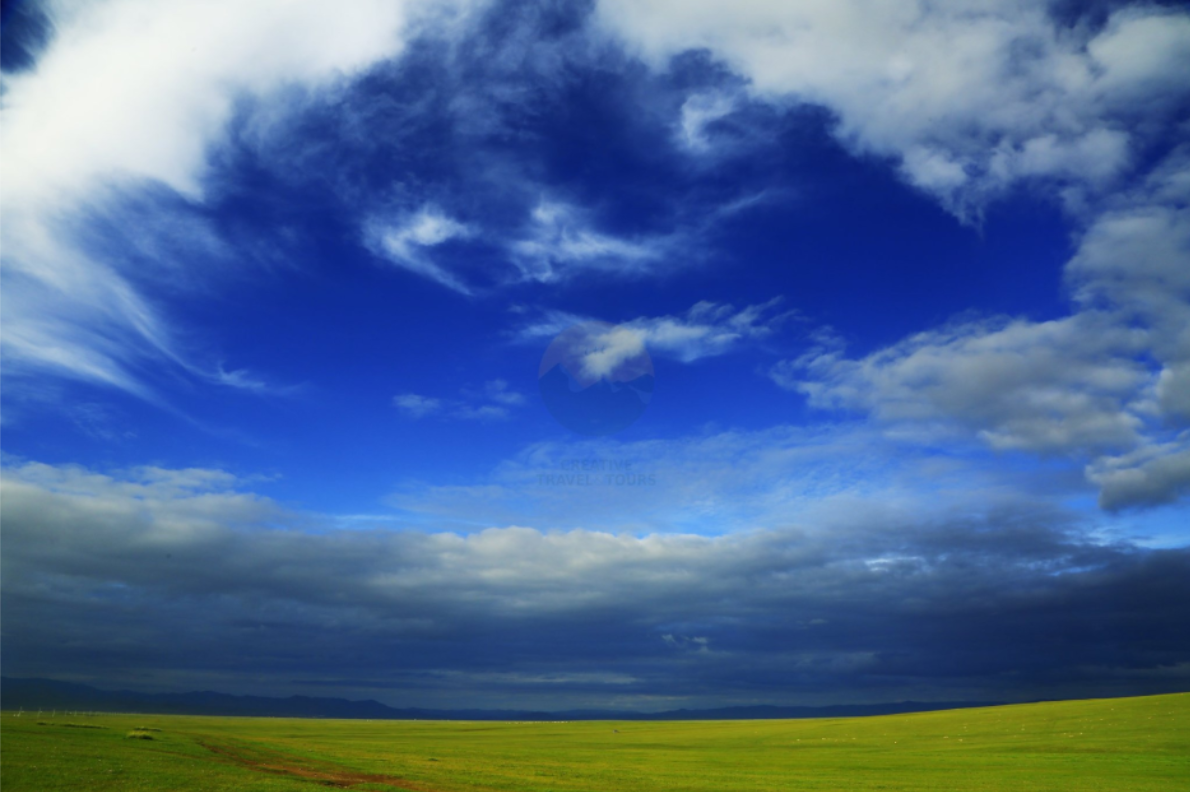
Tengri (Тэнгэр) means "sky" or "heaven" in Mongolian. In Tengrist belief, Tengri is the supreme deity — the Eternal Blue Sky (Mönh Khökh Tenger) that arches overhead, all-seeing and all-encompassing. Tengri is not a personal god in the Abrahamic sense; it is more like a supreme spiritual force or principle, cosmic and impersonal yet responsive to human reverence.
The West is associated with light, goodness, and the 55 benevolent, white Tenger (led by Esege Malan). The East is associated with darkness, severity, and the 44 fearsome, black Tenger (led by Ata Ulaan).
Etugen is the Earth Mother — the complementary force to Tengri. Sky and Earth together sustain the world. Fire (gal) is sacred in Tengrist practice, representing the connection between heaven and earth and the spirit of the domestic hearth. Offering food and sacred blue silk scarves (khadag) to fire is a common ritual act.
The word Tengri means “sky” or “heaven” in ancient Turkic and Mongolic languages. However, Tengri is not simply the physical sky. He represents an eternal cosmic power that controls fate, justice, and order.
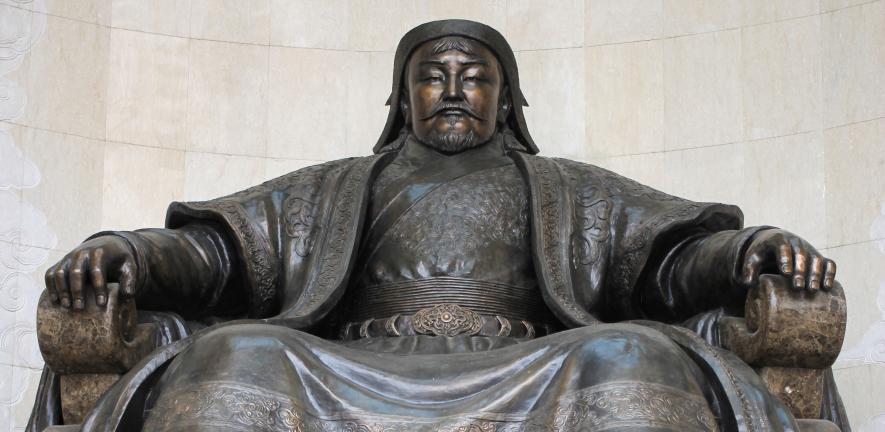
Genghis Khan (c. 1162–1227) was a devoted Tengrist, and the spiritual framework of Tengrism was inseparable from his political and military project. He reported receiving visions from Tengri, believed himself to be divinely chosen to unite the Mongol people, and invoked "the force of the Eternal Sky" (mönkh tengerin küchin) as the source of his authority and victories. This phrase appears repeatedly in the Secret History of the Mongols (c. 1240), the earliest written record of Mongolian history.
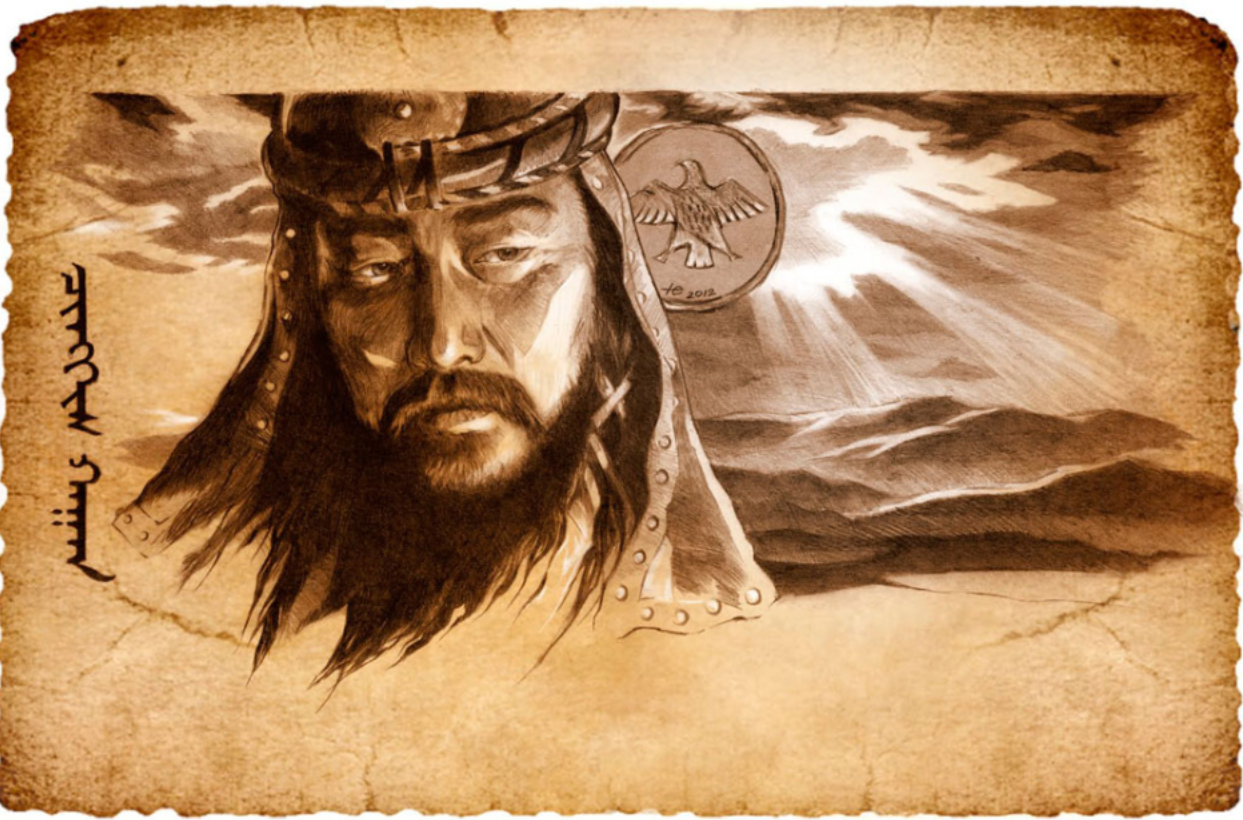
The Mongol concept of a "Mandate of Heaven" — the idea that military and political success was evidence of divine approval — both legitimised Genghis Khan's conquests and created an obligation to maintain the favour of Tengri through correct conduct. Genghis Khan kept shamans (boo) as close advisors throughout his campaigns.
Most remarkably, Tengrism's absence of dogmatic exclusivity produced one of history's most extraordinary experiments in religious tolerance. The Mongol Empire — which at its height stretched from Korea to Hungary — allowed Christians, Buddhists, Muslims, Taoists, and adherents of all other religions to practise freely within its borders. Mongol rulers actively corresponded with the Pope, debated theology with Islamic scholars, and patronised Buddhist monasteries and Christian churches simultaneously. This tolerance was not accidental — it flowed directly from the Tengrist understanding that spirit is everywhere and that no single path holds a monopoly on sacred truth.
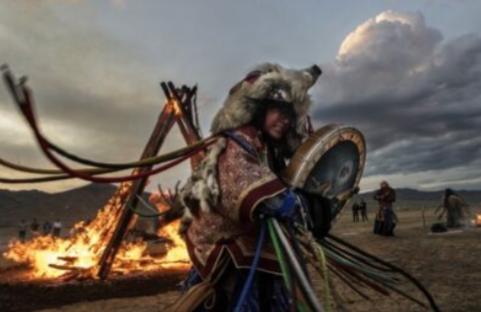
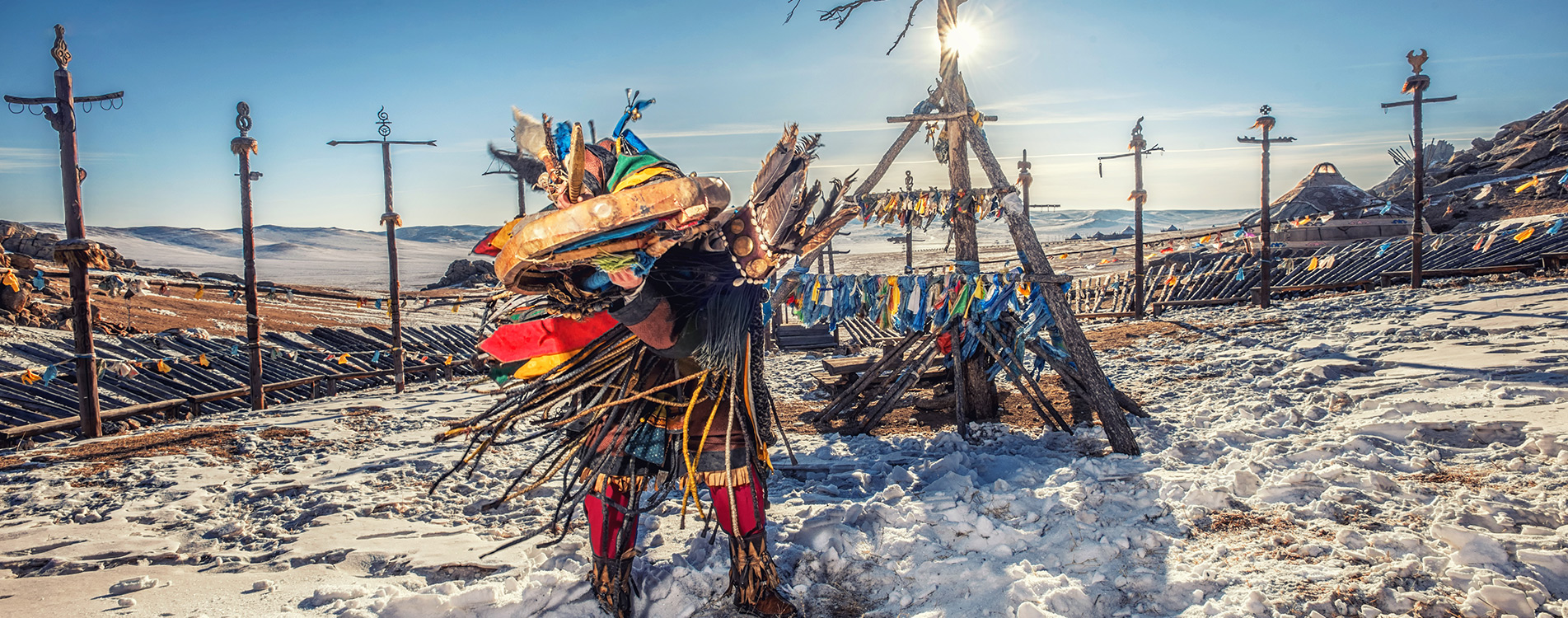
The shaman — called boo (бөө) for male practitioners and udgan (удган) for female — is the central specialist figure in Tengrist religious practice. Shamans serve as intermediaries between the human world and the spirit worlds, able to travel between realms through altered states of consciousness induced by drumming, chanting, and ritual.
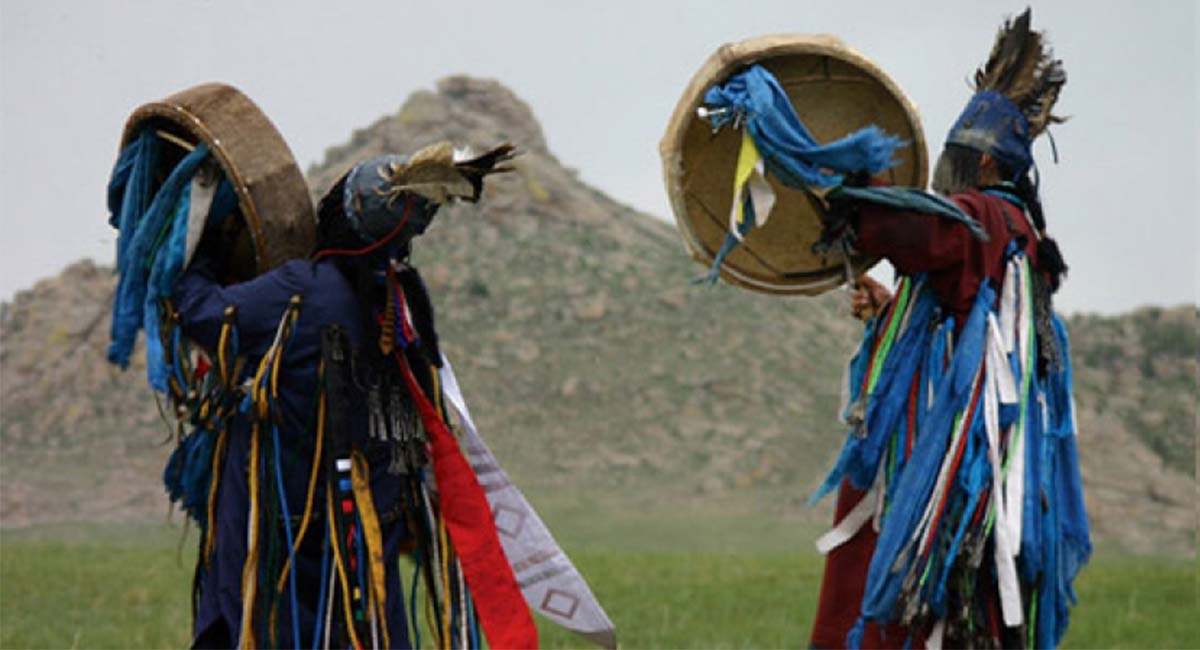
A shaman's primary roles include:
hevsgel-khengereg/The metal mirrors (Toli) are explicitly used to reflect bad energy, deflecting spiritual attacks away from the practitioner's chest. Feathers (often eagle or owl) represent flight, and fringe over the face protects the shaman from being overwhelmed by blinding spiritual realities while in a trance state .
Not everyone can become a shaman. The calling is typically identified through illness, unusual experiences, or hereditary lineage — many shamanic families pass the vocation through generations. Training is long and demanding, involving study with established practitioners and direct experience of spirit contact.
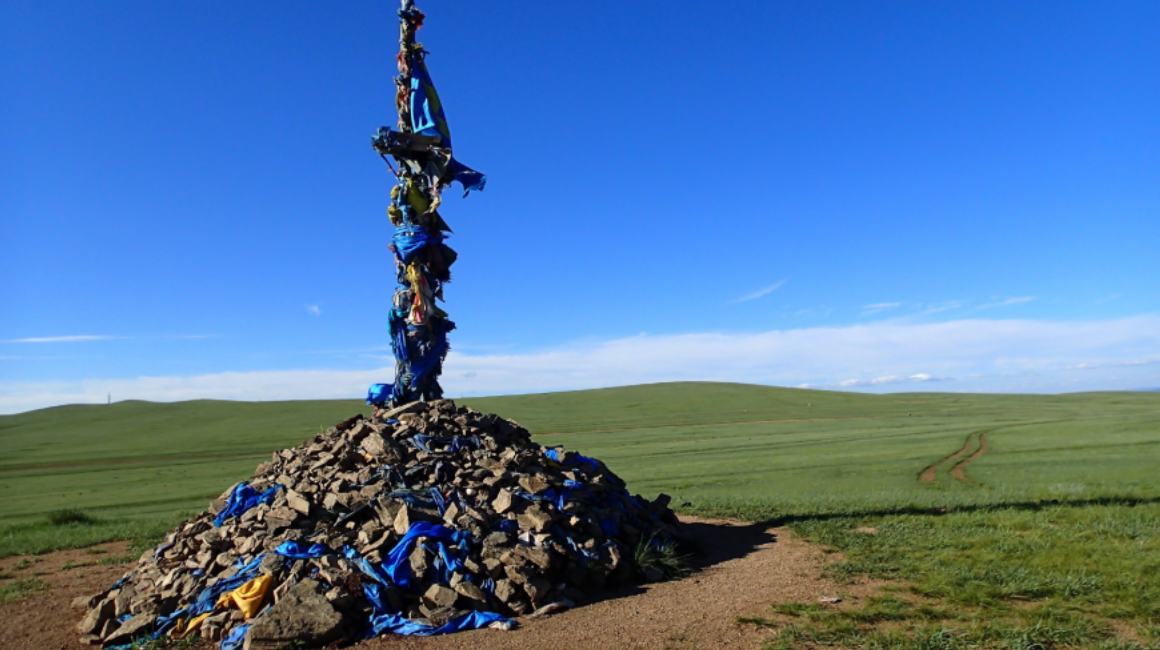
The ovoo (овоо) is the most visible symbol of Tengrist practice in Mongolia's landscape. These stone cairns — often decorated with blue silk scarves (khadag), bottles of vodka or airag, food offerings, and sometimes antlers or tree branches — are found at mountain passes, hilltops, lakeshores, and any place considered spiritually significant.
An ovoo represents the connection between earth and sky, and serves as a meeting point between the human world and the spirit world. Travellers passing an ovoo observe a specific ritual: they circle it clockwise three times, making offerings and asking for protection on their journey. The clockwise direction reflects the movement of the sun — a sacred symbol in Tengrist cosmology.
Ovoo are not merely individual spiritual monuments — they are community institutions. Annual ceremonies are held at major ovoo, bringing together surrounding communities for collective offerings, games, and celebration. The Mongolian state still conducts official ovoo ceremonies in some contexts. Some ovoo in Mongolia are hundreds of years old, their stone bases accumulated over generations of offerings.
Tengrism's decline came in two distinct waves, separated by centuries. The first was the introduction of Tibetan Buddhism to Mongolia in the 16th century. Altan Khan (r. 1543–1583) invited the Dalai Lama to Mongolia in 1578 and declared Buddhism the state religion. The subsequent century saw rapid construction of monasteries and the conversion of much of the Mongolian population. Buddhism incorporated elements of Tengrist practice rather than destroying them entirely — ovoo rituals, nature reverence, and shamanic elements were absorbed into a syncretic folk Buddhism.
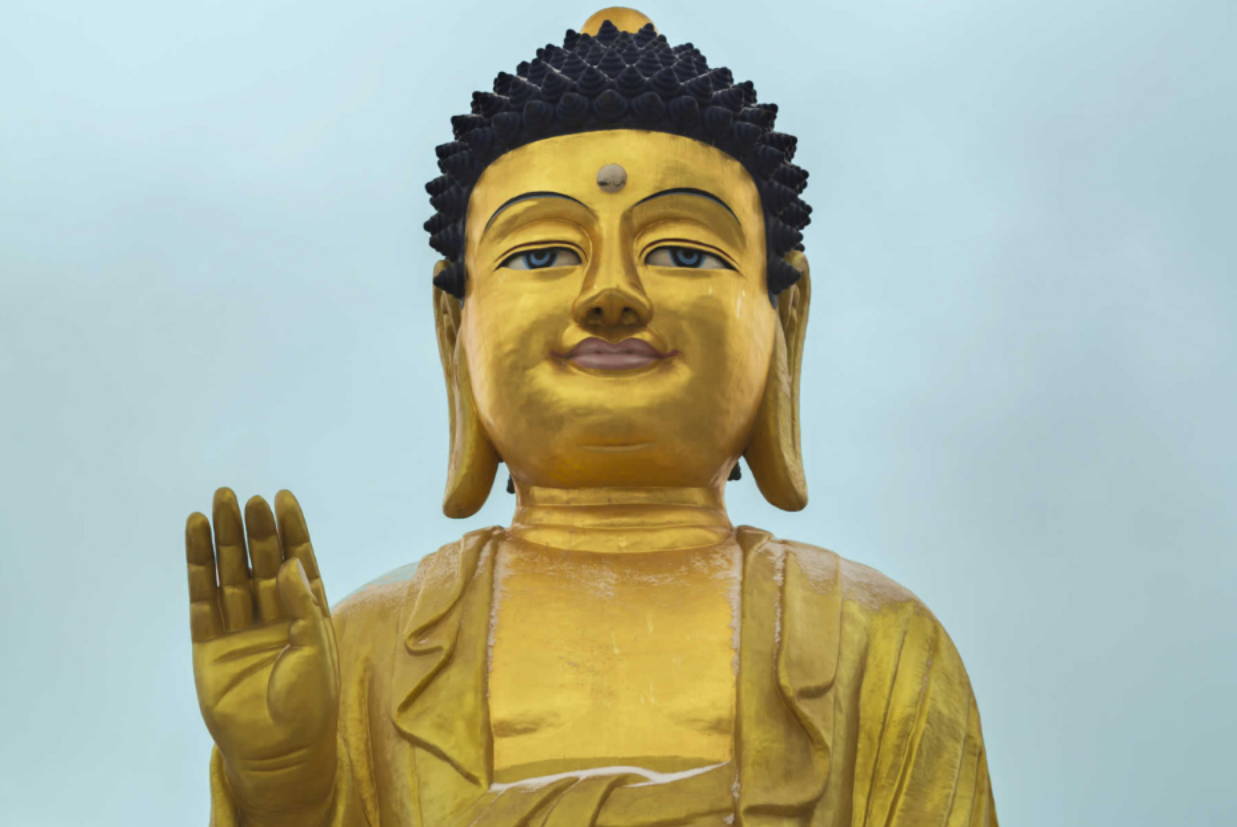
The second and more catastrophic wave was Soviet rule (1921–1990). The Mongolian People's Republic, aligned with the Soviet Union, pursued systematic suppression of all religion. Between 1937 and 1939 alone, over 30,000 Buddhist monks were killed or imprisoned, and nearly 800 monasteries were destroyed. Tengrist practitioners and shamans were persecuted, their knowledge driven underground. Seventy years of enforced atheism caused incalculable damage to Mongolia's living spiritual traditions.
Yes, and with growing momentum. Since Mongolia's democratic transition in 1990, there has been a significant revival of interest in indigenous spiritual traditions, driven partly by a search for national and cultural identity after the Soviet period, and partly by a genuine spiritual hunger for traditions rooted in Mongolian experience rather than imported from outside.
An estimated 3–5% of Mongolians actively identify as practitioners of shamanism or Tengrism. Organisations such as the Golomt Center for Shamanic Studies in Ulaanbaatar have formalised and supported this revival, training practitioners and providing a public face for the tradition. Many more Mongolians engage with Tengrist practices — visiting ovoo, observing fire rituals, consulting shamans — without formally identifying as Tengrists.
Tengrism is also deeply embedded in Mongolian Buddhism as it is actually practised. Naadam Festival — Mongolia's national celebration — has deep Tengrist roots in its ritual structure. Traditional festival calendar days, nature reverence, and the centrality of the horse in Mongolian spiritual life all reflect the living presence of Tengrism across the culture.
Is Tengrism the same as shamanism?
They are closely related but not identical. Tengrism is the specific cosmological and theological framework — the beliefs about sky, earth, three worlds, and the spiritual nature of the natural world. Shamanism refers to the practice and the specialists (the shamans, boo and udgan) who perform rituals and mediate between worlds. All Tengrist communities use shamanic practice, but shamanism as a technique exists in other religious contexts globally. In Mongolia, the two are so intertwined that the distinction is more academic than practical.
Can I witness Tengrist or shamanic ceremonies in Mongolia?
Some ceremonies are open to respectful visitors. Shamanic rituals can be arranged through cultural centres in Ulaanbaatar, and some practitioners welcome observers. Your tour operator can make appropriate introductions. It is essential to approach these as genuine spiritual practices deserving of the same respect you would give a church service or temple ceremony — they are not tourist performances. Photography should only be taken with explicit permission.
Did Genghis Khan practice Tengrism?
Yes, definitively. The Secret History of the Mongols (c. 1240) — the closest thing to a primary source for his life — repeatedly describes Genghis Khan praying to Tenger, receiving divine visions, and attributing his success to celestial mandate. His famous declaration "the force of the Eternal Sky" mönkh tengeriin khüchin (Мөнх тэнгэрийн хүчин) appears multiple times. He remained personally devoted to Tengrism throughout his life while maintaining his policy of tolerance toward all other religions within his empire.
How does Tengrism relate to Mongolian Buddhism today?
Mongolia is approximately 53% Buddhist in identification, but the Buddhism practiced by most Mongolians is deeply infused with Tengrist and shamanic elements. Ovoo rituals are conducted by Buddhist lamas as well as shamans. Nature reverence, fire offerings, and the spiritual significance of horses and mountains persist within Buddhist practice. Scholars describe this synthesis as "folk Buddhism" — a Mongolian cultural form that blends the two traditions into something distinctive and living.
What is the significance of the color blue in Tengrism?
Blue (khökh) represents Tenger, the Eternal Sky, and carries sacred meaning throughout Mongolian culture. The traditional offering scarf (khadag) used at ovoo, temples, and sacred sites is blue. Mongolia's national flag bears a blue stripe representing the sky. In traditional Mongolian cosmology, blue is the color of heaven, eternity, and the sacred connection between earth and sky. Even in contemporary Mongolia, blue retains a spiritual resonance that goes beyond aesthetics.
Where can I learn more about Tengrism in Mongolia?
The National Museum of Mongolia in Ulaanbaatar has exhibits on pre-Buddhist religion and shamanic traditions. The Choijin Lama Temple Museum contains shamanic costumes and ritual objects. Centre of Shaman Eternal Heavenly Sophistication (Mönkh Tengeriin Süsüg) in Ulaanbaatar is the main organization for the contemporary revival and can arrange educational visits. Academic literature includes René Grousset's Empire of the Steppes and Jean-Paul Roux's extensive work on Tengrism religion. Your Discover Mongolia guide can arrange access to authentic practitioners and sacred sites that are not publicly listed.
Discover Mongolia has organized tailor-made tours since 2004.
We handle flights, accommodation, guides, vehicles — you focus on the journey.