What Are the Best Festivals in Mongolia? 2026 Travel Calendar
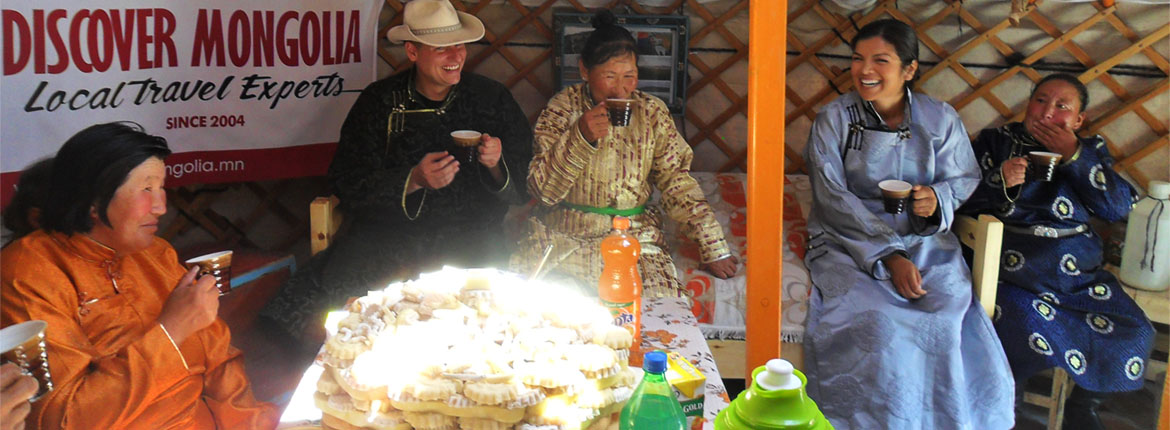
Tea in Mongolia can surprise first-time visitors. Instead of a sweet drink served with dessert, traditional Mongolian milk tea is usually warm, savory, and lightly salty. Known as suutei tsai, milk tea is closely connected with everyday hospitality and pastoral life. Different regions, families, and ethnic communities have developed their own versions, adding ingredients such as butter, millet, rice, dried meat, or dumplings.
Mongolian milk tea, or suutei tsai, is traditionally made by boiling tea with water, milk, and usually a small amount of salt. Some versions remain simple, while others add butter, grains, meat, or dumplings and become almost a light meal.
Preparation varies across Mongolia. Khalkh, Dörvöd, Torguud, Zakhchin, Dariganga, Kazakh, and other communities have different family and regional traditions, so there is no single recipe that represents every Mongolian household.
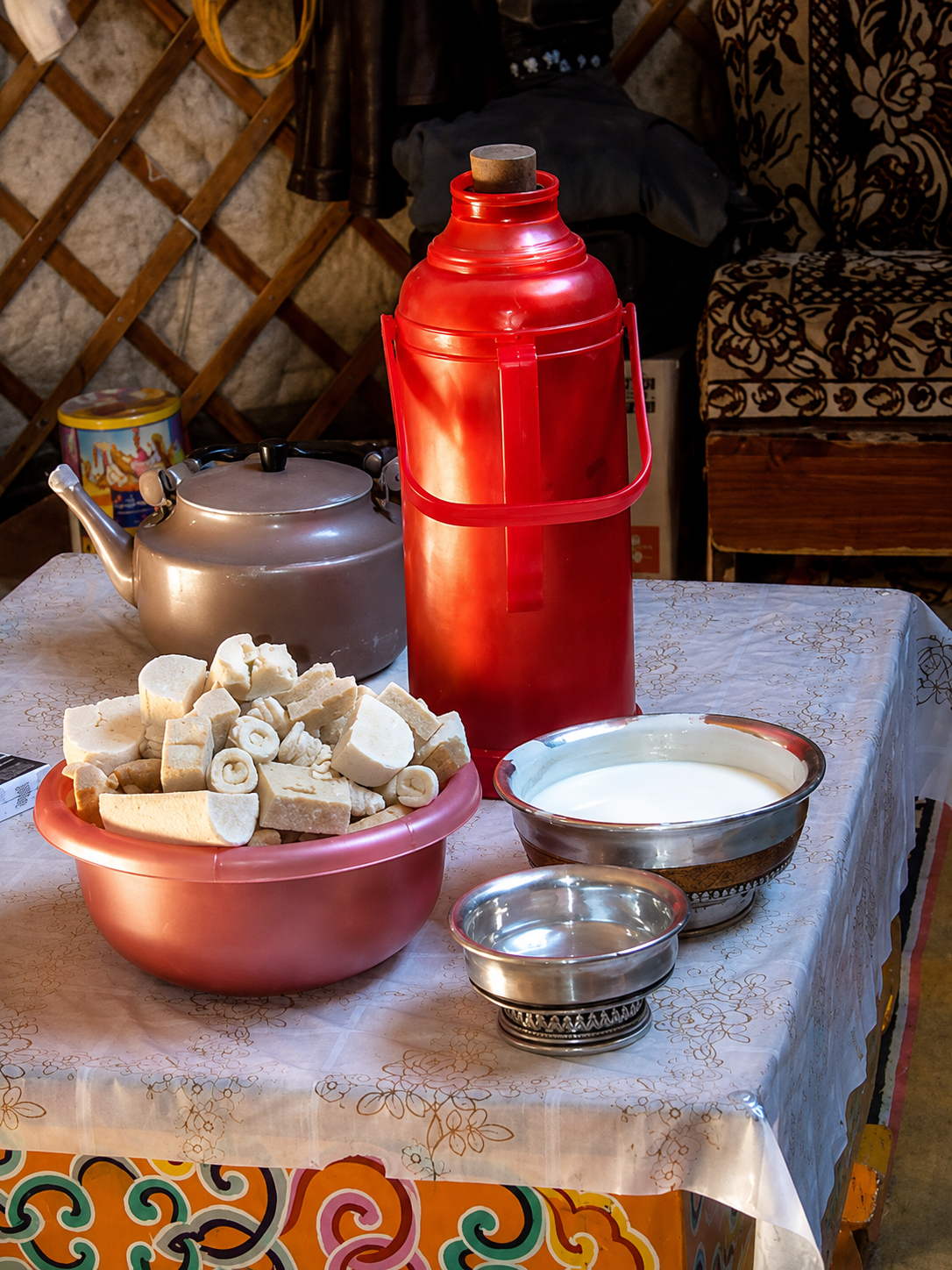
Salt is one of the details that surprises international visitors most.
Mongolian milk tea is traditionally savory rather than sweet. A basic version combines water, tea, milk, and salt, while richer preparations may include butter or other ingredients.
The exact amount of salt depends on the person making it.
Some households make tea noticeably salty. Others use only a small amount, and modern urban families may prepare it differently according to personal taste.
So if your first bowl tastes different from your second one somewhere else in Mongolia, that is normal.
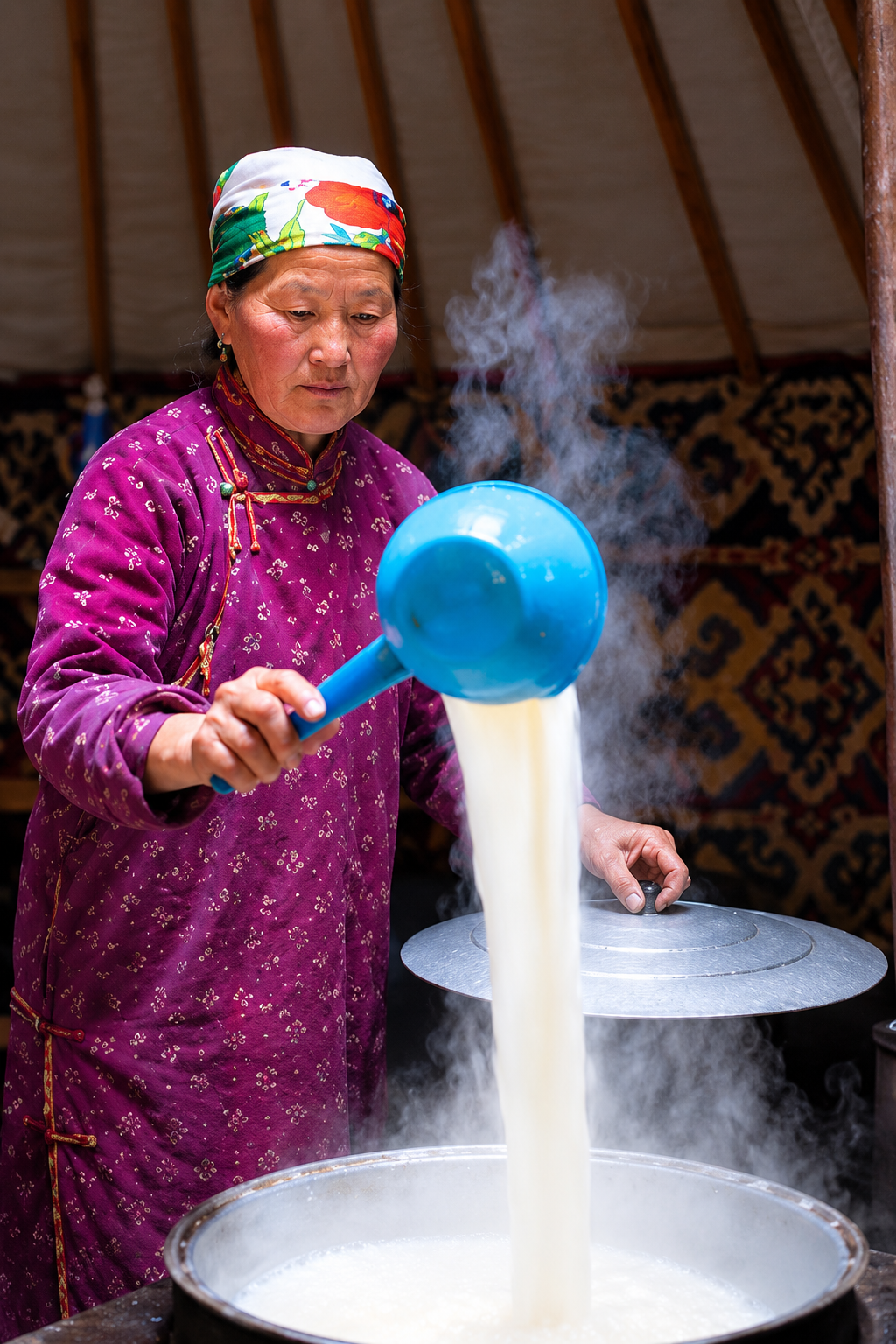
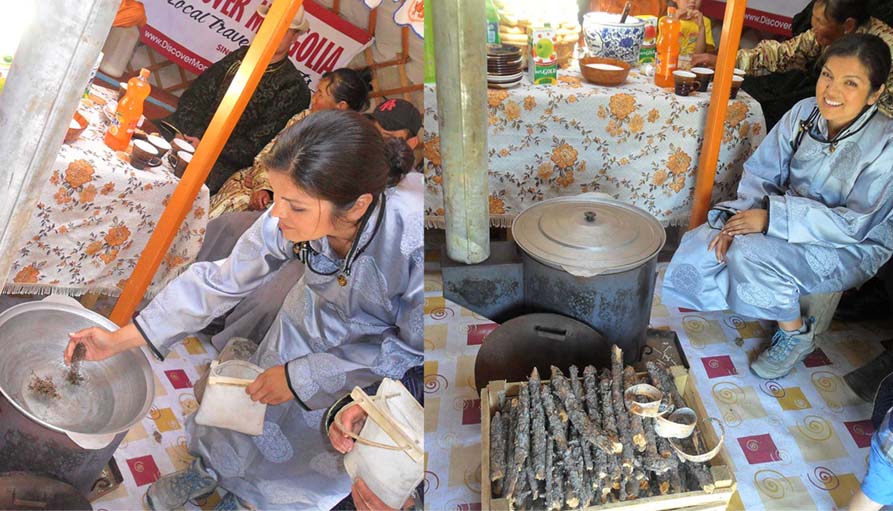
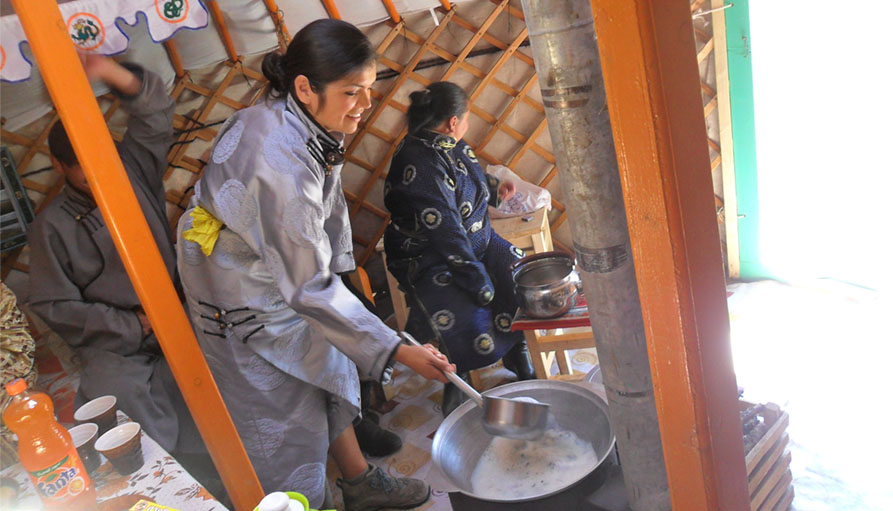
Instead of simply stirring the pot, the person making the tea may lift liquid with a ladle and pour it back from above.
This mixes the milk, tea, salt, and any added fat while creating movement through the pot. The technique continues to appear in current descriptions of traditional suutei tsai preparation.
The exact number of times is not a universal rule.
If you watch tea being prepared in several households, you may notice that each person has their own rhythm and method.
Not every Mongolian milk tea is the same.
These richer varieties explain why Mongolian tea can sometimes feel closer to soup than to the cup of tea many travelers expect.
Khalkh Tea With Dried Meat
The original version of this article records a hearty Khalkh-style tea made with rice, sheep-tail fat, dried meat, and sometimes ribs.
This belongs to a wider category of filling Mongolian teas often called hiitstei tsai, where ingredients are added to ordinary milk tea to turn it into a more substantial food.
Modern versions may also contain small dumplings.
This type of tea is particularly interesting for travelers because it challenges the idea that tea must always be only a drink.
In Mongolia, one bowl can sometimes provide both tea and food.
Dörvöd-Style Milk Tea
Dörvöd communities are associated with western Mongolia, and the existing article describes a rich preparation using tea, milk, salt, and clarified butter.
The tea is repeatedly ladled while heating so that the ingredients combine.
The important thing is not to treat this as one fixed recipe followed by every Dörvöd household.
Like most traditional food, preparation can differ between families, generations, and regions.
The defining idea is a rich milk tea in which dairy fat plays an important role.
Kazakh Tea in Western Mongolia
Mongolia's Kazakh communities have their own strong tea culture, particularly in Bayan-Ölgii in the far west.
Tea is closely tied to hospitality in Kazakh households. Visitors may be invited to sit, eat, and drink tea soon after arriving, sometimes continuing through several servings during a visit.
The old Discover Mongolia recipe describes a particularly rich version prepared with tea, dairy fat, and butter and served very hot.
As with Mongolian tea, however, Kazakh household recipes vary.
The cultural point is more important than one exact measurement: tea is part of welcoming a guest.
Torguud Milk Tea
The existing article describes Torguud tea as particularly rich in milk, with a stronger tea base followed by a generous amount of milk.
The result can be thick and filling.
Torguud communities are one of several western Mongolian groups whose food traditions reflect local livestock, climate, and family practices.
Instead of saying one exact recipe defines all Torguud tea, it is better to think of this as one documented style within a much wider living tradition.
Zakhchin Milk Tea
One traditional Zakhchin version described on the original page begins with a strong tea base before milk, salt, and dairy fat are added. The tea is then ladled repeatedly before serving.
This creates a stronger tea flavor than some lighter everyday versions.
Again, household practice matters.
One family may use more milk. Another may prefer stronger tea or more butter.
Traditional recipes survive partly because people continue adapting them rather than following one standardized commercial formula.
Dariganga Millet Tea
The Dariganga version is one of the easiest regional variations for travelers to understand because millet becomes a visible part of the drink.
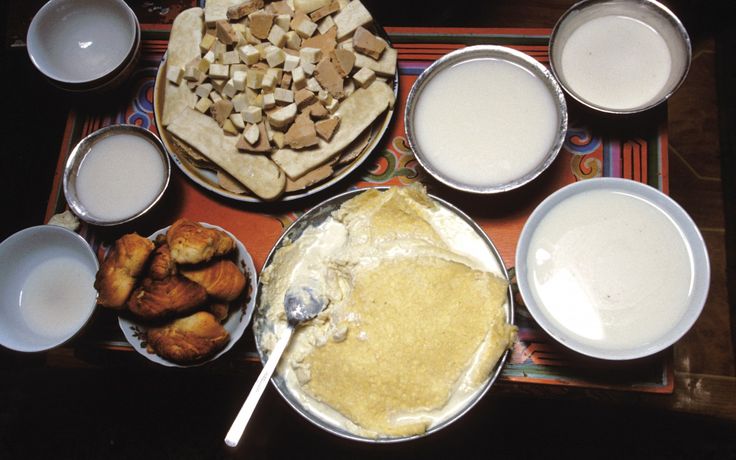
The original recipe combines millet, tea, milk, salt, and clarified butter. It also describes eating the cooked millet together with foods such as fried biscuits, dried curds, and clotted cream.
Adding grain transforms the tea from a simple hot drink into something more substantial.
This idea appears elsewhere in Mongolian milk-tea culture as well, where rice, millet, flour, or dumplings may be added.
Wild plants have also been used in Mongolian food and drink traditions.
The old article gives an example of dried nettle being ground and added to tea.
However, it then says this tea is good for people with high blood pressure.
That should not be presented as medical advice.
Traditional herbal knowledge can be an important part of Mongolian cultural heritage, but a traditional use does not automatically prove that a preparation safely treats a medical condition.
For travelers, herbal tea is better understood as part of regional food knowledge and taste, not as a substitute for medical treatment.
No, ordinary Mongolian milk tea should not be presented as a medicine.
The current article says milk tea can heal sickness, improve mental wellbeing, boost immunity, and provide broad health benefits.
Those claims are too strong.
Milk tea contains food ingredients such as milk and tea, and richer versions can provide calories and nutrients. Traditional Mongolian medicine and household customs may also associate certain teas or ingredients with particular health effects.
But cultural belief and medical evidence are not the same thing.
The stronger story is that tea provides warmth, food, hospitality, and continuity between generations.
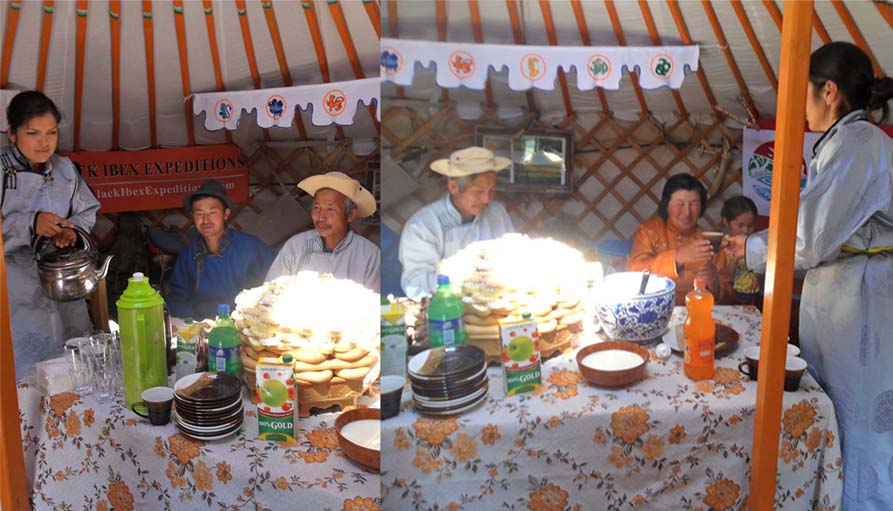
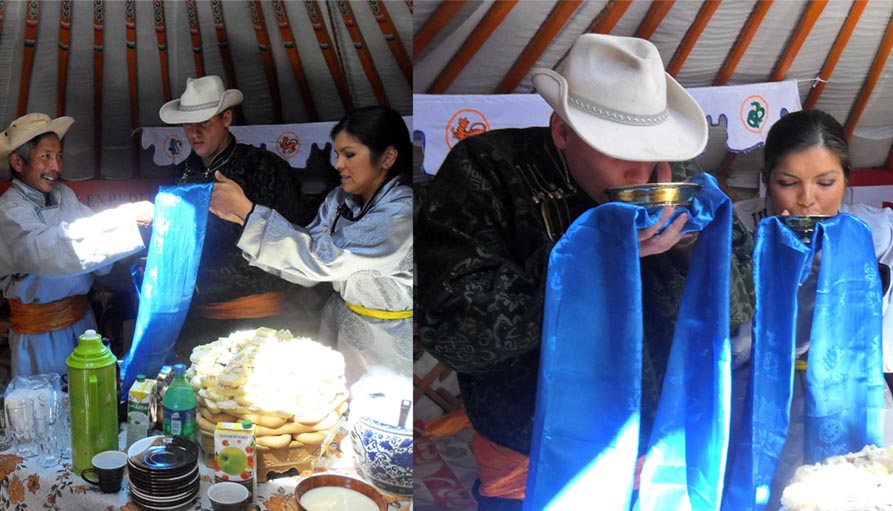
Milk tea is often one of the first things offered when a guest enters a ger.
Discover Mongolia's current food guide describes suutei tsai as an essential everyday beverage and part of welcoming visitors.
The gesture matters as much as the drink.
A visitor may be offered tea alongside:
You do not need to finish several bowls to show respect.
Trying what is offered and showing appreciation is normally enough.
If a host offers you tea, receive it politely.
Common visitor etiquette includes:
During more formal occasions, elders may be served before younger family members.
Hospitality customs differ between households, so respectful attention is more useful than trying to perform every tradition perfectly.
Mongolia contains very different landscapes and pastoral traditions.
Families in the Gobi, central steppe, Altai Mountains, and northern regions may keep different livestock and have access to different ingredients.
Traditional foodways therefore developed around:
UNESCO's 2025–2026 work documenting Mongolian foodways specifically highlights the diversity of dairy processing, wild plants, seasonal foods, and regional knowledge across Mongolia.
That is why asking for the single “authentic Mongolian milk tea recipe” can be misleading.
There are many authentic ways to prepare it.
No.
Modern Ulaanbaatar households do not necessarily prepare tea exactly as rural families do, and younger people may drink coffee, black tea, bottled drinks, and other beverages alongside traditional milk tea.
Even within one extended family, people can prefer different amounts of milk or salt.
Traditional food culture is living culture.
It changes while remaining recognizable.
That is a better way to understand suutei tsai than imagining that every Mongolian household follows one ancient recipe unchanged.
You do not need sheep-tail fat or dried meat to try a basic version.
Start with:
Step 1: Brew the Tea
Bring water to a boil and add your tea.
Allow it to develop enough flavor to remain noticeable after milk is added.
Step 2: Add Milk
Add milk according to your preferred richness.
There is no need to treat one exact water-to-milk ratio as compulsory.
Step 3: Add a Little Salt
Start with less than you think you need.
You can always add more.
The goal is usually lightly savory tea rather than something that tastes like seawater.
Step 4: Ladle the Tea
Use a ladle to lift the liquid and pour it back into the pot several times.
This imitates one of the most recognizable traditional preparation techniques.
Step 5: Serve Hot
Serve it in a small bowl or cup.
Once you understand the basic version, experiment with millet, butter, rice, or small dumplings.
If you encounter several versions during a trip, try comparing them.
The most interesting question is often not “Which recipe is correct?”
Ask instead:
“How does your family make tea?”
That question can lead to a much better conversation.
You may encounter it:
Milk tea is particularly important during Tsagaan Sar, when it is commonly among the first foods or drinks offered to guests.
Discover Mongolia has organized journeys since 2004, and visits with local families give travelers a chance to experience tea as part of real hospitality rather than simply ordering it from a restaurant menu.
You do not need to love salty milk tea immediately.
Instead:
A bowl of tea can tell you a surprising amount about livestock, landscape, family, hospitality, and regional identity.
What is Mongolian milk tea called?
Mongolian milk tea is commonly called suutei tsai, meaning milk tea. A basic version contains tea, water, milk, and usually a small amount of salt.
Is Mongolian milk tea salty?
Yes, traditional suutei tsai is usually savory and lightly salted rather than sweet. The amount of salt varies between households and individual taste.
Why do Mongolians put salt in tea?
Salt is part of the traditional flavor of Mongolian milk tea and distinguishes it from many sweet milk teas found elsewhere. Recipes differ, so some people use more salt than others.
Do all Mongolians make milk tea the same way?
No, milk-tea preparation varies by family, region, ethnic community, season, and available ingredients. Some versions are simple, while others contain butter, millet, rice, meat, or dumplings.
Does Mongolian milk tea contain meat?
Yes, some richer varieties can contain dried meat, sheep-tail fat, ribs, or small meat dumplings. Ordinary suutei tsai, however, can be simply tea, milk, water, and salt.
Is Mongolian milk tea good for high blood pressure?
No, it should not be promoted as a treatment for high blood pressure. Traditional herbal and tea practices may have cultural health associations, but anyone managing high blood pressure should follow appropriate medical advice.
Will I be offered milk tea when visiting a Mongolian family?
Yes, milk tea is commonly offered as part of hospitality when visiting rural families and during celebrations such as Tsagaan Sar. It may be served with bread, fried dough, or dairy products.
Can I make Mongolian milk tea at home?
Yes, start with water, tea, milk, and a small amount of salt. Once you like the basic version, you can try richer variations using butter, millet, rice, or dumplings.
Discover Mongolia has organized tailor-made tours since 2004.
We handle flights, accommodation, guides, vehicles — you focus on the journey.