What Meat Do Mongolians Eat? Mongolian Meat Guide (2026)
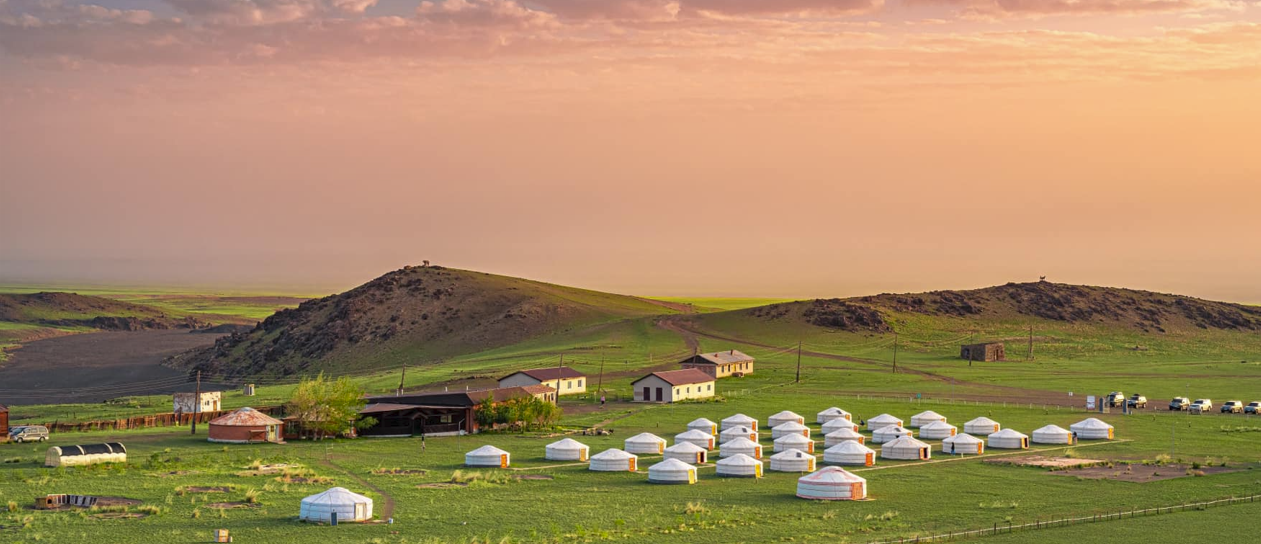
A tourist ger camp is a collection of traditional Mongolian round felt tents (gers) set up in scenic locations across Mongolia. A standard ger sleeps 2-4 guests, measures 5-8 metres in diameter, and costs $40-120 per person per night including meals. Most camps have shared bathroom facilities; deluxe or ensuite camps offer private bathrooms within the ger.
Staying in a traditional ger camp is one of Mongolia's most unforgettable experiences, combining authentic nomadic culture with breathtaking natural landscapes.
Of all the experiences that Mongolia offers, sleeping in a traditional ger under a star-filled sky may be the one that travellers remember most vividly. The ger -- the round, white, felt-covered tent that serves as both home and symbol for Mongolian nomads -- is one of humanity's most refined and practical dwelling solutions. It has been refined over thousands of years to be warm in winter, cool in summer, assembleable in under an hour, and perfectly suited to a nomadic lifestyle.
Today, a network of tourist ger camps stretches across Mongolia's most visited landscapes, from the sand dunes of the Gobi to the shores of Lake Khuvsgul and the river valleys of Terelj National Park. These camps range from simple authentic setups with minimal facilities to high-end glamping experiences with ensuite bathrooms, gourmet meals, and luxury fittings.
This guide covers everything you need to know about ger camp accommodation in Mongolia: what a ger is, the types of camps available, what activities are offered, the cultural etiquette you should follow, and what to pack for your stay.
The ger (known in the West by the Turkic word "yurt") is one of the oldest and most sophisticated portable dwellings ever developed. Archaeological evidence places ger-like structures in the Mongolian steppe as far back as 3,000 years ago. The design has been refined over millennia to produce a structure that is warm, lightweight, rapid to assemble and disassemble, and perfectly adapted to the extreme climate of the Central Asian steppe.
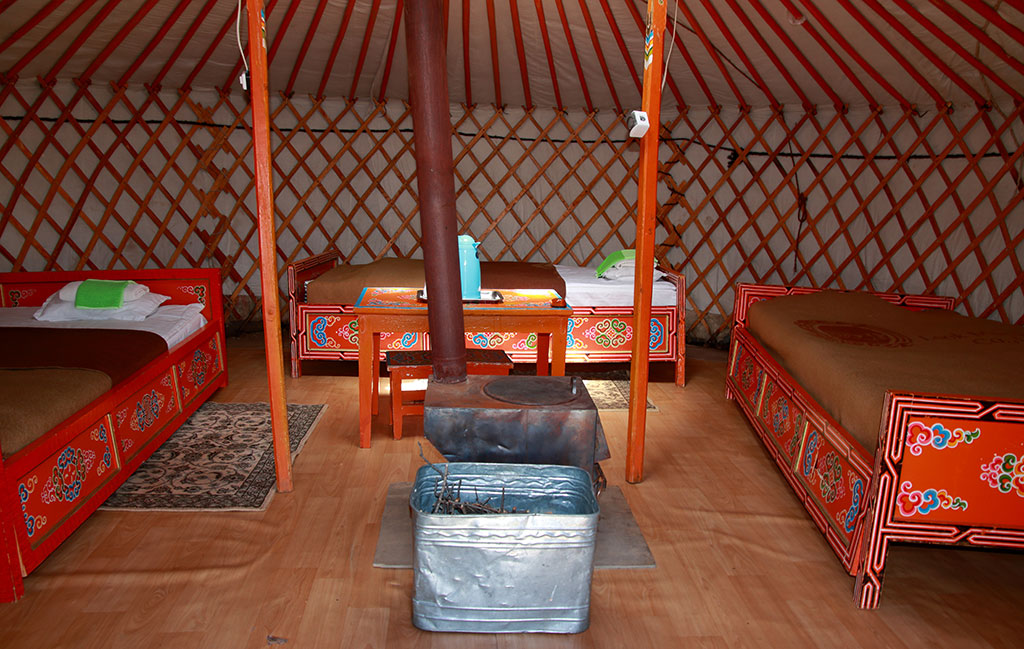
A standard ger consists of a lattice wooden frame (khana) that forms the circular walls, wooden roof poles (uni) that radiate from a central smoke hole (toono) at the apex, and layers of felt and canvas that wrap the exterior for insulation and weatherproofing. The toono also serves as a skylight and compass -- a ger's door always faces south to maximise winter sunlight. A central stove, fuelled with wood, animal dung, or coal, provides heating and cooking fire.
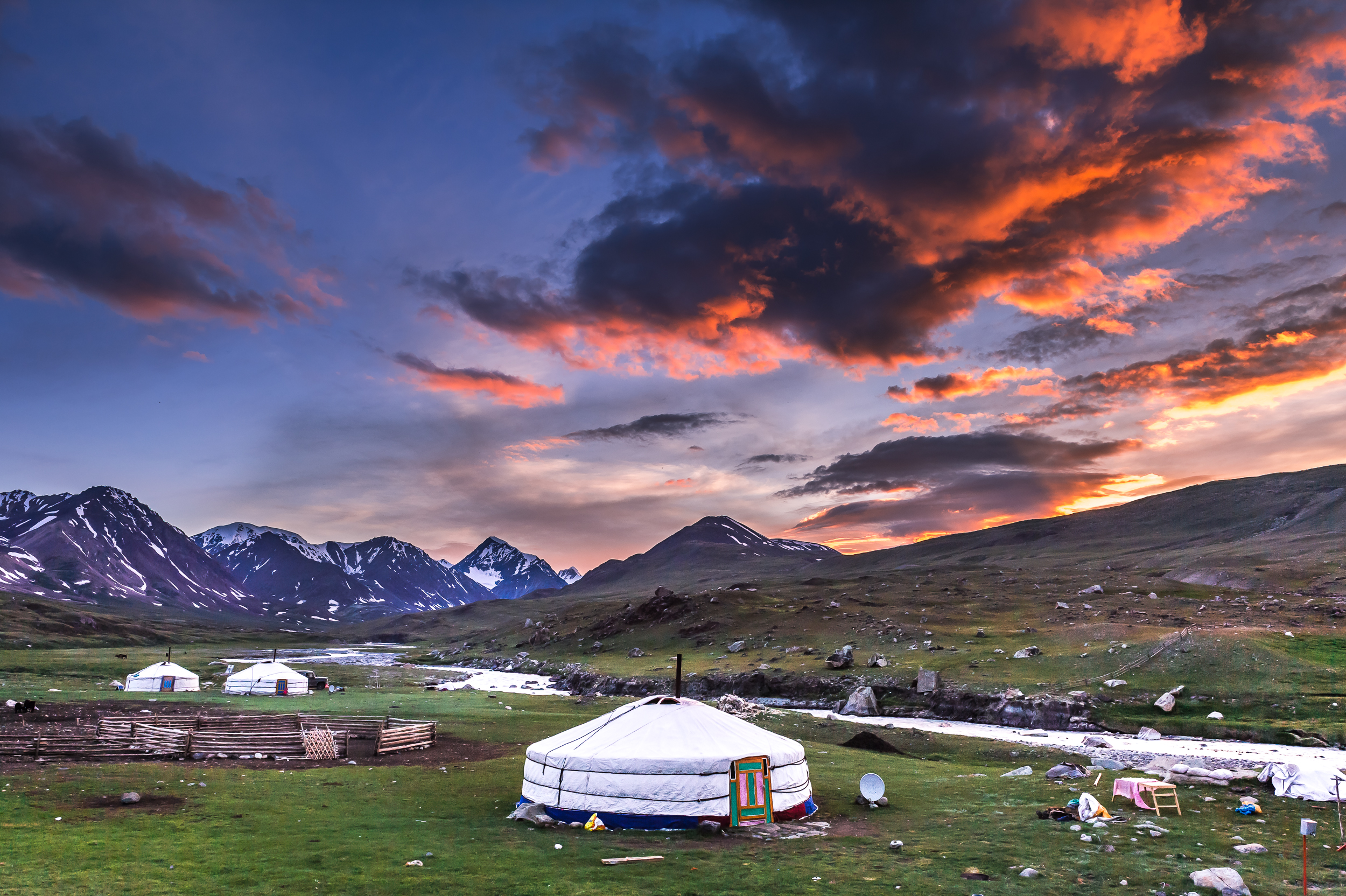
A typical ger measures approximately 6 metres in diameter, stands 2.4 metres at the central apex, and provides around 28 square metres of living space. An experienced nomadic family can assemble or disassemble a standard ger in approximately 30 minutes. Around 1 to 1.5 million Mongolians still live in gers today. The ger was inscribed on UNESCO's Representative List of the Intangible Cultural Heritage of Humanity in 2013.
From budget-friendly camps to luxury glamping, you'll fall asleep beneath some of the world's darkest, star-filled skies while experiencing Mongolia's legendary hospitality.
Standard camps are the most common type of tourist ger accommodation. Each guest ger contains 2 to 4 single or twin beds with blankets and pillows, a small table, chairs, and a central stove. Bathroom and shower facilities are in a separate communal block, typically a short walk from the guest gers. Electricity is provided by a generator or solar panels for a limited period each evening, usually 6pm to 10pm. Three meals per day are included in the price and served in a large central dining ger.
The most culturally immersive option is a homestay with an actual nomadic Mongolian family in their own ger. Facilities are basic: a sleeping space on the floor or a simple cot, shared use of the family's outdoor toilet, and washing with a basin of heated water. In return for the simplicity, you gain an unfiltered window into Mongolian nomadic life. Prices of $20 to $40 per person including meals go directly to the host family. Homestays must be arranged through a reputable tour operator to ensure the family is prepared and fairly compensated.
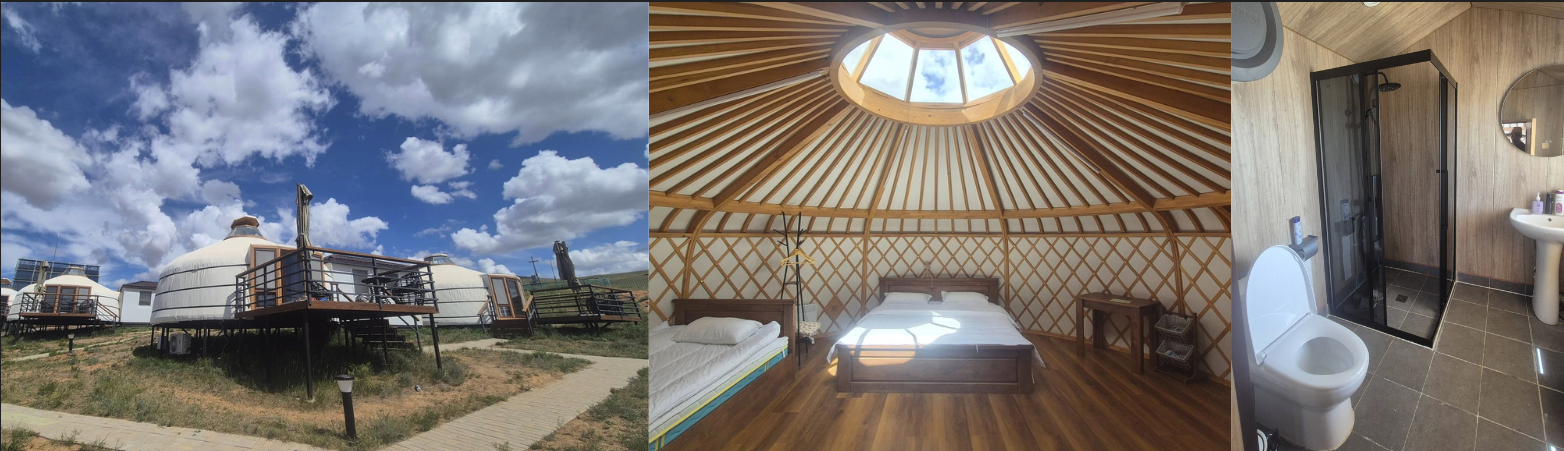
Ensuite camps offer a private bathroom -- toilet, shower, and sometimes a bathtub -- either attached to or contained within the ger itself. Beds are of higher quality, linens are better, and there is usually 24-hour electricity. Some ensuite camps offer Wi-Fi, though connection quality is often limited. Prices range from $80 to $150 USD per person per night, including meals.
A small number of camps in Mongolia -- concentrated primarily in the Gobi Desert (notably Three Camel Lodge) and around Lake Khuvsgul -- offer genuinely luxury ger accommodation. These properties feature high-quality custom-made furnishings, premium en-suite bathrooms, gourmet locally-sourced cuisine, and curated cultural experiences. Prices range from $150 to $400 USD per person per night. Booking 6 or more months in advance is essential for peak season.
• Horse riding: The quintessential Mongolia experience. Most camps have horses available for hourly or half-day rides through the surrounding landscape.
• Archery (Mongolian-style): Traditional Mongolian archery uses recurve bows and is shot with a distinctive thumb ring technique. Most camps have a small archery range.
• Eagle hunting demonstrations: At camps in western Mongolia (Bayan-Ulgii), Kazakh eagle hunters sometimes visit to demonstrate hunting with trained golden eagles.
• Cooking classes: Learning to make buuz (steamed dumplings) or khuushuur (fried dumplings) in the camp kitchen is a highlight for many visitors.
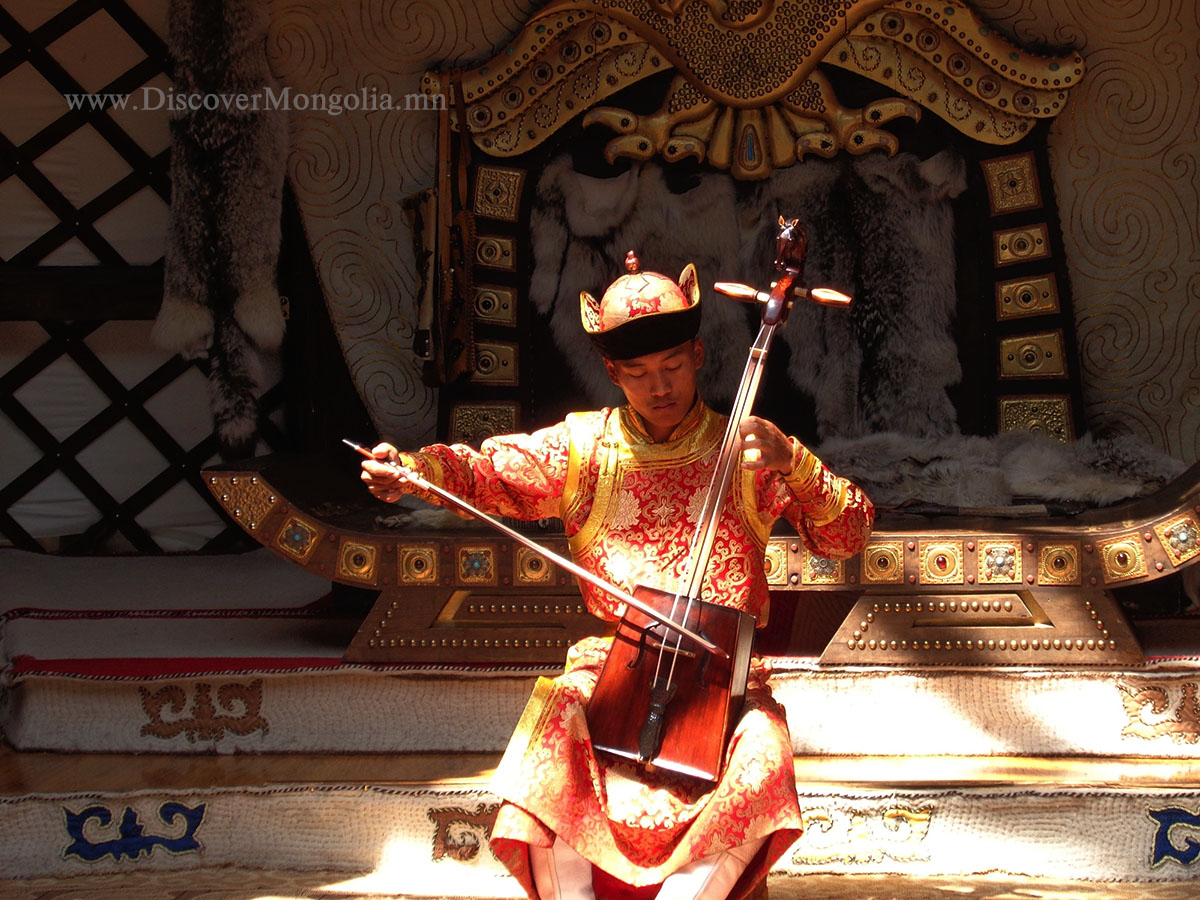
• Throat singing (khoomei): Many camps can arrange a performance or basic lesson in Mongolian overtone singing.
• Mongolian wrestling demonstration: Camps occasionally arrange exhibitions of bekh, the traditional Mongolian wrestling form practised at Naadam.
• Stargazing: Mongolia's rural areas have virtually no light pollution, producing some of the most spectacular night skies in the world.
• Herding and livestock activities: Helping nomadic families herd sheep and goats or learning to milk a mare to produce airag (fermented mare's milk), are available at camps with close nomadic partnerships.
Entering the ger: Always step over -- never on -- the wooden threshold at the entrance. Stepping on the threshold is considered deeply disrespectful and is associated in Mongolian tradition with dishonoring the household.
Moving inside the ger: After entering, move to the left (clockwise). Men traditionally sit on the western (left) side of the ger; women on the eastern (right) side. The seat directly opposite the door is the position of honour, reserved for the most senior guest or host.
The hearth: Never point your feet toward the central stove -- the fire is considered sacred. Avoid leaning against the central support poles. Do not throw rubbish into the fire.
Accepting food and drink: Accept offered items with your right hand, or with both hands. It is polite to at least taste everything offered. A full cup means your host intends to refill it -- leave your cup partly full when you have had enough.
Whistling: Never whistle inside a ger -- it is believed to summon evil spirits.
Ovoo sacred cairns: Walk around stone cairns (ovoo) clockwise three times and add a stone, a coin, or a piece of candy as an offering to receive safe travel and good luck.
• Earplugs: Ger walls do not block sound effectively, and you may hear wind, animals, and neighbouring gers through the night.
• Headlamp or torch: Generator electricity typically shuts off at 10pm. A headlamp is essential for navigating to bathroom facilities at night.
• Wet wipes and hand sanitiser: For quick freshening up, particularly at camps where shower schedules are limited.
• Flip-flops: For the shower block and for comfort inside the ger.
• Warm layers: Even in midsummer, steppe nights can drop to 5 to 8C. A fleece and a light down jacket are essential.
• Mosquito repellent: During July and August, mosquitoes can be active near rivers and lakes.
• Reusable water bottle: Camps provide drinking water (usually boiled or filtered), and a 1-litre bottle is sufficient.
• Small padlock: Most ger camps do not have locking doors. A small padlock for your bag provides peace of mind, though theft is very rare.
Do ger camps have hot showers?
Yes, most mid-range and above tourist ger camps have hot showers available. Shower times may be limited to morning and evening slots due to solar heating or generator schedules. Basic camps may use solar-heated water bags that provide warm rather than hot showers. Luxury camps offer on-demand hot water at all times.
Is there Wi-Fi at ger camps?
While camp Wi-Fi itself remains rare outside of luxury sites, the "digital detox" label is now optional rather than forced. Mongolia has skipped landline infrastructure and heavily invested in cellular coverage. Local carriers like Mobicom offer nearly 80% coverage in rural regions. A tourist traveling with an inexpensive tourist eSIM will frequently have high-speed 4G internet right inside their ger
Are ger camps safe for solo female travellers?
Yes, ger camps are generally very safe environments for solo female travellers. Mongolian hospitality culture places great importance on protecting guests, and harassment of travellers is very rare. Camp staff are accustomed to solo visitors. Always inform the camp manager of any plans to go out alone and trust your instincts.
Can ger camps accommodate dietary restrictions?
Vegetarian meals are increasingly possible at tourist ger camps, particularly if you inform your tour operator well in advance so they can notify the camp. Traditional Mongolian cuisine is heavily based on mutton, beef, and horse meat. Vegan diets are significantly more challenging to accommodate in remote areas. Travellers with specific medical dietary requirements should communicate these clearly at the booking stage.
How cold does it get inside a ger at night?
A well-tended ger with a good stove is genuinely warm even in very cold weather -- the felt insulation is excellent. The challenge is that the fire may not be attended once guests are asleep. If the fire goes out in autumn or spring, temperatures inside can drop to uncomfortable levels by early morning. Bringing a warm sleeping layer (fleece blanket or sleeping bag liner) is always a sensible precaution.
How far in advance should I book a ger camp?
For the July to August peak season, booking 2 to 3 months in advance is the minimum recommended lead time for standard and ensuite camps. Popular camps near Ulaanbaatar can fill up for Naadam week (July 11 to 13) as early as 6 months in advance. Three Camel Lodge in the Gobi typically books out for July to August 6 to 9 months ahead. For May to June and September travel, 4 to 6 weeks notice is usually sufficient.
Is a ger camp experience worth it?
Overwhelmingly, yes -- the ger camp experience is one of the most universally praised aspects of Mongolia travel. Waking to the sound of horses and wind on the steppe, watching the night sky from a camp chair in total darkness, eating fresh khuushuur dumplings cooked over a fire while hosts tell stories through a guide -- these are experiences impossible to replicate in any other accommodation format.
Discover Mongolia has organized tailor-made tours since 2004.
We handle flights, accommodation, guides, vehicles — you focus on the journey.