Genghis Khan Statue Complex: History & Visitor Guide (2026)
The Mongolian Gobi Desert covers about 1.3 million square kilometers of southern Mongolia, making it one of the world's largest deserts. Despite its reputation, sand dunes cover only a small part of the Gobi; most of the terrain is gravel plain, steppe, and rocky mountains. The best time to visit is from June to September, when temperatures are warmer and ger camps are open, though the desert is known for sudden weather changes year-round.
The Gobi covers roughly 1.3 million square kilometers across southern Mongolia, bordered by the Altai Mountains to the west and the Khangai Mountains to the north. It is sparsely populated, with nomadic herders as the main inhabitants.
The Gobi's climate is extreme:
This mix of heat, cold, and dryness shapes everything that lives there.
A single day can swing 30–35°C — beyond the seasonal extremes, the Gobi is known for dramatic day-to-night temperature drops within the same day, up to 35°C (63°F).
The Gobi is often pictured as an endless sand sea, but its ecosystem is more varied than that image suggests.
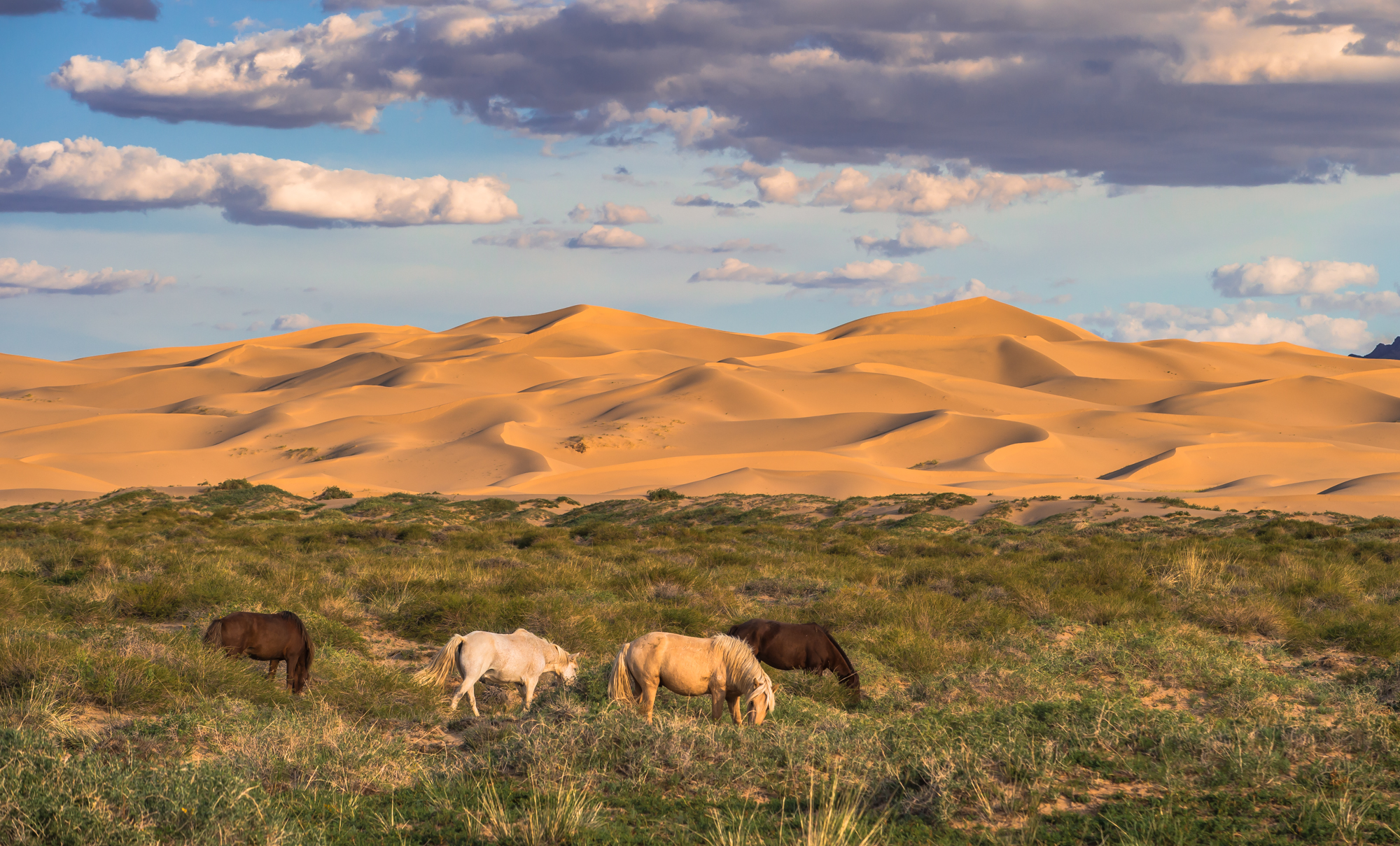
Sand dunes cover only a portion of the Gobi's total area; most of the desert is gravel plain, steppe, and rocky terrain. The most famous dune field is Khongoryn Els, known as the "Singing Dunes," which stretches roughly 100 km and rises up to 300 meters in places. Wind constantly reshapes the dunes, and in strong wind they produce a low booming sound.
Despite its harsh conditions, the Gobi supports a surprising range of life:
Small oases provide vital water sources for both wildlife and nomadic herders. These green pockets, often surrounded by small herding settlements, stand out sharply against the surrounding dry terrain.
The Gobi is one of the most important fossil regions in the world. Bayanzag, known as the Flaming Cliffs, is where the first dinosaur eggs ever documented were discovered in the 1920s. The dry climate has preserved fossils here for millions of years, and paleontological work continues in the region today.
The Gobi's weather is a major part of the experience, and travelers should plan around it.
Comparing Gobi Seasons:
Most travelers combine a flight in one direction with an overland route in the other, to see more of the landscape without spending both legs of the trip driving.
If your main goal is climbing dunes and photographing sunsets, prioritize Khongoryn Els and build your trip around a few nights there. If fossils and dramatic geology interest you more, Bayanzag and its red cliffs deserve extra time. Many travelers combine both, along with the ice-filled gorge at Yolyn Am, in a single multi-day itinerary.
Discover Mongolia Travel has operated since 2004 and organizes cultural and travel experiences across Mongolia, including multi-day journeys through the Gobi Desert.
Is the Gobi Desert all sand?
No, Sand dunes cover only a small portion of the Gobi. Most of the landscape is gravel plain, rocky mountains, and open steppe.
What is the best time to visit the Gobi Desert?
June to September offers the warmest weather and the most open ger camps. May and October are quieter shoulder-season options with cooler temperatures.
How hot does the Gobi Desert get?
Summer daytime temperatures can exceed 40°C (104°F), while winter temperatures can fall as low as -40°C (-40°F).
What animals live in the Gobi Desert?
Wild Bactrian camels, the critically endangered Gobi bear, snow leopards in the mountain fringes, and various desert bird species all live in the region.
How do I get to the Gobi Desert from Ulaanbaatar?
You can fly to Dalanzadgad in about 1.5 hours, or travel overland, which takes roughly 7–9 hours one way depending on the route.
Why is the Gobi Desert important for paleontology?
The Flaming Cliffs at Bayanzag are where the first dinosaur eggs were ever documented, in the 1920s, and the region remains an active fossil site.
How many days do I need to see the Gobi Desert?
Most travelers plan 7–8 days to comfortably reach the main sites, including Khongoryn Els, Bayanzag, and Yolyn Am.
Can I visit the Gobi Desert independently, without a guide?
It's possible but difficult, given long distances, limited signage, and rough terrain. Most travelers use a local guide or driver.
The Mongolian Gobi Desert covers an area of approximately 1.3 million square kilometers, making it one of the largest deserts in the world. Despite its vast size, it is relatively sparsely populated, with nomadic herders being the primary inhabitants of the region. The Gobi is surrounded by the Altai Mountains to the west and the Khangai Mountains to the north, creating a unique microclimate.
The climate of the Gobi is characterized by extreme temperature variations. Summers can be scorching, with daytime temperatures soaring to over 40°C (104°F), while winters can be bitterly cold, plummeting to as low as -40°C (-40°F). The Gobi is also known for its low precipitation, receiving only about 194 millimeters of rain annually, which further intensifies the desert's arid conditions.
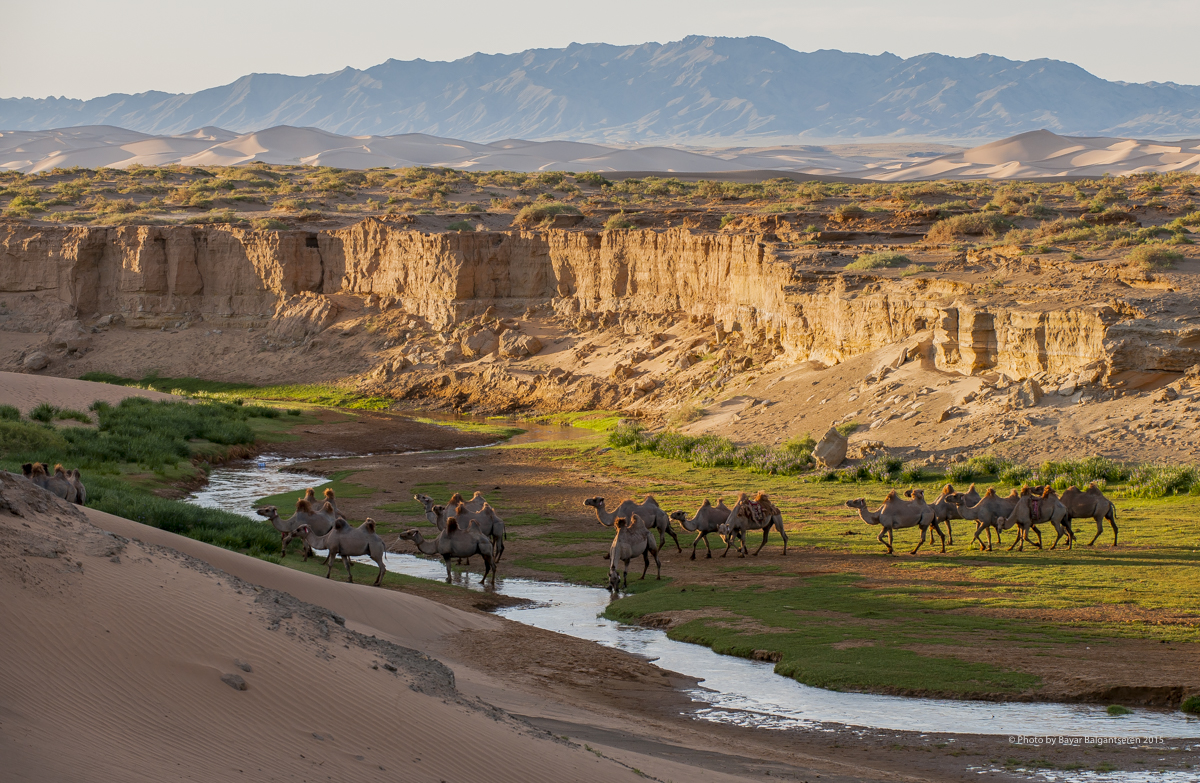
The Gobi Desert is often associated with vast stretches of sand dunes, but its ecosystem is far more diverse than it might seem at first glance. Let's take a closer look at the various elements that make up this unique sand ecosystem:
Sand Dunes: The most iconic feature of the Gobi Desert is its towering sand dunes. Some of the most famous dunes in the Gobi include the Khongoryn Els and the Hongorin Els, which can reach heights of up to 300 meters. These dunes are constantly shifting and reshaping due to the wind, giving the landscape an ever-changing appearance.
Flora and Fauna: Contrary to the common perception of deserts as lifeless, the Gobi hosts a surprising variety of plant and animal species adapted to its harsh conditions. You can find saxaul trees, camel thorn bushes, and a variety of drought-resistant grasses. Wildlife includes wild Bactrian camels, Gobi bears, and numerous bird species, such as the elusive snow leopard.
Oasis: Amidst the harsh desert terrain, oases provide a vital source of water and sustenance for both humans and wildlife. These lush pockets of green are often surrounded by small settlements of nomadic herders, who rely on the water and vegetation to support their livestock.
Fossils: The Gobi Desert is a treasure trove of paleontological discoveries. It's home to some of the world's most important dinosaur fossil sites, including the famous Flaming Cliffs, where the first-ever dinosaur eggs were discovered. The desert's dry climate and unique geological features have preserved fossils for millions of years.
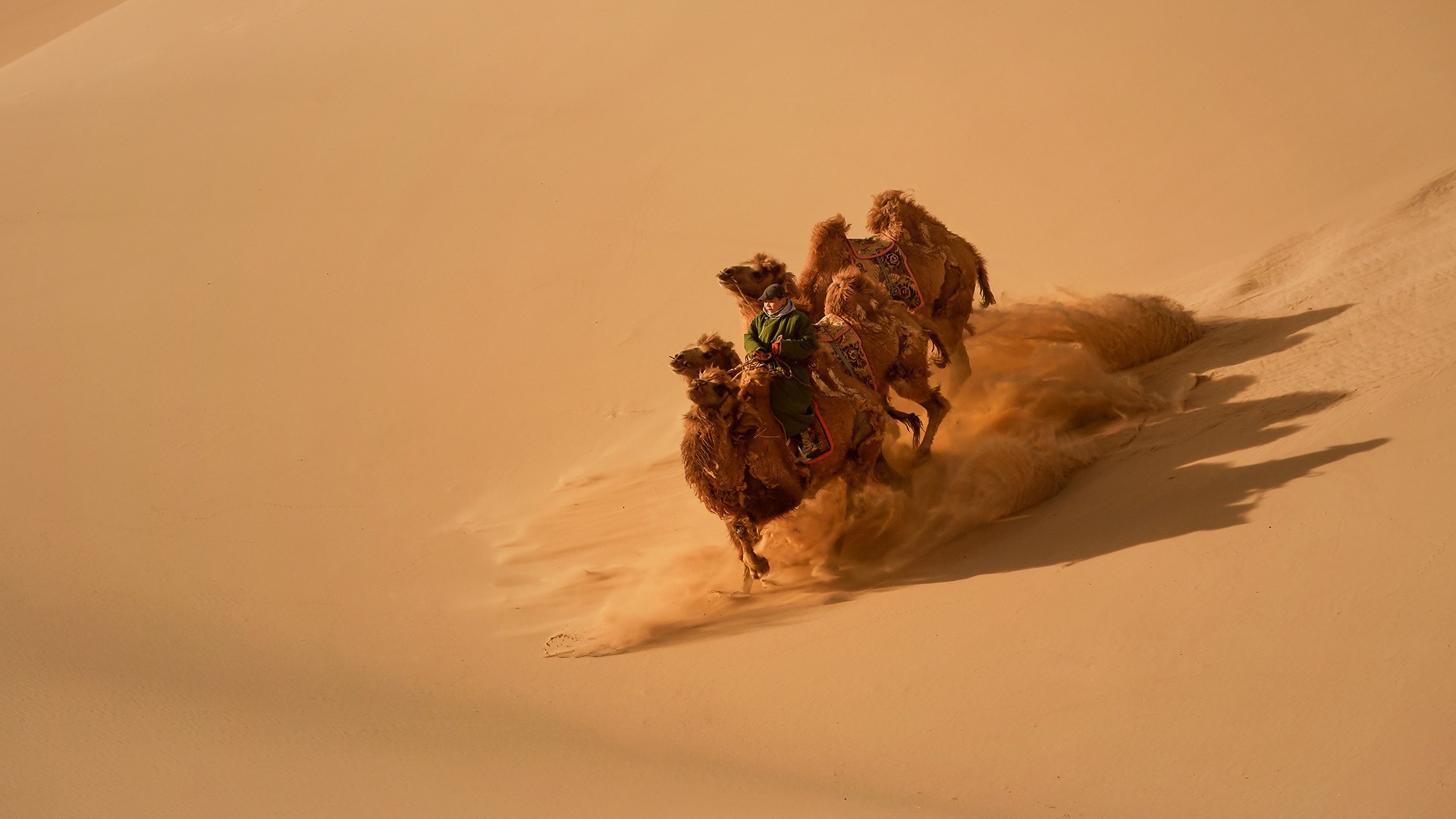
One of the most intriguing aspects of the Gobi Desert is its unpredictable weather patterns. The interplay between the desert's geography and climate results in some fascinating meteorological phenomena:
1. Gobi Wind: The Gobi is known for its fierce and unpredictable winds, which can whip up sandstorms and reduce visibility to almost zero. These winds, often referred to as "Gobi Wind," can make traveling through the desert a challenging endeavor.
2. Temperature Fluctuations: As mentioned earlier, the Gobi experiences extreme temperature variations. The transition from sweltering summer days to freezing winter nights can be abrupt and demanding for those who live and work in the region.
3. Flash Floods: Despite its arid reputation, though not so common the Gobi is prone to sudden, intense rainfall that can lead to flash floods. These floods can be particularly dangerous, as they often catch both residents and travelers off guard.
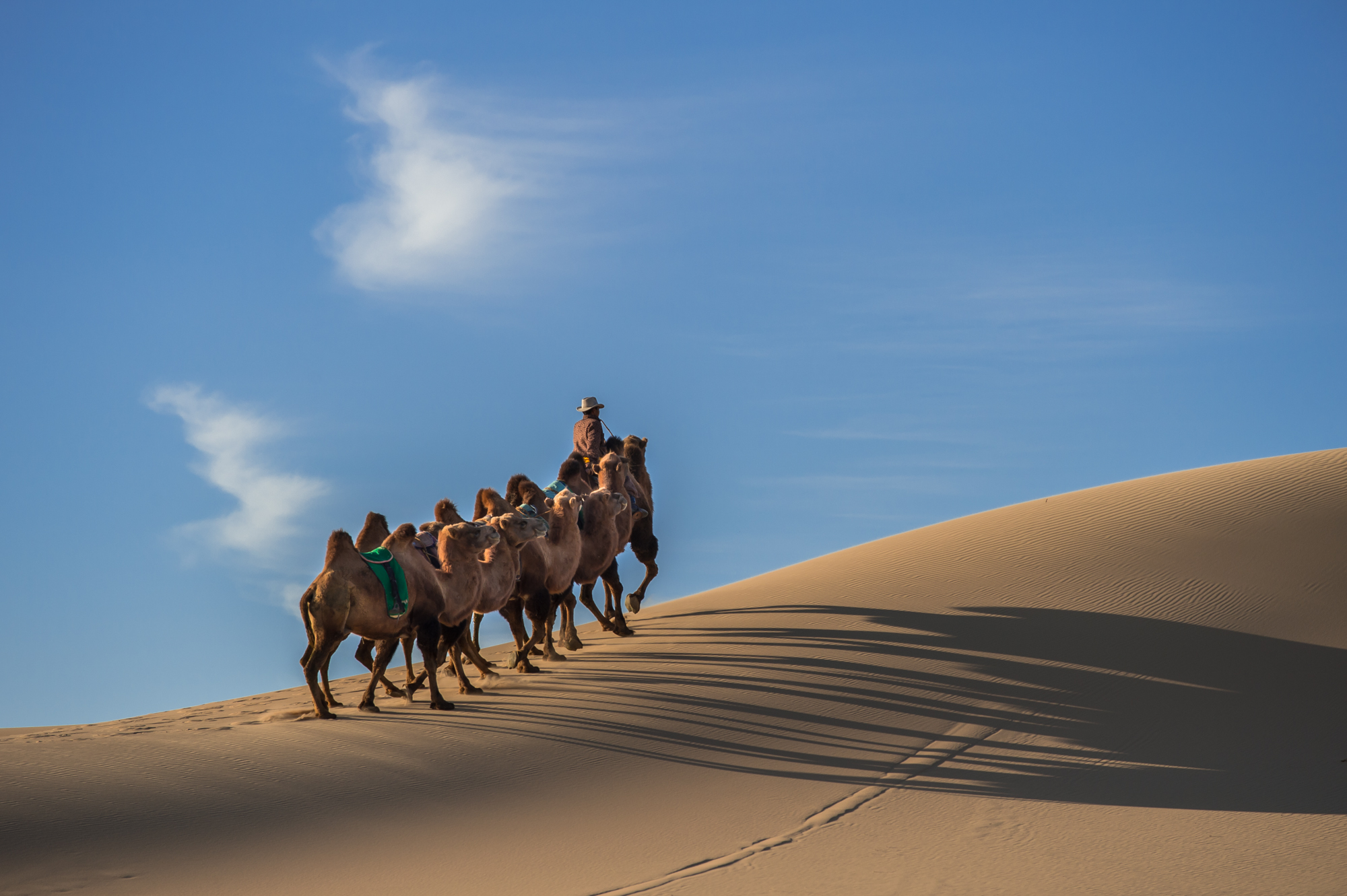
The Mongolian Gobi Desert is a place of extraordinary contrasts, from its towering sand dunes and diverse ecosystems to its unpredictable weather patterns. This enigmatic landscape has fascinated explorers, scientists, and adventurers for centuries. While the Gobi's harsh conditions present challenges, they also offer unique opportunities for discovery and appreciation of the natural world. It's a testament to the resilience of life in extreme environments and a reminder of the breathtaking beauty that can be found in the most unlikely places.