What Meat Do Mongolians Eat? Mongolian Meat Guide (2026)
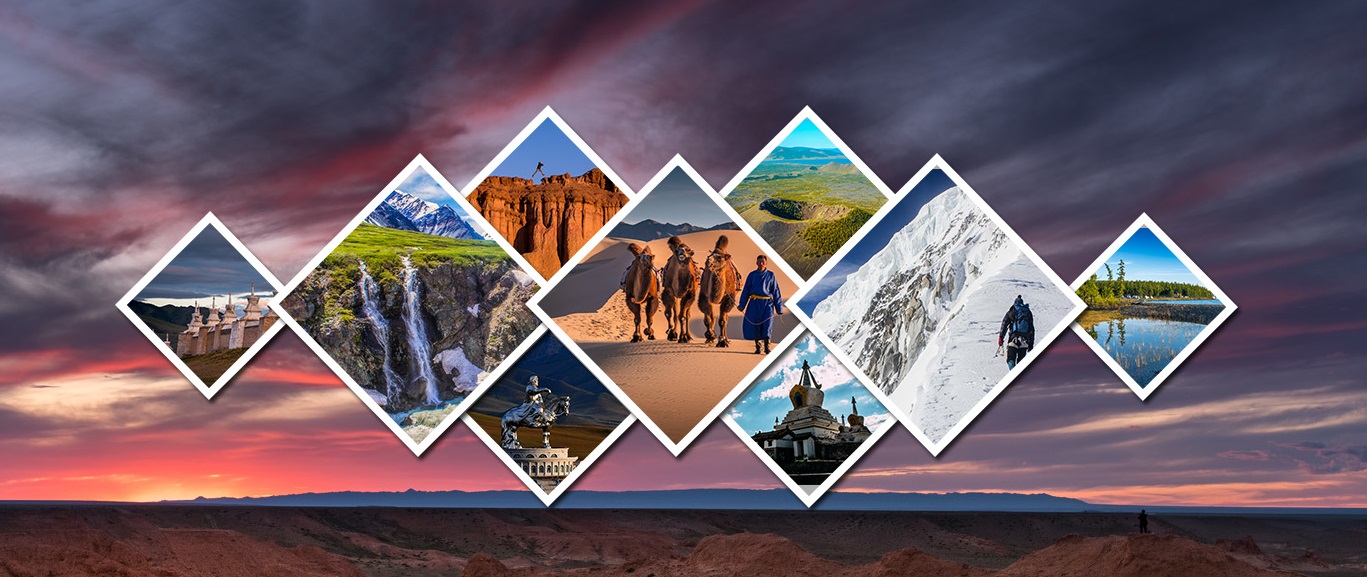
Mongolia's top 10 destinations include the Gobi Desert, Lake Khuvsgul, Terelj National Park, Hustai National Park, the Altai Mountains, Khangai Range, Uvs Nuur, Orkhon Valley, Bayan-Ulgii, and Ulaanbaatar itself. Most require a domestic flight or multi-day overland journey from the capital. The best time to visit most destinations is June through September
From the Gobi Desert to alpine lakes, Mongolia offers 10 unforgettable destinations, each with its own unique landscapes, wildlife, and culture.
Mongolia is a country that challenges conventional ideas of travel. There are no beach resorts, no theme parks, and very few of the tourist corridors that define experiences elsewhere in Asia. What Mongolia offers instead is something far rarer: raw, unmediated wilderness across a landmass the size of Western Europe, inhabited by fewer than 3.56 million people.
Approximately 25% to 30% of the Mongolian population still lives a nomadic or semi-nomadic lifestyle, herding livestock across vast open steppes according to the seasons. Around 21% of the country's total land area is protected as national parks, nature reserves, or strictly protected areas. Most visitors to Mongolia's wilderness report seeing fewer than five other tourists per day once they leave Ulaanbaatar -- a statistic that is extraordinary by any modern travel standard.
The 10 destinations below represent the full sweep of what Mongolia offers: dramatic desert landscapes, ancient capitals, pristine mountain lakes, wildlife sanctuaries, and nomadic culture at its most authentic.
The capital deserves 2 to 3 days of dedicated exploration. The city is a fascinating mix of Soviet-era apartment blocks, traditional ger suburbs (home to around 60% of the population), gleaming glass towers, and ancient monasteries. Gandantegchinlen Monastery (Gandan) is the largest and most important active Buddhist monastery in the country, housing a 26.5-metre gilded statue of Migjid Janraisig. The National Museum of Mongolia traces Mongolian history from the Bronze Age through the Mongol Empire to the present.
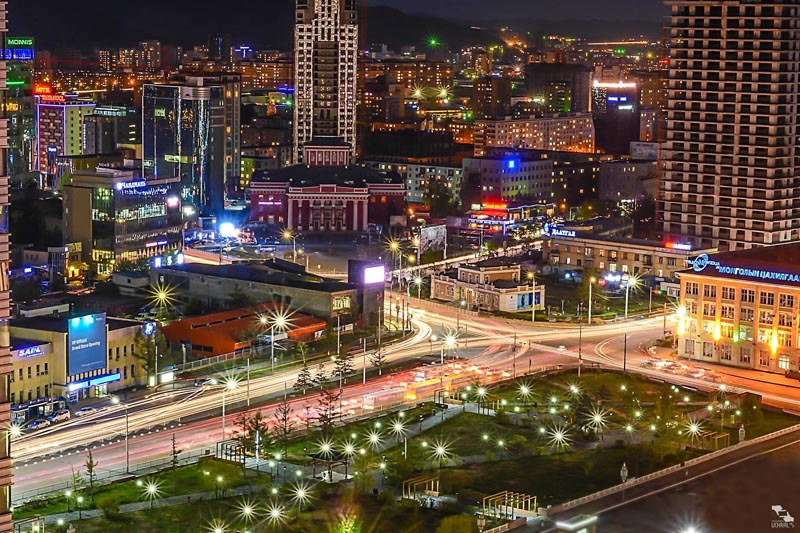
Distance from UB: You are here | Best Time: Year-round | Don't Miss: Gandan Monastery, National Museum, Choijin Lama Temple, Naadam Festival (July 11 to 13)
Eastern Mongolia is the least-visited region in the country and one of the most extraordinary. The Eastern Steppe of Dornod Province is the largest intact temperate grassland ecosystem remaining in the world -- an unbroken sea of grass stretching to the Russian and Chinese borders. The most massive, unified mega-gatherings actually occur in late spring (May/June) for synchronized calving and late autumn/winter to seek snow-free pastures, Mongolian gazelle herds numbering up to 200,000 animals migrate across this steppe in the largest terrestrial wildlife migration in Asia.
The region's Kherlen River valley contains important historical sites related to the Mongol Empire, and Buir Lake on the Chinese border hosts significant populations of migratory waterfowl. This is genuinely off-the-beaten-path Mongolia.
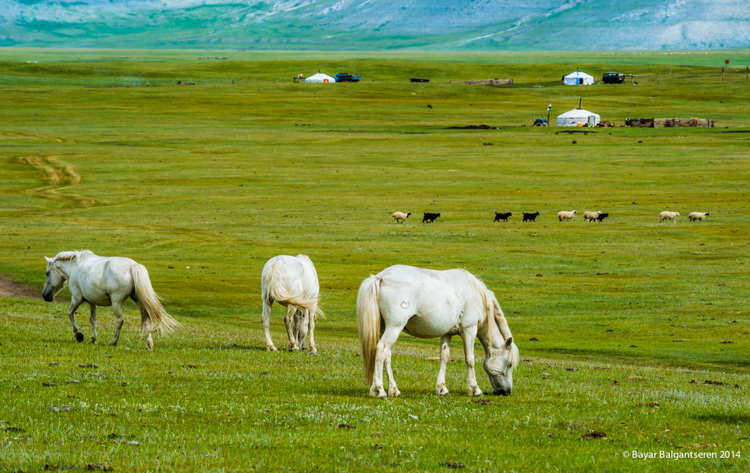
Distance from UB: 650 km east | Best Time: June to August | Don't Miss: Mongolian gazelle migration, Eastern Steppe's vast horizon, Kherlen River valley
Uvs Nuur is the largest lake in Mongolia by surface area, covering 3,350 km2. It sits in a large basin in northwestern Mongolia and forms the centrepiece of the Uvs Nuur Basin Biosphere Reserve -- a UNESCO World Heritage Site jointly held with Russia. The basin contains an extraordinary range of ecosystems: salt flats, sand dunes, taiga, steppe, and alpine tundra all occur within a short distance of one another.
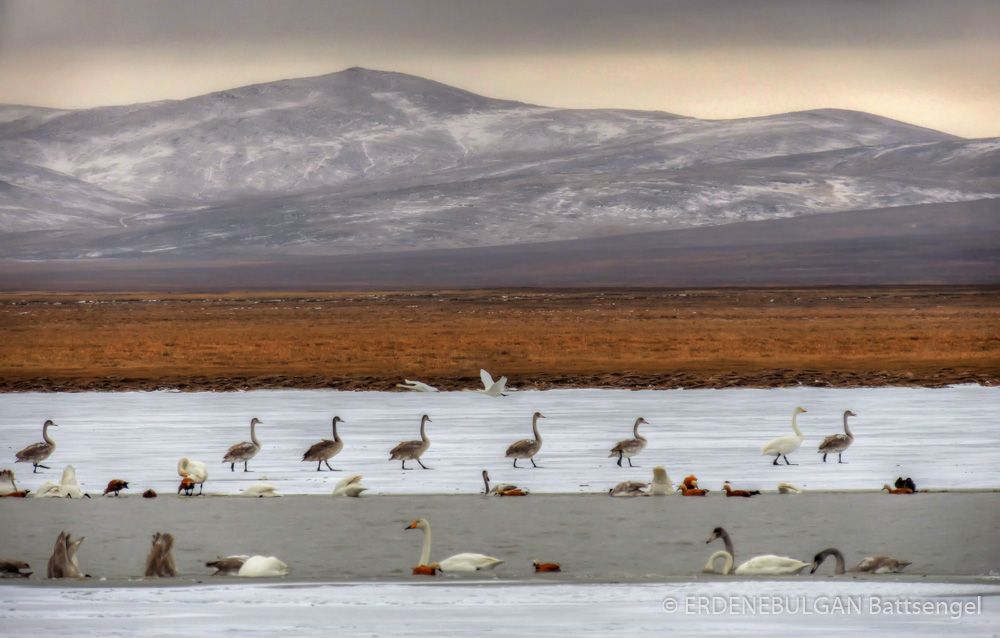
Uvs Nuur rewards serious travellers with some of the country's best birdwatching (Dalmatian pelicans, relict gulls, and many steppe species occur here) and an extreme climate that ranges from -58C in winter to +40C in summer -- one of the most climatically extreme places on earth.
Distance from UB: 1,200 km west (fly to Ulaangom) | Best Time: June to August | Don't Miss: UNESCO biosphere birdwatching, salt flat landscapes
The Orkhon Valley is the historical heartland of the Mongol Empire and is inscribed as a UNESCO World Heritage Site, recognising its 2,000-year history as the political and cultural centre of successive nomadic empires. Genghis Khan originally designated the site as his base camp in 1220. His son, Ögedei Khan, formally constructed the walled city and permanent palaces starting in 1235, once rivalled contemporary European capitals in size and sophistication.
Today, Erdene Zuu Monastery -- built in 1586 on the ruins of the ancient capital and surrounded by a wall with 108 white stupas -- is the most visible reminder of this history. The valley itself, broad, river-cut, and lined with gers in summer, is a powerful landscape for any visitor with an interest in history or nomadic culture.
Distance from UB: 360 km west | Best Time: June to September | Don't Miss: Erdene Zuu Monastery, Kharkhorum Museum, Orkhon River valley horseback riding
Western Mongolia's Altai region is the most remote and arguably the most spectacular destination in the country. Bayan-Ulgii Province, home to the Kazakh ethnic minority, is culturally distinct from the rest of Mongolia -- Kazakh is the primary language here, and the region maintains its own traditions of eagle hunting, Islamic practice, and felt craft.
Tavan Bogd National Park contains Mongolia's five highest peaks, including Khuiten Peak (4,374 m, the highest point in the country) and Potanin Glacier, which at 14 (some satellite models record up to 19 km) kilometres is one of the longest glaciers in Central Asia. The Golden Eagle Festival in October is one of Central Asia's most visually stunning events.
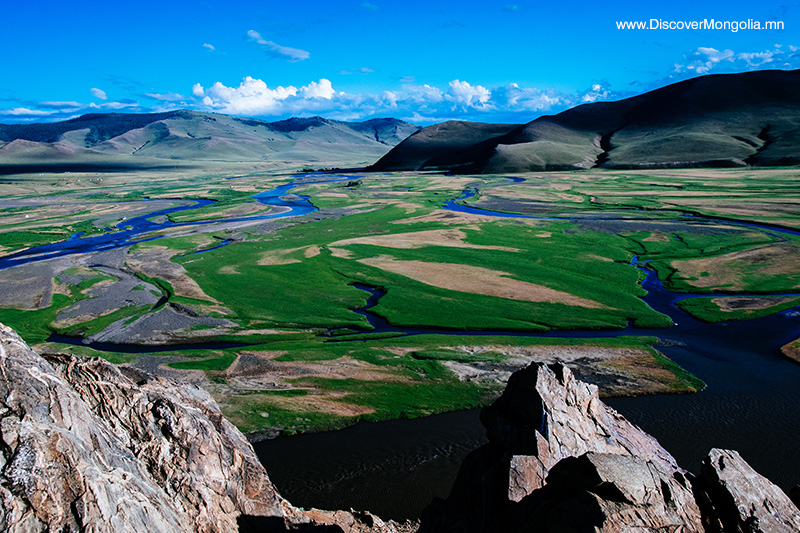
Distance from UB: 1,700 km west (fly to Ulgii, 2.5 hours) | Best Time: September to October for Eagle Festival; June to August for trekking | Don't Miss: Eagle Festival, Khuiten Peak, Kazakh nomad families
The Khangai range runs for approximately 700 kilometres across central Mongolia, forming a green forested highland that feels dramatically different from the open steppe or the desert. The range's highest point, Otgontenger Peak, reaches 4,031 metres and is considered sacred in Mongolian Buddhism.
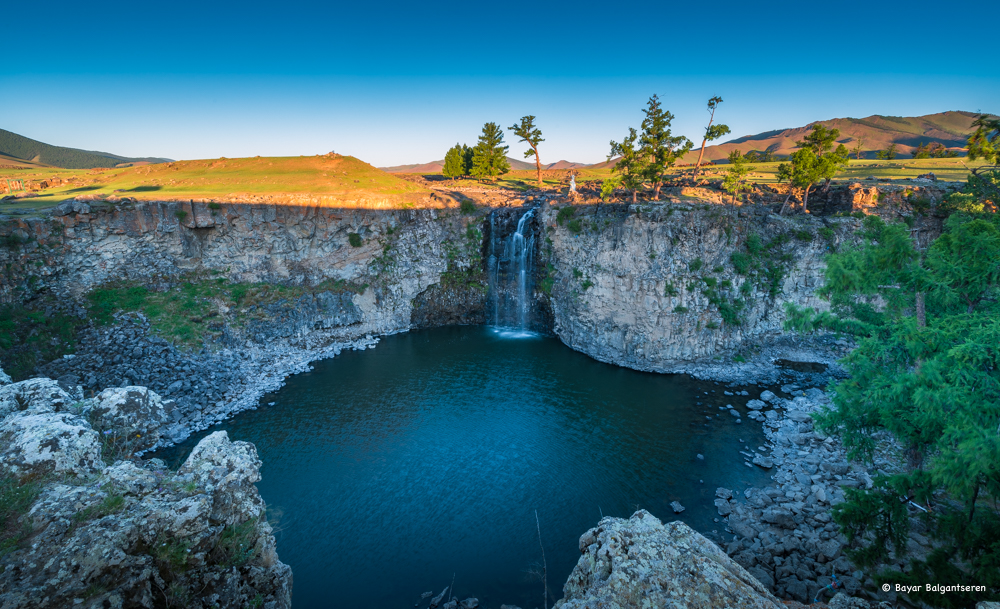
The Khangai is best known for the Orkhon waterfalls -- Ulaan Tsutgalan -- where the Orkhon River drops 20 metres over a volcanic basalt cliff into a forested canyon. White Lake (Tsagaan Nuur) in the northern foothills is a beautiful and relatively little-visited destination. The ancient Tuvkhun Monastery, built in 1651, perches dramatically on a forested granite cliff.
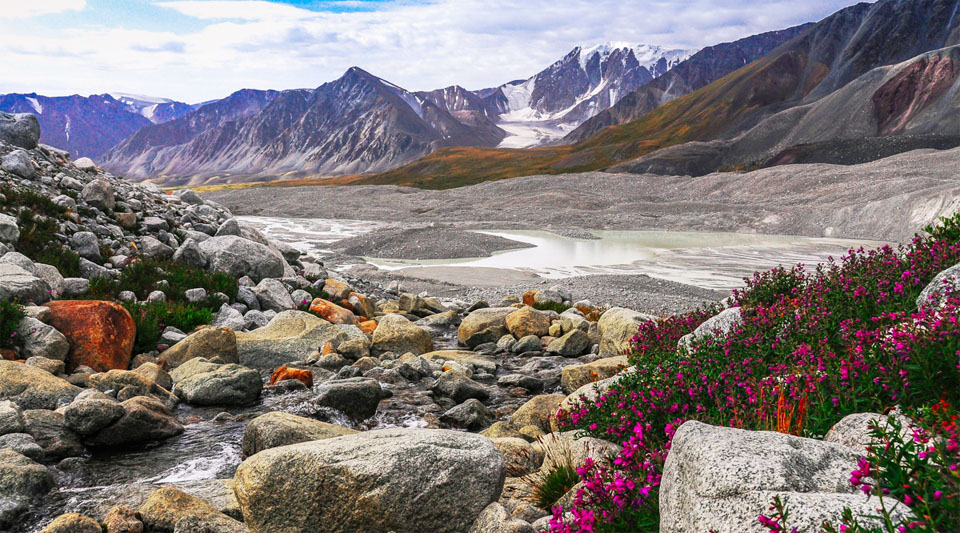
Distance from UB: 650-700 km west (drive to Tsetserleg) | Best Time: June to September | Don't Miss: Orkhon Waterfalls, Tuvkhun Monastery, White Lake
Hustai National Park is one of the great conservation success stories of our time. In the early 1990s, the Przewalski horse -- the world's last truly wild horse species, known in Mongolian as takhi ("spirit") -- had been extinct in the wild for decades. Between 1992 and 2000, 84 horses were reintroduced from Dutch and other European breeding programmes. Today, more than 300 takhi roam freely in the park's 506 km2 of protected steppe.
The park lies 100 kilometres southwest of Ulaanbaatar. Beyond the Przewalski horses, Hustai supports populations of red deer, wild boar, wolves, and over 200 species of birds. The best time to observe horses is at dawn, when the herds graze in the open valleys closest to the visitor centre.
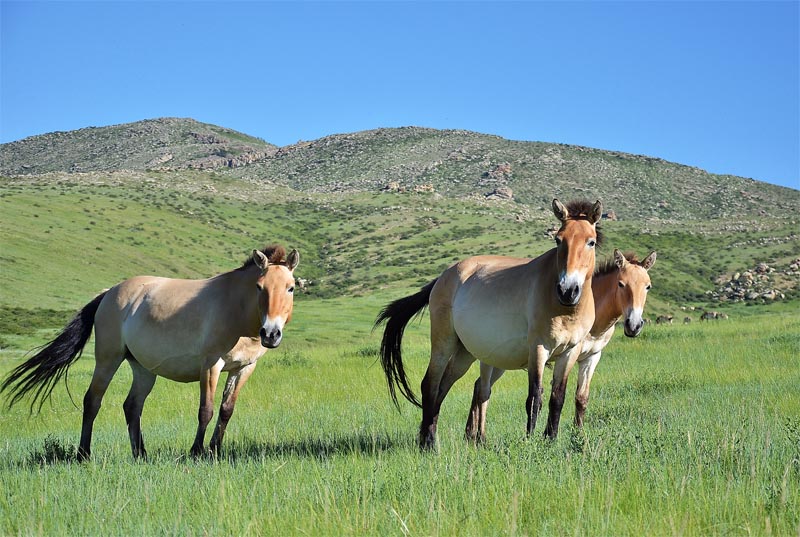
Distance from UB: 100 km southwest | Best Time: April to October | Don't Miss: Przewalski horse herds at dawn
Terelj is the most accessible major wilderness area from Ulaanbaatar, located just 55 kilometres to the east. The park covers 2,930 km2 of river valleys, granite rock formations, pine forests, and open meadows. It is ideal for travellers with limited time, families with children, or anyone wanting a taste of nomadic ger camp life close to the capital.
The park's most photographed landmark is Turtle Rock, a naturally eroded granite outcrop that bears an unmistakable resemblance to a tortoise. Nearby, the Aryapala Buddhist Meditation Centre perches on a forested hillside and is reachable by a short hike. The Terelj River flows through the core tourist valley, while the Tuul River serves as the southwestern boundary, offering travelers access to the park, offering opportunities for fishing, hiking, and horse riding.
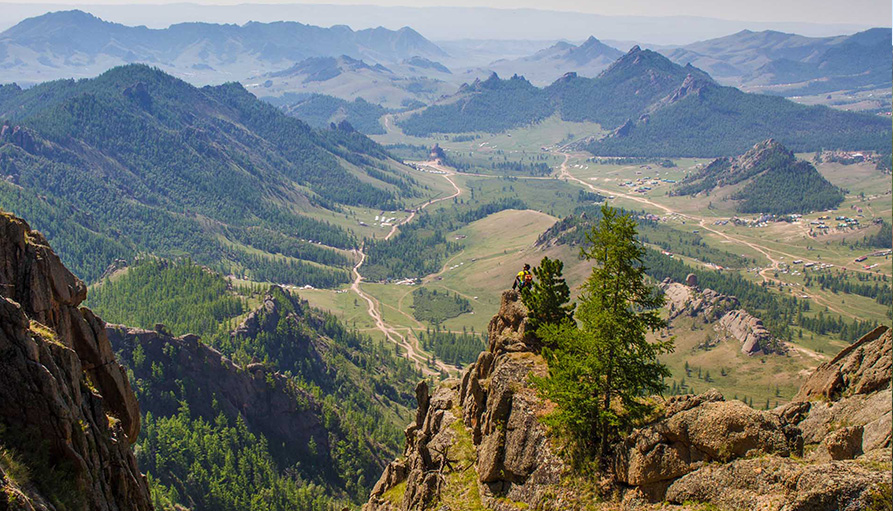
Distance from UB: 55 km east | Best Time: May to October | Don't Miss: Turtle Rock, Aryapala Monastery hike, horse riding in the Tuul River valley
Lake Khuvsgul -- sometimes called the "Blue Pearl of Mongolia" -- is one of the most pristine large lakes in the world. Located 778 kilometres north of Ulaanbaatar, it holds approximately 0.4% of the world's unfrozen freshwater. The lake is 136 kilometres long, up to 262 metres deep, and sits at an altitude of 1,645 metres, ringed by boreal taiga forests and mountains.
The Tsaatan (Dukha) people -- one of the world's last reindeer-herding communities -- live in the remote mountains to the north of the lake. Meeting them is one of Mongolia's most profound cultural experiences. For most visitors, horse trekking around the lake shoreline, kayaking, and enjoying the crystal-clear views against forested slopes is satisfaction enough.
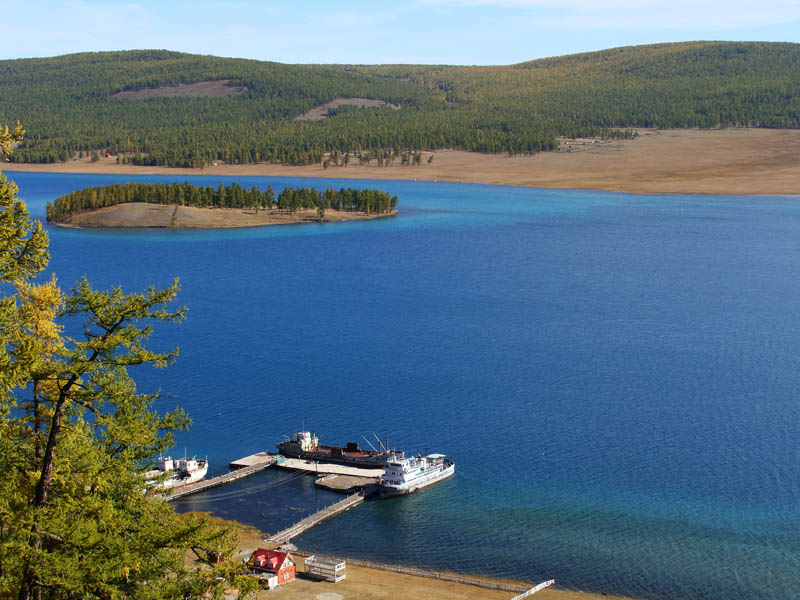
Distance from UB: 778 km north (fly to Moron, then 30 to 50 km drive) | Best Time: June to August | Don't Miss: Sunrise over the lake, horse trekking, Khuvsgul Ice Festival (March)
The Gobi is Mongolia's most iconic destination and typically the first major stop on any classic itinerary. It is not a monolithic sandy desert -- only around 5% of the Mongolian Gobi is covered by sand dunes. The rest is a spectacular mosaic of gravel plains, rocky outcrops, saxaul forests, dry riverbeds, and dramatic canyon landscapes.
The Gobi's signature sites each offer something different: the Khongoryn Els sand dunes rise up to 300 metres and extend for 180 kilometres, making them among the largest sand dunes in Asia. Yolyn Am (Eagle Valley) is an improbable ice canyon that remains frozen until July in the summer heat but climate change has drastically affected the canyon. While it once stayed frozen year-round, the "Gobi Glacier" ice field now regularly melts away completely by late summer (late July or August). . Bayanzag (the Flaming Cliffs) is globally famous as the site where American palaeontologist Roy Chapman Andrews discovered the world's first dinosaur eggs in 1923.
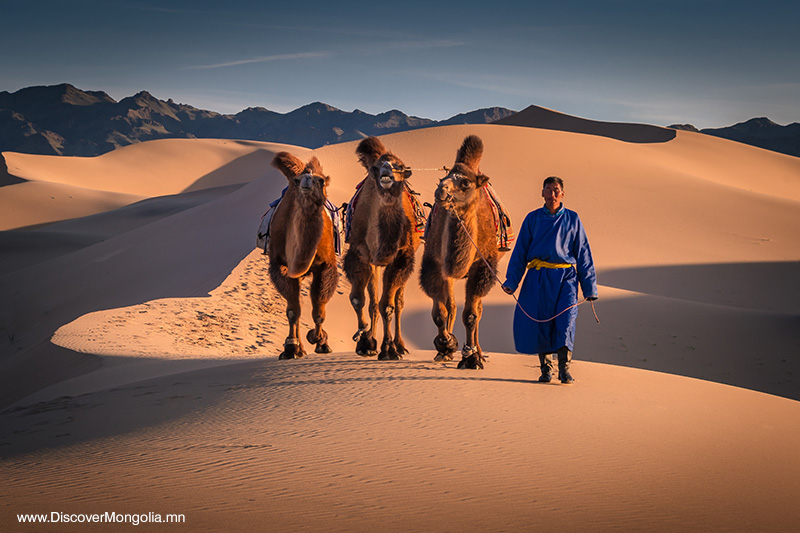
Distance from UB: 600 to 650 km south | Best Time: May to September | Don't Miss: Khongoryn Els at sunset, camel trekking, Bayanzag at dusk
🏜️ Gobi Desert → 600–650 km south → Drive (8–10 hrs) or fly → Best: May–September → Sand dunes, dinosaur fossils
🏔️ Lake Khuvsgul → 778 km north → Fly to Moron + drive → Best: June–August → Crystal-clear alpine lake
🌲 Terelj National Park → 55 km east → 1-hour drive → Best: May–October → Turtle Rock, scenic valleys, easy day trip
🐎 Hustai National Park → 100 km southwest → 2-hour drive → Best: April–October → Wild Przewalski's horses and steppe wildlife
⛰️ Khangai Mountains → 460–700 km west → Drive to Tsetserleg → Best: June–September → Orkhon Waterfall, volcanic landscapes, hot springs
🦅 Altai Mountains & Bayan-Ölgii → 1,700 km west → Fly to Ölgii (2.5 hrs) → Best: September–October → Eagle hunters and Mongolia's highest peaks
🏛️ Orkhon Valley → 360 km west → 5–6 hour drive → Best: June–September → Ancient Karakorum and UNESCO-listed landscapes
🦢 Uvs Nuur Basin → 1,200 km west → Fly to Ulaangom → Best: June–August → UNESCO Biosphere Reserve and exceptional birdlife
🌾 Dornod (Eastern Mongolia) → 650 km east → Drive (10–12 hrs) → Best: June–August → Vast grasslands and gazelle migration
🏙️ Ulaanbaatar → 0 km → You're already here → Best: May–September → Gandan Monastery, museums, cultural performances, and local cuisine
Which Mongolia destination is best for first-time visitors?
The classic first-timer's combination is Ulaanbaatar (2 days) plus Terelj National Park (1 to 2 nights) plus Gobi Desert (4 to 5 days). This covers the nomadic ger camp experience, dramatic desert landscapes, and dinosaur fossil history in a manageable 10-day circuit. Hustai National Park can easily be added for a half-day to see Przewalski horses.
Which destinations require domestic flights?
Lake Khuvsgul (fly to Moron, 1.5 hours from UB), Bayan-Ulgii/Altai Mountains (fly to Ulgii, 2.5 hours), and Uvs Nuur (fly to Ulaangom, 2 hours) all require domestic flights. The Gobi Desert, Terelj, Hustai, Orkhon Valley, and Khangai Mountains can all be reached by road from UB, though journey times range from 1 to 12 hours.
Can I visit multiple destinations in one trip?
Yes, the standard approach is to combine 2 to 4 destinations in a single itinerary. A popular 10-day circuit combines UB, Terelj, and the Gobi. A 14-day trip might add Lake Khuvsgul or the Orkhon Valley. Three weeks or more is needed to include western Mongolia.
Which destinations are best for families with children?
Terelj National Park, the Gobi Desert (Khongoryn Els camel rides are a highlight for children), and Hustai National Park are all very family-friendly. The distances are manageable, roads to these destinations are relatively decent, and the activities -- camel riding, horse riding, watching wild horses -- are memorable for children of all ages.
When is the worst time to visit Mongolia's destinations?
November through April is unsuitable for most destinations. December through February can see temperatures drop to -40C in some regions. Roads become icy and some passes are impassable. Many ger camps close for the winter season.
Do I need a guide for all destinations?
A local guide is strongly recommended for all destinations outside Ulaanbaatar and the immediate surrounds of Terelj. There are no road signs on most rural tracks, traditional roaming is non-existent in valleys, Mobicom/Unitel 4G towers exist near village centers, and Starlink satellite internet is now widely used by rural tour operators. , and no rescue services if something goes wrong.
Discover Mongolia has organized tailor-made tours since 2004.
We handle flights, accommodation, guides, vehicles — you focus on the journey.