About Mongolia
Mongolia is truly one of the world's last undiscovered travel destinations and the safest country to visit.
Southern Mongolia
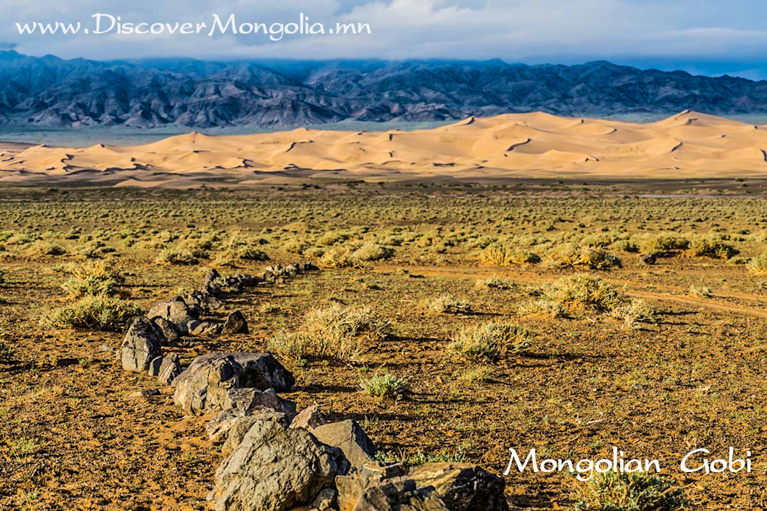
Southern Mongolia centers on the Gobi Desert, home to sand dunes, fossil-rich cliffs, canyons, and rare wildlife across the Great Gobi Strictly Protected Area, one of the world's largest biosphere reserves. Despite its desert reputation, sand covers only about 3% of the region's total territory, with the rest made up of gravel plain, rock formations, and desert steppe. Mongolians traditionally recognize 33 distinct named "Gobi" zones within the broader region, each with its own character. To read blog about Mongolian Gobi click_here
The Great Gobi Strictly Protected Area
The Mongolian government established the Great Gobi as a Strictly Protected Area in 1975, and UNESCO designated it as the fourth-largest biosphere reserve in the world in 1991. Split into two management zones, Great Gobi A (Southern Altai Gobi) and Great Gobi B (Dzungarian Gobi), the combined reserve protects a huge stretch of desert, mountain, and steppe habitat along Mongolia's border with China.
Despite its harsh, arid conditions, the reserve supports real biodiversity, including wild Bactrian camels, Gobi bears (found nowhere else in the world), Asiatic wild asses, snow leopards, argali wild sheep, and goitered gazelles. Dinosaur skeletons and fossilized eggs have also been preserved throughout the wider Gobi region, making it one of the most significant paleontological areas on Earth.
Key Destinations in Southern Mongolia
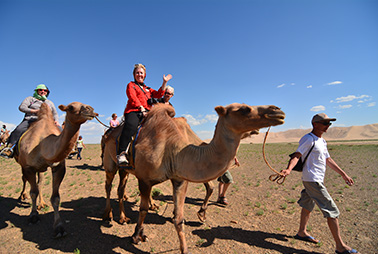
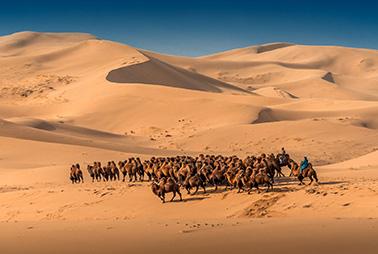
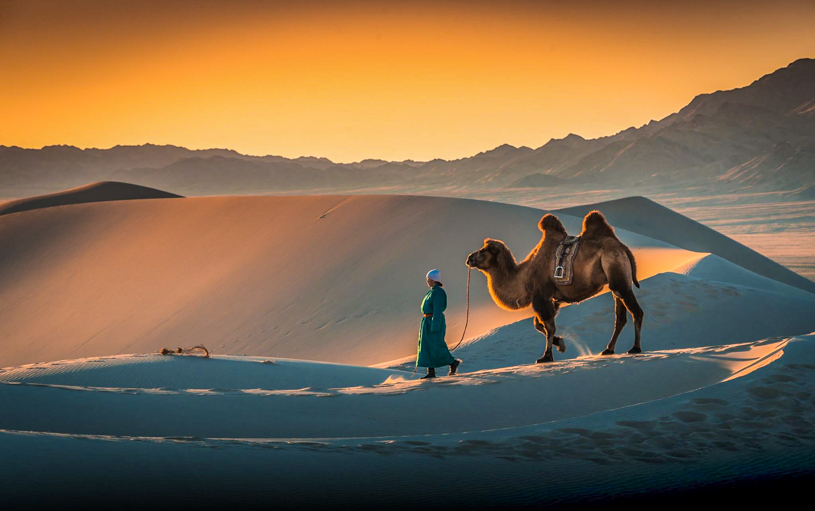
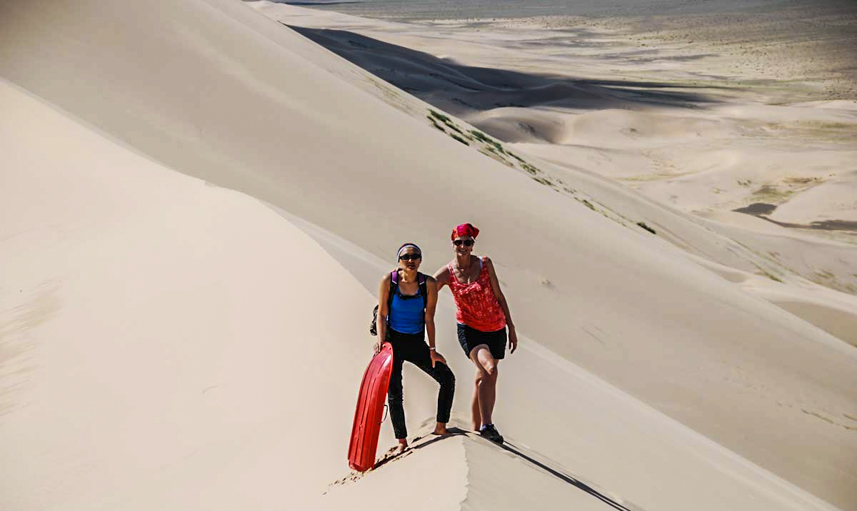
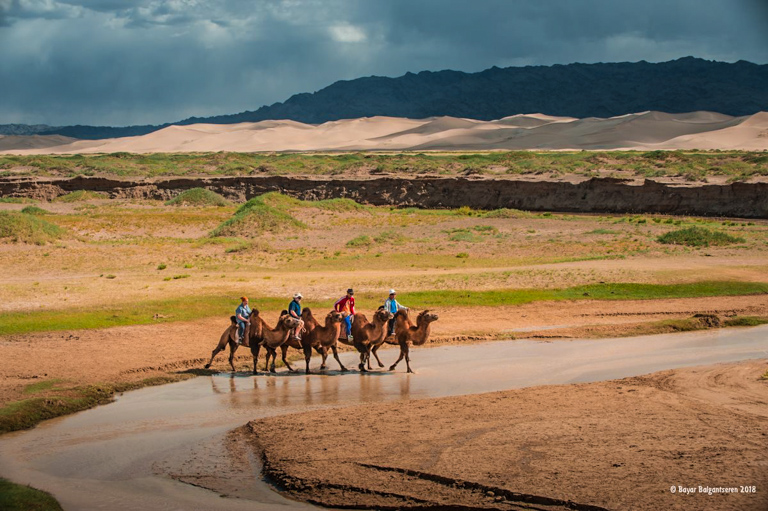
Khongor Sand Dunes – The Gobi's most famous dune field, known as the "Singing Dunes" for the sound they produce in strong wind, stretching roughly 100 km with some dunes reaching up to 300 meters high. A signature Gobi experience is climbing the dunes at sunset and riding a camel across them.
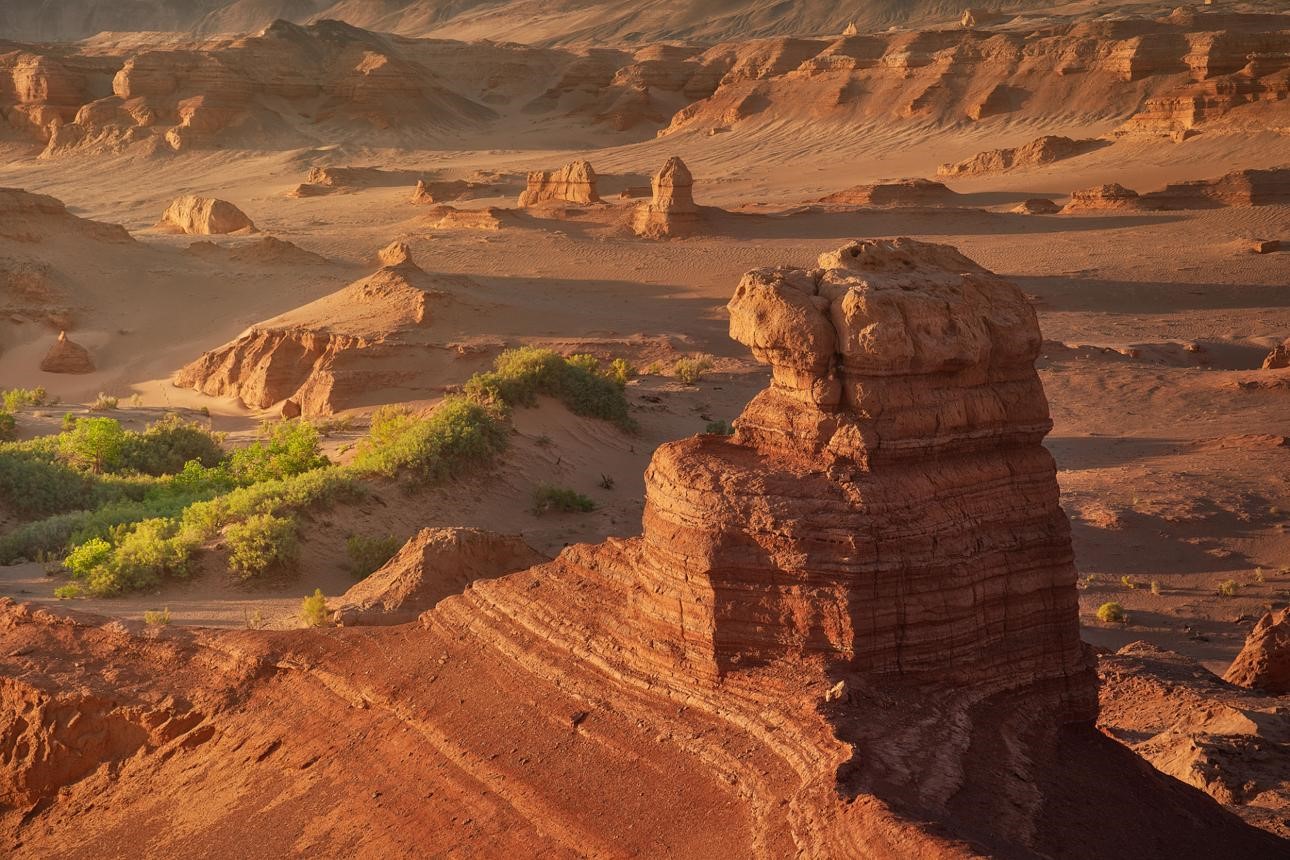
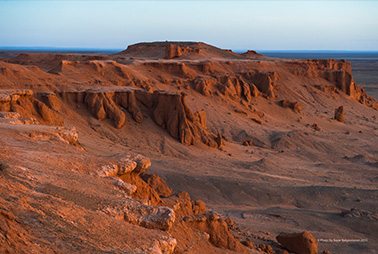
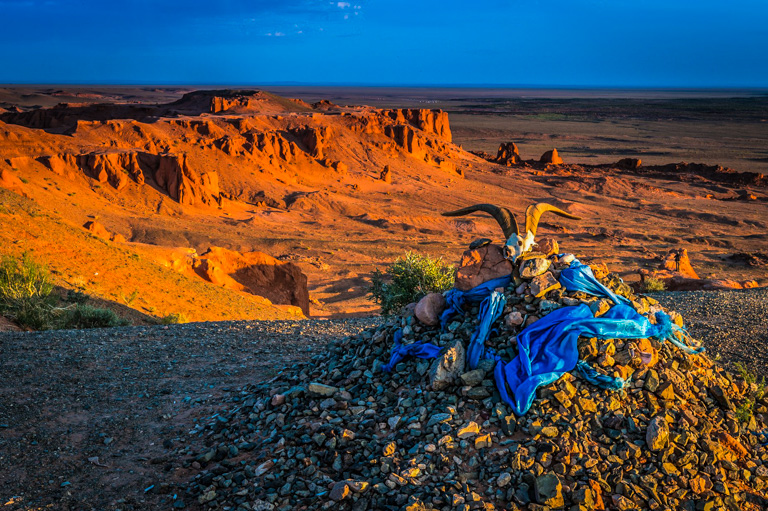
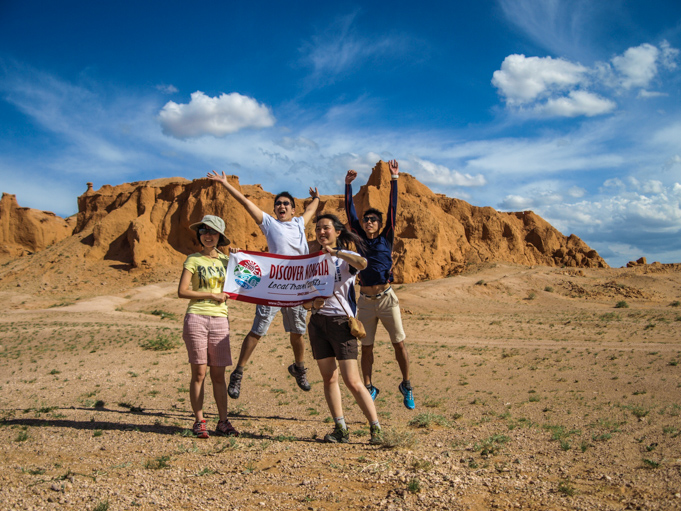
Bayanzag (Flaming Cliffs) – Striking red sandstone cliffs where the first confirmed dinosaur eggs in the world were discovered in the 1920s. The cliffs glow a deep orange-red at sunset, giving the site its name, and remain an active area of paleontological research.
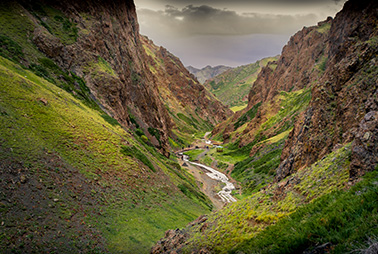
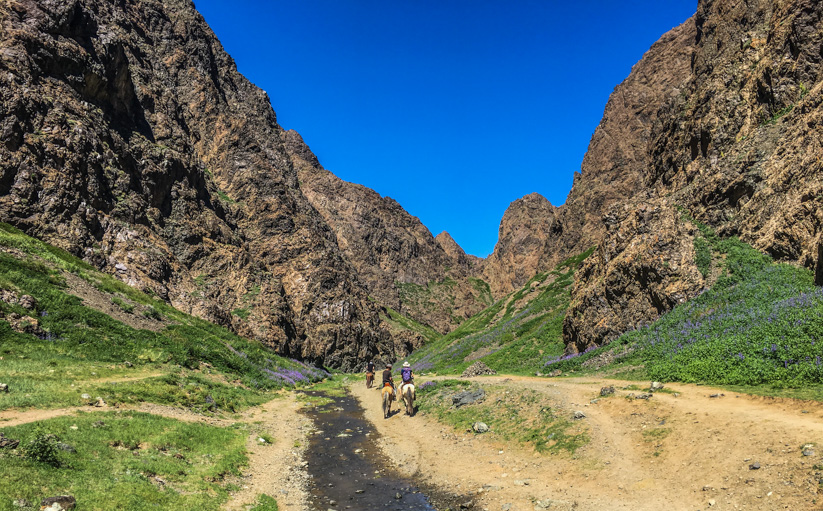
Eagle Valley (Yolyn Am) – A narrow, steep-walled canyon within Gobi Gurvansaikhan National Park, known for an ice field that can persist deep into summer despite the surrounding desert heat, along with resident lammergeyer and golden eagle populations.
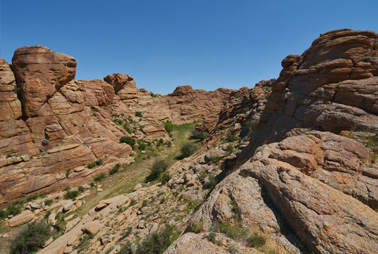
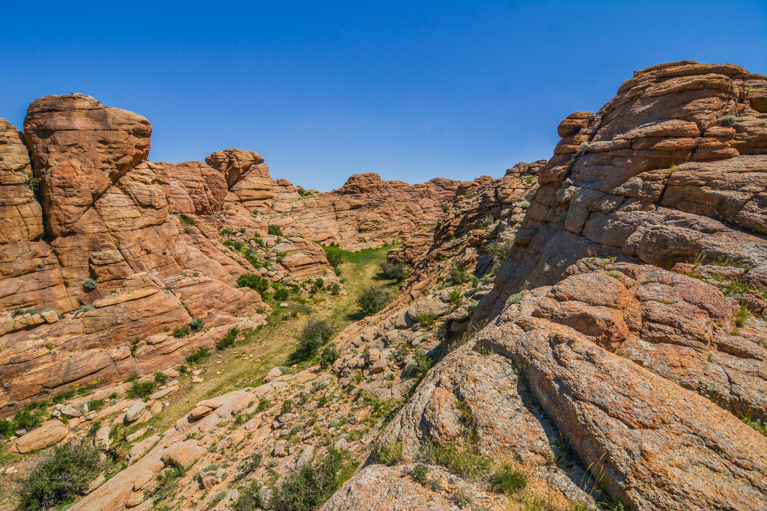
Baga Gazriin Chuluu – A striking granite rock formation rising from open steppe, with caves, ruins of an old monastery, and mineral springs, offering a quieter, less-visited stop compared to the Gobi's better-known sites.
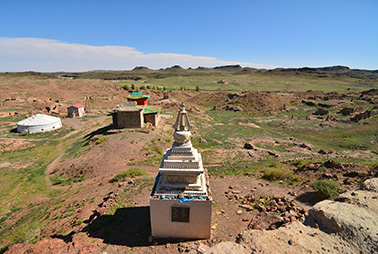
Ongi Temple – The ruins of a once-major Buddhist monastery complex on the Ongi River, largely destroyed during the religious purges of the 1930s, now a historical and reflective stop along southern travel routes.
Mongolian Camels – The Gobi is Mongolia's center of Bactrian camel culture, both the domesticated camels used for transport and, in the most remote reserve areas, some of the last wild Bactrian camels on Earth, a critically endangered species found in only a handful of locations worldwide.
How These Sites Compare
- Best for dramatic landscape photography: Khongor Sand Dunes and Bayanzag, both known for striking color and light at sunset
- Best for wildlife and nature: the Great Gobi Strictly Protected Area and Eagle Valley, home to rare species rarely seen elsewhere
- Best for history and culture: Ongi Temple, for its monastic ruins, and Baga Gazriin Chuluu, for its old cave hermitage sites
- Most physically active stop: Khongor Sand Dunes, where climbing the dunes is a genuine workout
- Most off-the-beaten-path: Baga Gazriin Chuluu, which sees far fewer visitors than the Gobi's headline sites
Planning a Trip Through Southern Mongolia
Most Gobi itineraries run 5 to 8 days from Ulaanbaatar, combining a handful of these sites into a single loop rather than visiting the region piecemeal. A common route links Baga Gazriin Chuluu, Bayanzag, Khongor Sand Dunes, and Yolyn Am in sequence, often flying into Dalanzadgad partway through to save driving time. Given the Gobi's size and the long distances between sites, traveling with an experienced guide or driver is strongly recommended.
Discover Mongolia Travel has operated since 2004 and organizes multi-day Gobi itineraries covering these destinations, tailored to the pace and interests of each traveler.
Frequently Asked Questions
Is the Gobi Desert all sand?
No, Sand dunes cover only about 3% of the region, with the rest made up of gravel plain, rock formations, and desert steppe.
What is the Great Gobi Strictly Protected Area?
It's one of the world's largest biosphere reserves, established in 1975 and recognized by UNESCO in 1991, protecting rare wildlife including wild Bactrian camels, Gobi bears, and snow leopards.
What are the must-see sites in southern Mongolia?
Khongor Sand Dunes, Bayanzag (the Flaming Cliffs), Eagle Valley (Yolyn Am), Baga Gazriin Chuluu, and Ongi Temple are among the region's most visited destinations.
Why is Bayanzag called the Flaming Cliffs?
Its red sandstone glows a deep orange at sunset, and it's also famous as the site where the first confirmed dinosaur eggs were discovered in the 1920s.
Can you see wild camels in the Gobi?
Wild Bactrian camels exist in the most remote parts of the Great Gobi Strictly Protected Area, though sightings are rare given how few remain and how protected their habitat is.
How many days do I need to see southern Mongolia?
Most travelers plan 5 to 8 days to cover the region's main sites, often combining a flight to Dalanzadgad with overland travel between destinations.
Is Yolyn Am (Eagle Valley) really icy in summer?
Yes, The canyon's deep, shaded walls allow an ice field to persist well into summer in some years, despite the surrounding desert heat.
Do I need a guide to visit southern Mongolia?
It's strongly recommended, since distances between sites are large, roads are often unpaved, and signage is limited outside major towns.t's strongly recommended, since distances between sites are large, roads are often unpaved, and signage is limited outside major towns.