What Meat Do Mongolians Eat? Mongolian Meat Guide (2026)
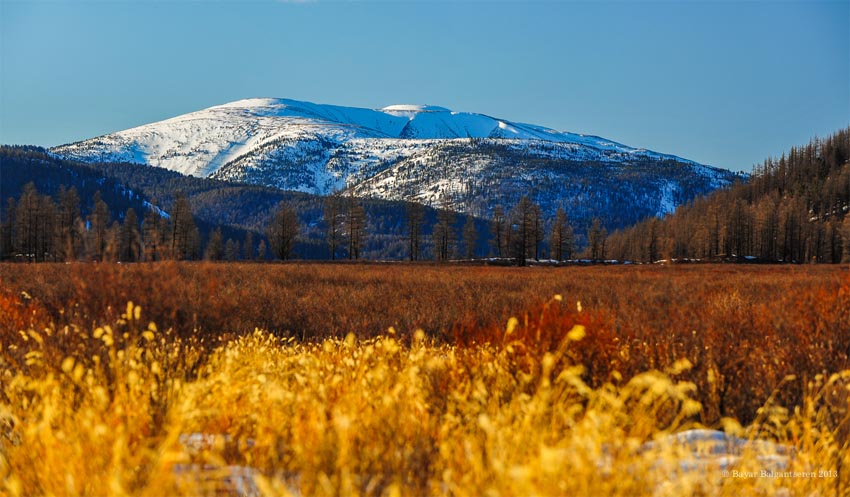
Burkhan Khaldun rises deep in the Khentii Mountains of northeastern Mongolia. Its importance goes far beyond scenery: the mountain is closely connected with Genghis Khan, Mongolian sacred-mountain traditions, The Secret History of the Mongols, and centuries of stories about the origins of the Mongol people.
It is also surrounded by one of history's greatest mysteries. Genghis Khan's burial place has never been confirmed, and Burkhan Khaldun remains one of the places most strongly associated with the search.
Burkhan Khaldun is sacred because of its deep connection with Mongolian mountain worship and with Genghis Khan. Historical and literary traditions associate the mountain with his early life, his recognition of sacred mountains, and possibly his burial.
UNESCO added Great Burkhan Khaldun Mountain and its surrounding sacred landscape to the World Heritage List in 2015. The site is recognized both for its association with the creation of the Mongol Empire and for its connection with The Secret History of the Mongols.
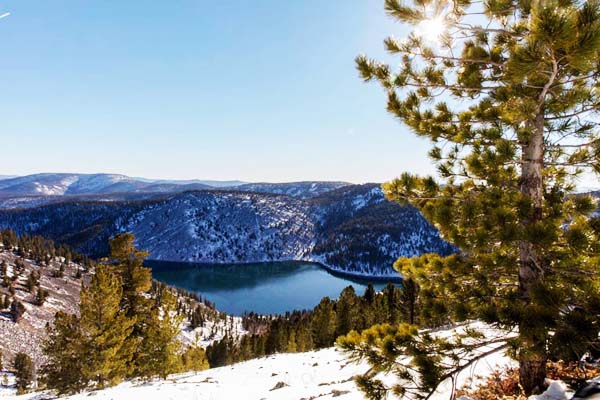
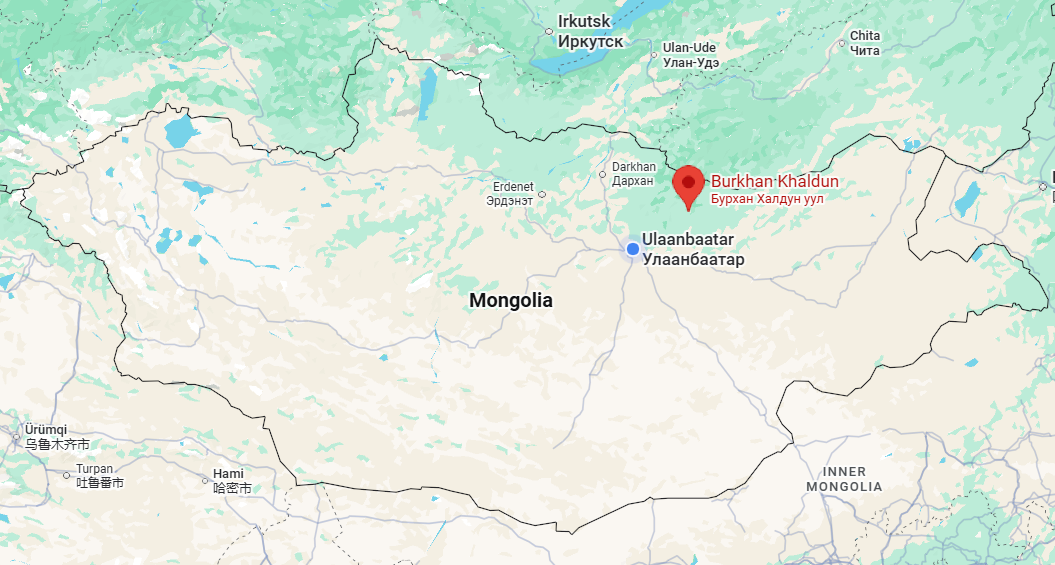
Burkhan Khaldun is located within the Khentii mountain region of northeastern Mongolia.
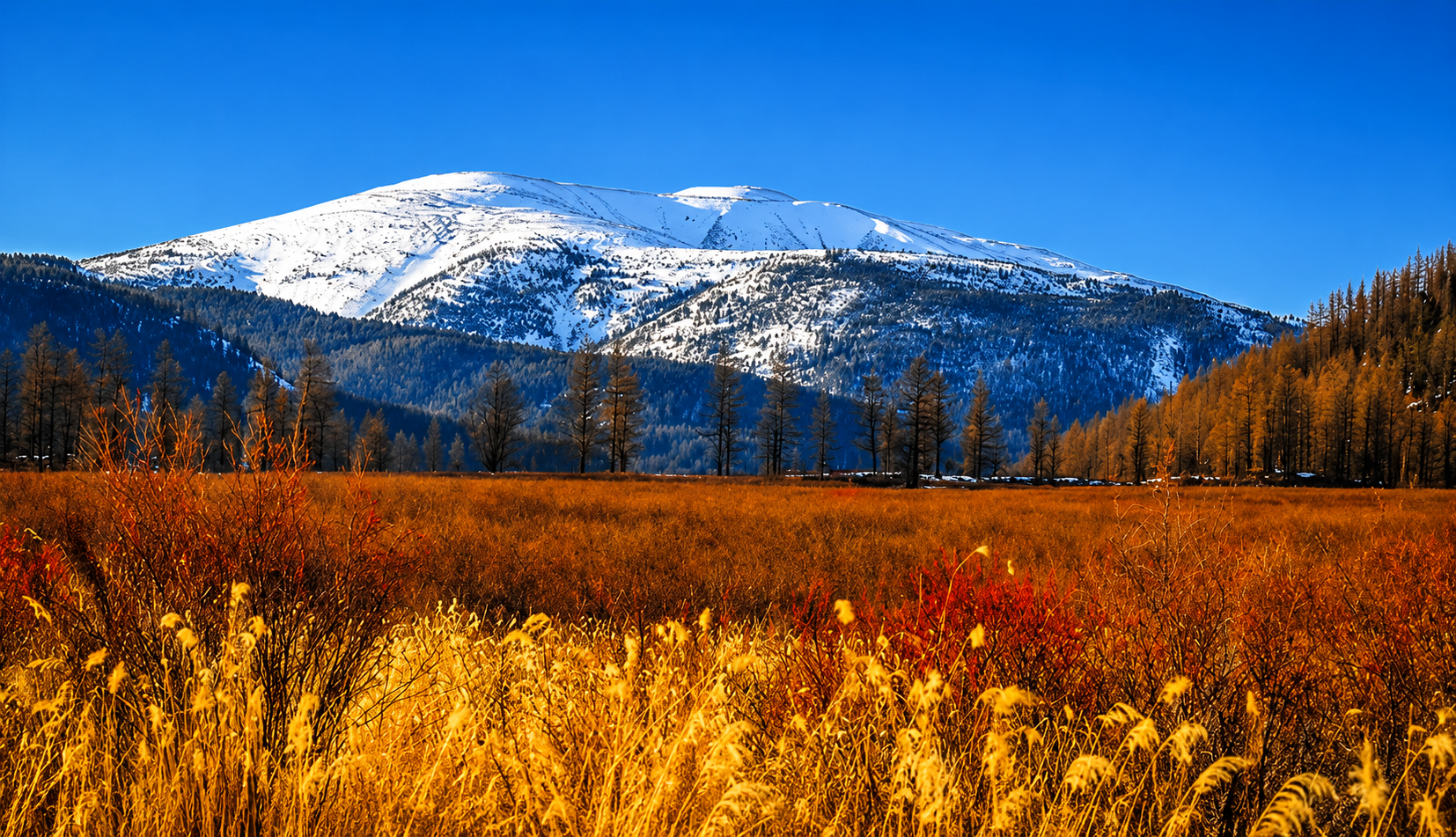
The landscape lies where the Central Asian steppe meets the forest environment of the Siberian taiga. Mountains, forests, grasslands, rivers, wetlands, and remote valleys combine to create a landscape that UNESCO describes as central to the sacred character of the site.
The area is also associated with the headwaters of major rivers including the Onon and Kherlen. These waterways appear repeatedly in the historical traditions connected with Genghis Khan and early Mongol history.
Burkhan Khaldun is one of the landscapes most closely associated with Genghis Khan, or Chinggis Khan, in Mongolian historical tradition.
UNESCO recognizes the mountain's direct connection with The Secret History of the Mongols, the major medieval work describing Temüjin's family origins, struggles, alliances, and rise to become Genghis Khan.
The historical tradition also connects Genghis Khan with the formal recognition of Burkhan Khaldun and other mountains as sacred places. UNESCO considers this relationship between mountain worship and the formation of the Mongol Empire important enough to form part of the site's World Heritage value.
One of the oldest stories connected with the mountain appears at the beginning of The Secret History of the Mongols.
The genealogy begins with Börte Chino, the Blue-Grey Wolf, and Qo'ai Maral, the Fallow Doe. The story places their descendants around the source of the Onon River near Burkhan Khaldun.
They belong to a legendary ancestry that eventually leads to the family line of Genghis Khan.
This should be understood as an origin tradition, not as a literal modern historical or biological account.
The old version of this blog presents the story but moves too quickly from legend to claims about Genghis Khan's political authority. It is more accurate to treat the Blue Wolf story as part of the literary and spiritual heritage surrounding the mountain.
This question needs careful wording.
Burkhan Khaldun and its wider Khentii landscape are strongly associated with Genghis Khan's origins, and UNESCO's nomination material discusses connections with his birthplace. However, that does not prove that he was literally born on the mountain itself.
Mongolian tradition more commonly identifies Deluun Boldog near Dadal, close to the Onon River in Khentii, as Genghis Khan's birthplace. Discover Mongolia already has a separate page specifically about that site.
It is therefore better to say that Burkhan Khaldun belongs to the wider sacred landscape of Genghis Khan's origins and early life rather than stating that his exact birthplace was on the mountain.
Nobody knows for certain.
Genghis Khan died in 1227, but his burial site has never been conclusively discovered. UNESCO describes Burkhan Khaldun as his reputed or possible burial place, not a confirmed tomb.
Researchers and archaeologists have investigated different parts of the Khentii region, but none has produced accepted proof of Genghis Khan's grave. UNESCO's own evaluation states that attempts to locate his burial have so far been unsuccessful.
Burkhan Khaldun remains one of the strongest candidates because of its sacred status, historical associations, and long connection with Genghis Khan.
But “possible burial place” is very different from “Genghis Khan's tomb.”
The existing article describes a feature called the “Black Crown” and suggests that an ovoo there could have been constructed over Genghis Khan's tomb.
That is an interesting story, but it should not be presented as archaeological evidence.
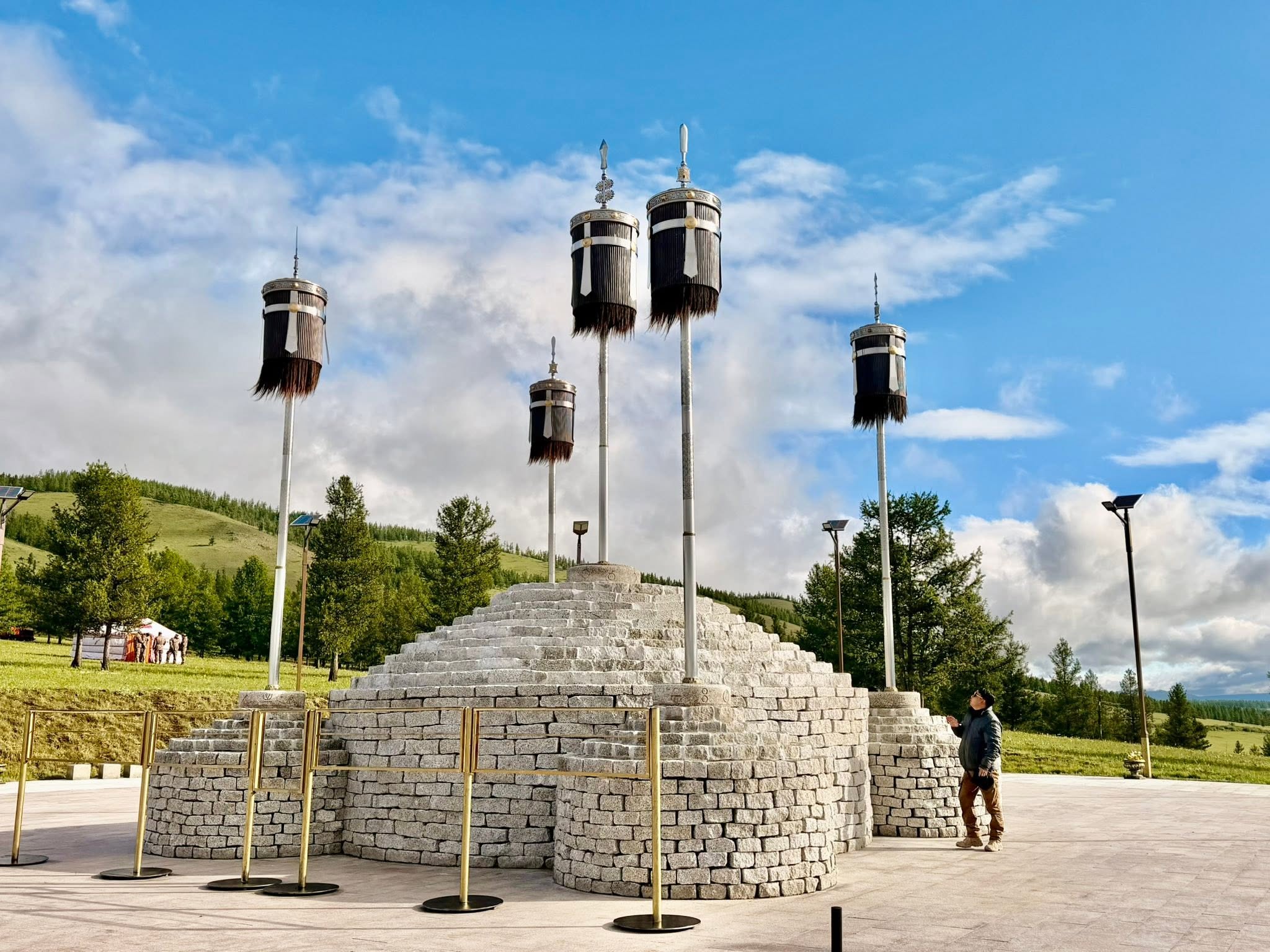
UNESCO documents three major stone ovoos along the sacred pilgrimage route. These cairns are places of worship, and some have been reconstructed over time. Archaeological investigation has not established that one of them covers Genghis Khan's burial.
The mystery is part of Burkhan Khaldun's appeal, but speculation should remain clearly labeled as speculation.
Several stories surrounding the mountain mix established evidence with folklore.
Keeping these categories separate makes the story more interesting, not less.
This is one of the most repeated stories about Genghis Khan's death.
According to later legends, members of the funeral procession killed people they encountered so that nobody could reveal the route to the grave. Some versions add further killings to make sure nobody who knew the burial place survived.
The old Discover Mongolia article presents this story too directly, saying that funeral onlookers “were massacred.”
It is safer to call this a burial legend rather than an established event.
What historians can say confidently is that Genghis Khan's burial location remained secret and has still not been confirmed.
Stories about families guarding Genghis Khan's burial region have existed for generations.
The current article specifically claims that 50 Darkhad families were appointed as guardians who continue to protect the secret location.
That exact claim is difficult to verify and should not be presented as a current factual arrangement.
There are historical traditions involving guardians of sacred or restricted areas associated with the Mongol royal family, but turning that into a story about exactly 50 modern families deliberately misleading visitors goes beyond the available evidence.
The rewrite therefore removes that claim.
UNESCO inscribed Great Burkhan Khaldun Mountain and its surrounding sacred landscape on the World Heritage List in 2015 under cultural criteria (iv) and (vi).
The recognition focuses on two major ideas.
First, Burkhan Khaldun reflects the formalization of sacred-mountain worship associated with Genghis Khan and the period when the Mongol peoples were being united into a new empire.
Second, the mountain has a direct connection with The Secret History of the Mongols, one of the world's most important sources for early Mongol history.
UNESCO also emphasizes the landscape itself. Its isolation, forests, grasslands, rivers, sacred ovoos, and pilgrimage routes are all part of the site's cultural meaning.
An ovoo is a sacred cairn traditionally made from stones, wood, or both.
Burkhan Khaldun has three major ovoos connected by a pilgrimage route. UNESCO describes a journey that begins around 20 km from the mountain and continues through sacred points toward the mountain.
Visitors may see blue khadag scarves and other offerings at ovoos.
When approaching an ovoo, remember that it is a place of worship rather than simply a scenic pile of stones.
Do not move offerings, climb on the cairn, or remove objects as souvenirs.
Yes, mountain worship remains a living tradition in Mongolia.
UNESCO notes that older mountain-worship practices declined after Buddhism became more influential but were revived strongly after Mongolia's democratic transition in the 1990s. Shamanic traditions and Buddhist elements are now often found together in modern ceremonies.
In 1995, Mongolia's president formally supported the revival of worship at Burkhan Khaldun, Bogd Khan Khairkhan, and Otgontenger. Burkhan Khaldun has since been recognized as a state-sacred mountain.
This means the mountain should not be viewed only as a historical attraction.
It remains a sacred place for people today.
Burkhan Khaldun should not be treated like an ordinary hiking mountain.
UNESCO states that, according to tradition, activities on the mountain itself other than worship have been forbidden. The World Heritage organization has also warned that increasing tourism could damage the mountain's isolation, sacred character, and archaeological landscape.
Local customs and access conditions can also apply to different parts of the pilgrimage route.
For travelers, the practical rule is simple: do not assume that reaching the summit is a normal tourism activity.
Always check current access requirements through local authorities, protected-area staff, or an experienced guide before traveling into the area.
Part of what preserves Burkhan Khaldun is its remoteness.
UNESCO describes the landscape as having little modern development, and its sacredness is closely connected with its isolation.
Travel can involve:
A visit is therefore very different from driving to the Genghis Khan Statue near Ulaanbaatar.
Burkhan Khaldun is better suited to travelers who are interested in history, sacred landscapes, remote nature, and respectful cultural travel.
Before planning a trip, remember that protecting the site is more important than reaching a particular point on the mountain.
A few practical rules help:
UNESCO specifically warns that uncontrolled tourism could threaten the sacred landscape and its sense of isolation.
Discover Mongolia has organized journeys across Mongolia since 2004, and remote Khentii travel is best planned around road conditions, protected-area rules, and respect for local sacred traditions.
Travelers sometimes confuse several places connected with Genghis Khan.
Each location tells a different part of the story.
Burkhan Khaldun's special importance comes from the combination of history, sacred landscape, literature, and mystery.
Why is Burkhan Khaldun sacred?
Burkhan Khaldun is sacred because of long traditions of mountain worship and its close association with Genghis Khan. UNESCO recognizes its connection with The Secret History of the Mongols and the formation of the Mongol Empire.
Is Genghis Khan buried on Burkhan Khaldun?
No, his tomb has never been conclusively found. Burkhan Khaldun is widely regarded as a possible or reputed burial area, but there is no confirmed archaeological proof of his grave there.
Was Genghis Khan born on Burkhan Khaldun?
No, it is not proven that Genghis Khan was born on the mountain itself. Mongolian tradition commonly identifies Deluun Boldog near Dadal as his birthplace, while Burkhan Khaldun belongs to the wider landscape associated with his origins and early life.
Is Burkhan Khaldun a UNESCO World Heritage Site?
Yes, Great Burkhan Khaldun Mountain and its surrounding sacred landscape were inscribed on the UNESCO World Heritage List in 2015. UNESCO recognizes it for both its historic importance and its connection with Mongolian sacred-mountain traditions.
Can tourists climb to the top of Burkhan Khaldun?
No, visitors should not assume the summit is open like an ordinary hiking destination. Sacred traditions and protected-area rules restrict activities, so current access conditions should be confirmed before traveling.
Did soldiers kill everyone who saw Genghis Khan's funeral procession?
No, this should not be presented as a confirmed historical fact. It is one of several later legends explaining how the location of Genghis Khan's grave remained secret.
What is an ovoo on Burkhan Khaldun?
An ovoo is a sacred cairn used in Mongolian worship traditions. Burkhan Khaldun has major ovoos along its pilgrimage route, and they remain active places of respect and worship rather than ordinary tourist monuments.
Is Burkhan Khaldun worth visiting?
Yes, for travelers interested in Genghis Khan, Mongolian history, sacred landscapes, and remote nature, the wider Burkhan Khaldun region can be extremely meaningful. Access must be planned carefully because protecting the sacred and natural landscape takes priority over ordinary sightseeing.
Discover Mongolia has organized tailor-made tours since 2004.
We handle flights, accommodation, guides, vehicles — you focus on the journey.