

What Meat Do Mongolians Eat? Mongolian Meat Guide (2026)
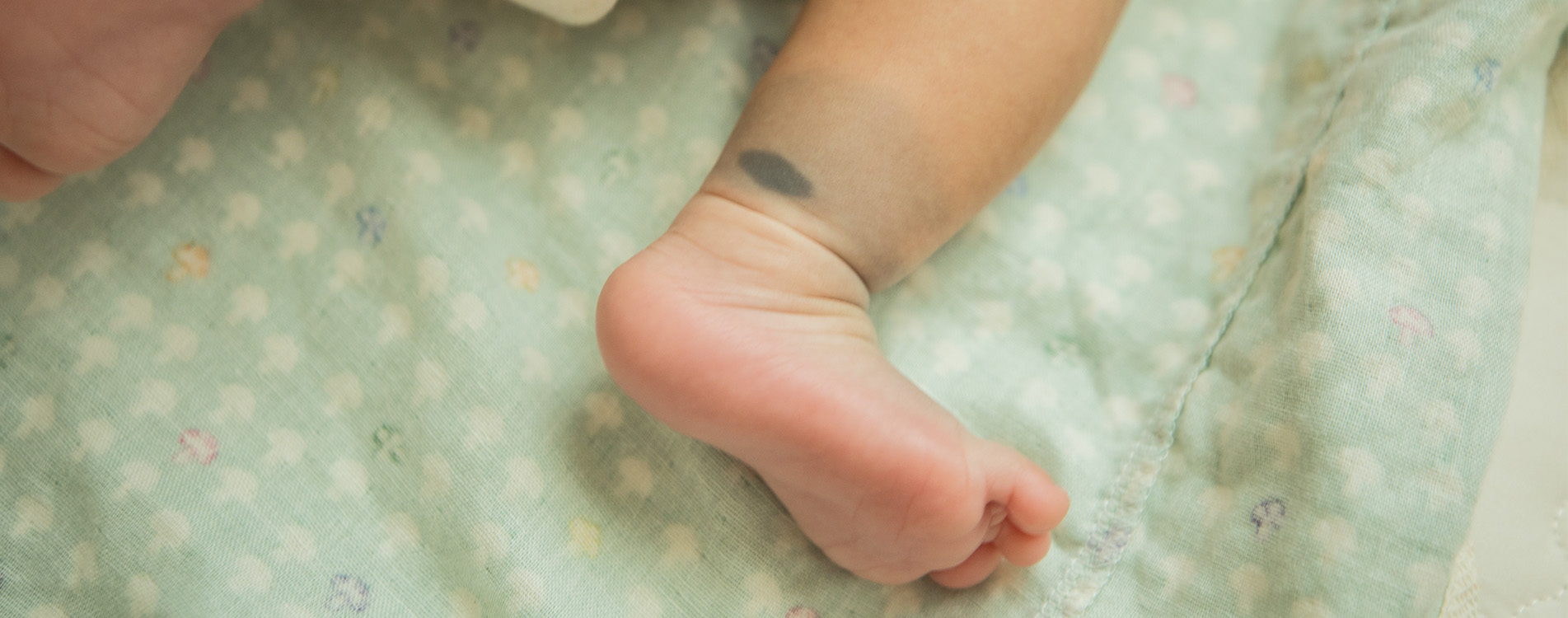
A Mongolian blue spot, now more often called congenital dermal melanocytosis, is a harmless bluish-gray birthmark that appears on a newborn's skin, most commonly on the lower back. It's caused by pigment cells (melanocytes) staying deeper in the skin than usual during fetal development, and it typically fades during childhood without treatment. The name comes from a 19th-century doctor's mistaken belief that it was more common among Mongolians specifically, and medical providers now increasingly use the more accurate term instead.
A Mongolian blue spot is a type of pigmented birthmark that appears soon after birth, usually as a flat, bluish-gray or slate-colored patch. It forms when melanocytes, the cells responsible for skin pigment, remain in the deeper layer of skin instead of moving to the surface during fetal development. The exact trigger for this isn't fully understood, though the underlying process is well documented.

The name comes from Erwin Bälz, a German anthropologist working in Japan, who named the birthmark in 1883 after observing it frequently in his Mongolian patients. He believed it was especially common among Mongolians specifically.
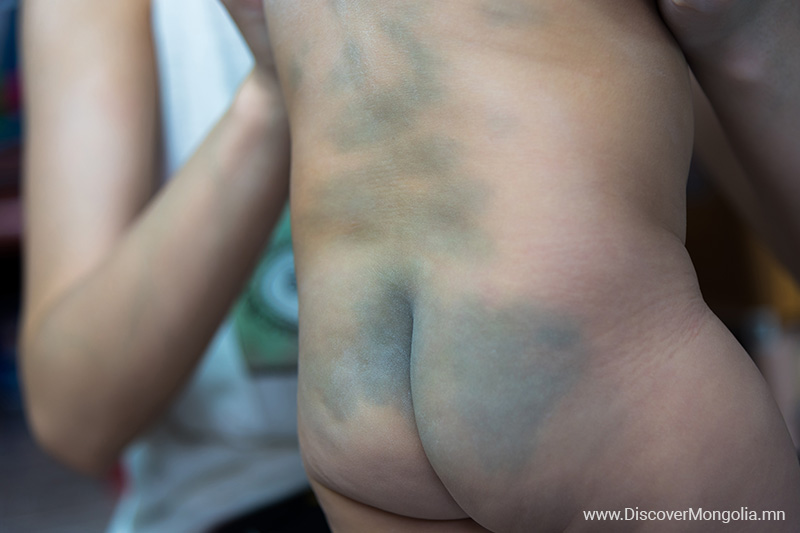
That assumption turned out to be inaccurate. The birthmark is common across many populations, not just Mongolian or East Asian ones, and appears in the majority of infants with darker skin tones worldwide, including Asian, African, and Hispanic populations, and in less than 10% of Caucasian infants.
Because the name doesn't reflect who's actually affected, medical providers increasingly use the term congenital dermal melanocytosis instead, since the older name is considered both inaccurate and outdated.
Prevalence varies significantly by population:
This wide variation is part of why the birthmark shows up so differently across different clinical settings, and why it's sometimes unfamiliar to parents or providers in populations where it's less common.
Congenital dermal melanocytosis is one of a small group of related pigmented birthmarks, distinguished mainly by location:
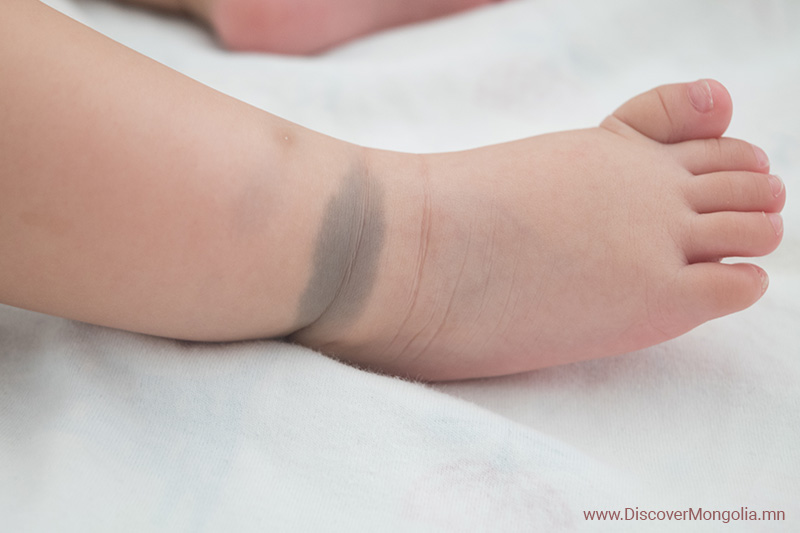
Unlike the lower-back version, facial or shoulder dermal melanocytosis is far less likely to fade on its own.
Congenital dermal melanocytosis itself is harmless. It isn't linked to any disease, disorder, or increased cancer risk, and it doesn't require treatment.
The more important practical issue is misdiagnosis. Because the marks can resemble bruising, they have, in documented cases, led to mistaken suspicion of child abuse, particularly when a child with the birthmark is examined by a provider unfamiliar with it, or when the marks appear in an unusual location. For this reason:
Most fade gradually during early childhood, often by school age, though the timeline varies by individual and by how deep and pigmented the original mark was. Marks in atypical locations, or unusually large ones, are somewhat more likely to persist longer. If a mark hasn't faded and a parent is concerned, a pediatrician can advise on options, including cosmetic laser treatment, which is optional and not medically necessary.
What is a Mongolian blue spot?
It's a harmless bluish-gray birthmark, now more often called congenital dermal melanocytosis, that appears on a newborn's skin, usually on the lower back.
Why is it called "Mongolian"?
A German anthropologist named it in 1883 after seeing it frequently in Mongolian patients in Japan, mistakenly believing it was specific to that population. It's actually common across many populations.
Is a Mongolian blue spot dangerous?
No, It's not linked to any disease or health risk and doesn't require treatment. It's important, though, to have it examined and documented by a pediatrician so it isn't mistaken for a bruise.
Can Mongolian blue spots be mistaken for bruises or child abuse?
Yes, this has been documented in medical literature, particularly when a provider is unfamiliar with the birthmark or when it appears in an unusual location. Documenting it early with a pediatrician can help prevent misunderstandings.
Do Mongolian blue spots go away?
Most fade gradually during childhood, often by school age, though some persist longer, especially if they're large or in an atypical location.
Are Mongolian blue spots only found in Mongolian babies?
No, Despite the name, they're common in Asian, African, and Hispanic infants, and occur in fewer than 10% of Caucasian infants. They are not specific to Mongolian ancestry.
What's the medical term for a Mongolian blue spot today?
Congenital dermal melanocytosis is the term increasingly used by medical providers, since it more accurately describes the condition without implying it's specific to one ethnic group.
How is a Mongolian blue spot different from a Nevus of Ota or Ito?
The main difference is location and permanence: Mongolian blue spots typically appear on the lower back and usually fade, while Nevus of Ota (face) and Nevus of Ito (shoulder area) usually persist for life.
Discover Mongolia has organized tailor-made tours since 2004.
We handle flights, accommodation, guides, vehicles — you focus on the journey.