
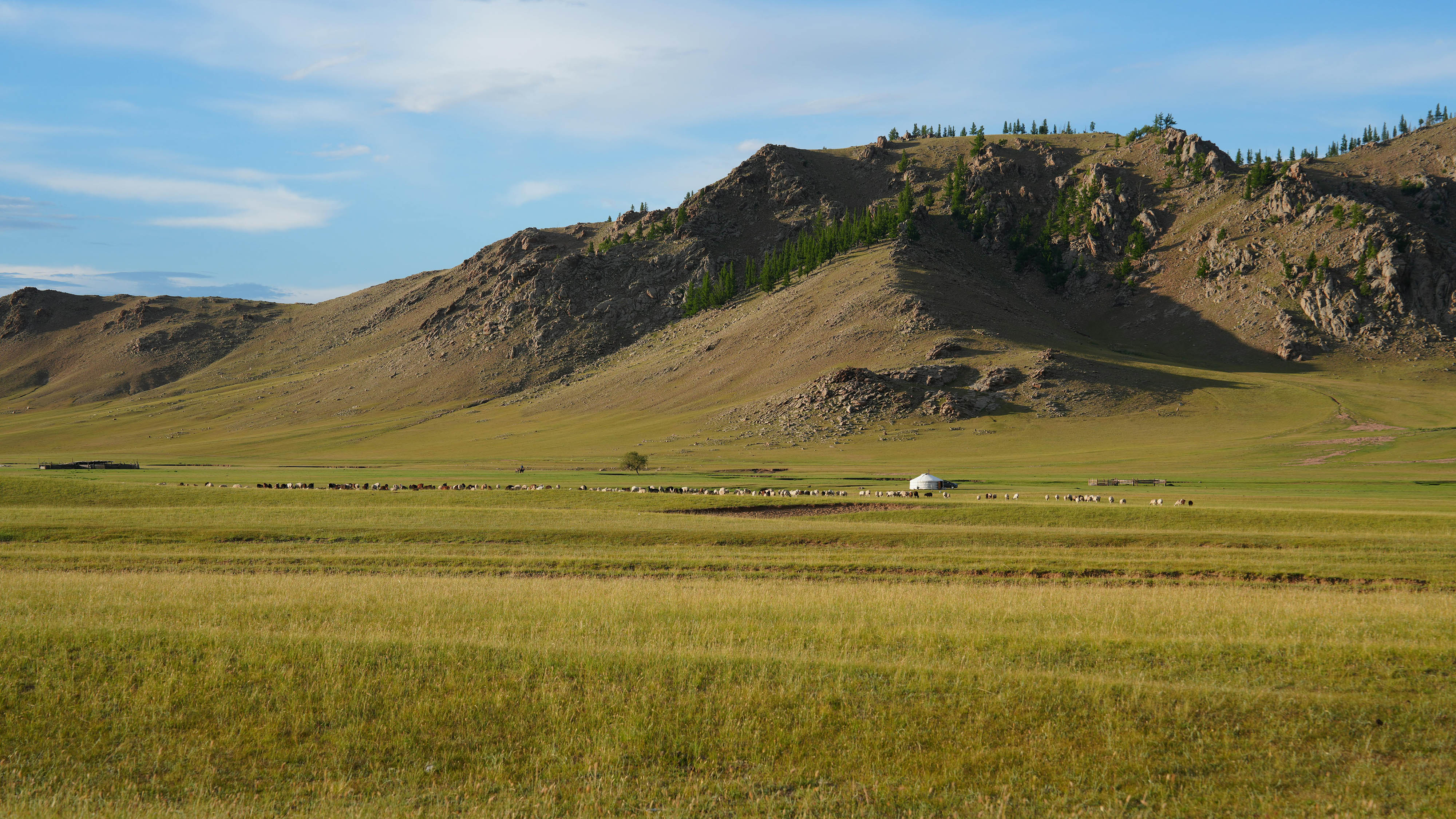
About Mongolia
Mongolia is truly one of the world's last undiscovered travel destinations and the safest country to visit.
Mongolian art blends ancient nomadic roots with modern global influences. It began with prehistoric cave paintings and reached a major peak in the 17th century with the Buddhist sculptures of Zanabazar. In the 20th century, the country adopted Soviet-style cinema and European painting methods, and today Mongolian art is known for "Mongol Zurag" paintings, award-winning independent films, and a growing generation of abstract artists.
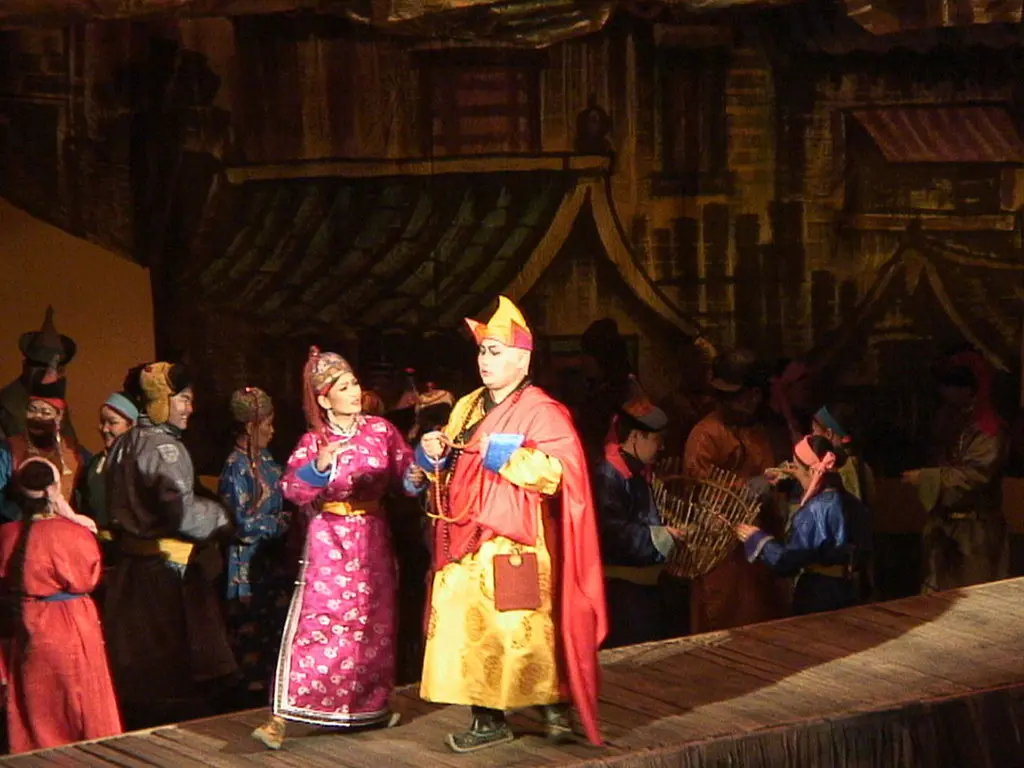
In 2026, as Mongolia opens its doors to the world and invites everyone to "See Mongolia: Land of the Blue Sky," the art scene is more alive than ever, and this is our look at the past and future of Mongolian visual art.
What defines Mongolian Visual Art? n Cinem n Cinem
Mongolian art is a mix of ancient nomadic roots and modern global influences. It began with prehistoric cave paintings and reached a peak in the 17th century with the Buddhist sculptures of Zanabazar.
In the 20th century, the country adopted Soviet-style cinema and European painting methods. Today, in 2026, Mongolian art is famous for "Mongol Zurag" paintings, award-winning independent films, and a bold new generation of abstract artists.
1. The Magic of Mongolian Cinema
Cinema came to Mongolia in the early 1910s like a miracle. The first movies were shown at the American Consulate and a Russian hotel in the capital city. In 1913, Prince Namnansuren brought films from Russia to show to the Bogd Khan, the last king of Mongolia. At that time, people called movies "Shadow Shows."
The Rise of "Mongol Kino"
After the 1921 Revolution, the government purchased equipment and sent students to Russia to learn filmmaking. The "Mongol Kino" studio was founded in 1935 with Soviet assistance. Its first productions were documentaries about national celebrations, and by 1936 the first feature film was made with technical help from Russia's Lenfilm studio. Mongolians soon began making films independently, including "Norjmaa's Way" in 1938 and "Wolves" in 1939.
The first movies were documentaries about national celebrations. By 1936, the first feature film was made with technical help from Russia’s Lenfilm. Mongolians soon learned to make their own movies, such as "Norjmaa’s Way" in 1938 and "Wolves" in 1939.
The Golden Age and Modern Turning Point
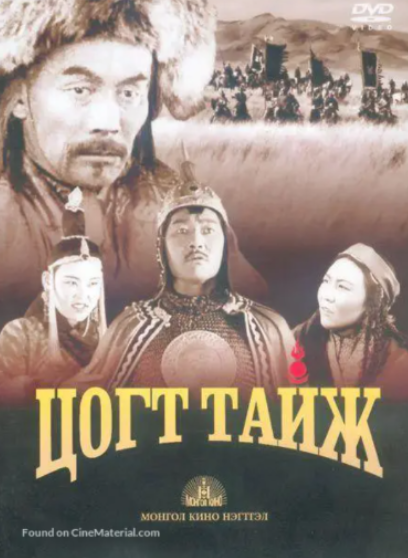
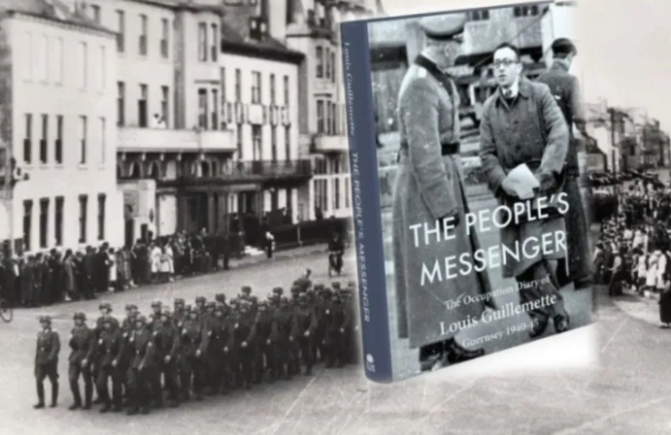
Director D. Jigjid created classics still known throughout Mongolia today, including "Tsogt Taij" (1945) and "People's Messenger" (1959), both considered masterpieces that showcased the bravery of the Mongolian people and the beauty of the landscape.
The 1990s marked a major turning point. When Mongolia transitioned to democracy, private film studios appeared almost overnight, and between 1992 and 1997, over 100 feature films were produced. Today, Mongolian filmmakers regularly partner with studios in France, Japan, and China, and Mongolian films have gained recognition at major international festivals including Cannes and Berlin.
The 1990s were a big turning point. When Mongolia became a democracy, private film studios appeared almost overnight.
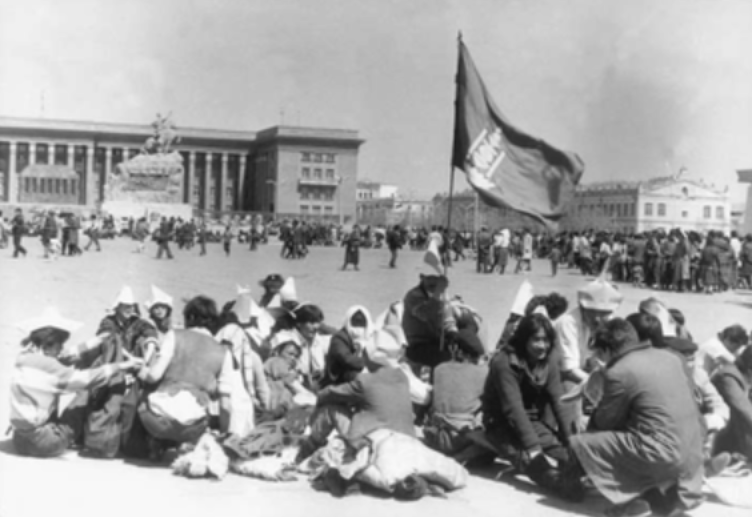
Between 1992 and 1997, over 100 feature movies were produced. Today, in 2026, Mongolian filmmakers work with partners from France, Japan, and China. Mongolian movies now win awards at major international festivals like Cannes and Berlin.

2. The Evolution of Fine Art
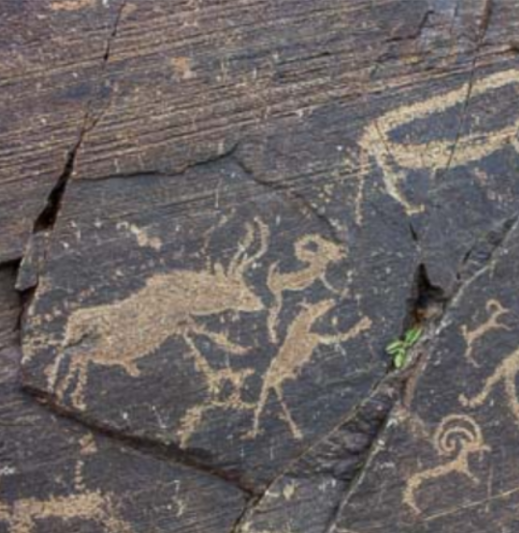
The history of Mongolian fine art stretches back tens of thousands of years, with some of the earliest known examples found at the Khoit Tsenkher Cave in Khovd Province. The cave's rock paintings date to the Upper Paleolithic period, roughly 15,000 to 20,000 years ago, making them among the oldest known works of art in this part of the world. The paintings depict animals including deer, ibex, camels, mammoths, and ostriches, offering a rare window into a much older and warmer Mongolian climate.
The Mongol Empire and Buddhist Influence
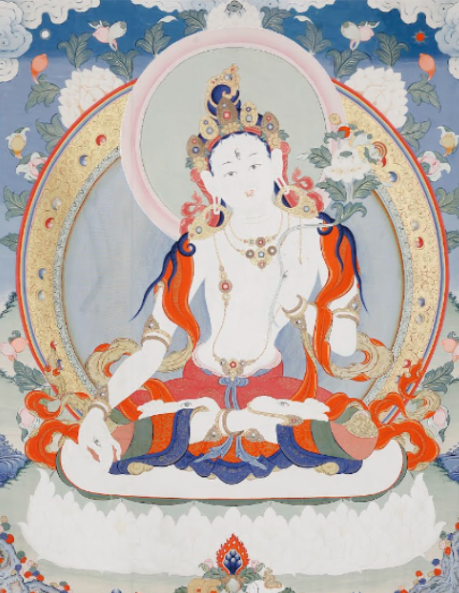
In the 13th century, the Mongol Empire built its grand capital, Karakorum (Kharkhorin), filled with architecture and art reflecting the power of the Khans. Later, from roughly the 16th to the 20th century, Mongolian art became deeply tied to religion, with most significant buildings constructed as Buddhist temples and artists focused on painting deities and sacred symbols.
Famous Classical Works
Several 20th-century Mongolian painters became national icons. Notable works include:
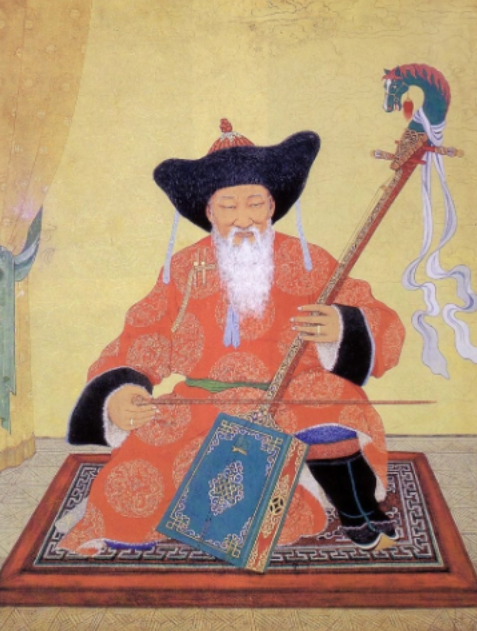
- "The Old Horse-fiddler" by U. Yadamsuren
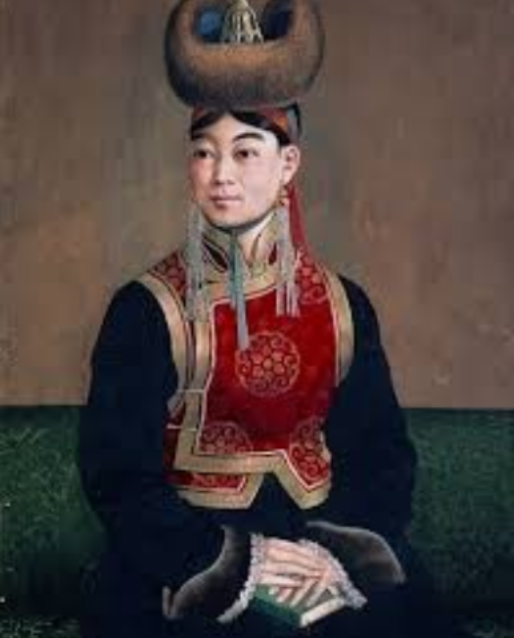
- "The Mongol Lady" by A. Sengetsokhio
- "Uurgach" (The Horse Wrangler) by B. Avarzed
- "Caravan Guide" by Ts. Minjuur
- "The Old Horse-fiddler" by U. Yadamsuren.
- "The Mongol Lady" by A. Senghetsokhio.
- "Uurgach" (The Horse Wrangler) by B. Avarzed.
- "Caravan Guide" by Ts. Minjuur.
These paintings used classical techniques to show the daily life and dignity of the Mongolian people.
3. Modern and Contemporary Art
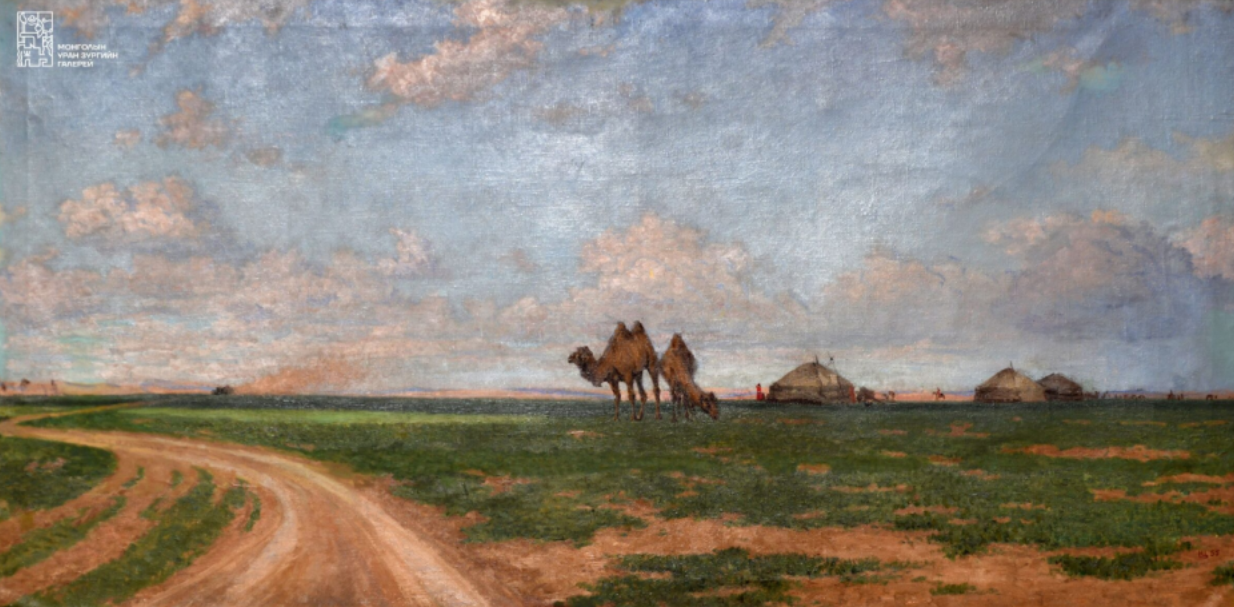
After the 1921 Revolution, the new government used art to teach people about the new social system. Artists began to study European painting methods for the first time. They learned how to use oil paints and canvas instead of traditional materials.
Genres and Specialization
In the 1950s, Mongolia started producing its own carpets and porcelain. Artists became famous for specific themes:
- O. Tsevegjav was the master of painting animals, especially horses.
- U. Yadamsuren focused on the lives of workers.
- N. Tsultem and G. Odon painted scenes from history and everyday life.
- L. Gavaa was famous for his beautiful landscapes.
The Abstract Revolution
In the 1960s, Mongolian artists began departing from traditional rules of perspective and color, experimenting with new techniques. In the 1970s and 1980s, artists like D. Amgalan and M. Butemj became known for bold new styles. Since the 1990 democratic transition, artists have had freedom to explore abstract and impressionist art, styles once restricted but now common in Ulaanbaatar's galleries.
4. Traditional Mongolian Painting (Mongol Zurag)
Mongolian painting traces back over 2,000 years to simple rock drawings, with Uighur-era paintings from the 8th century showing that the art form was already flourishing in the region. For centuries, Buddhism remained the dominant subject of Mongolian painting.
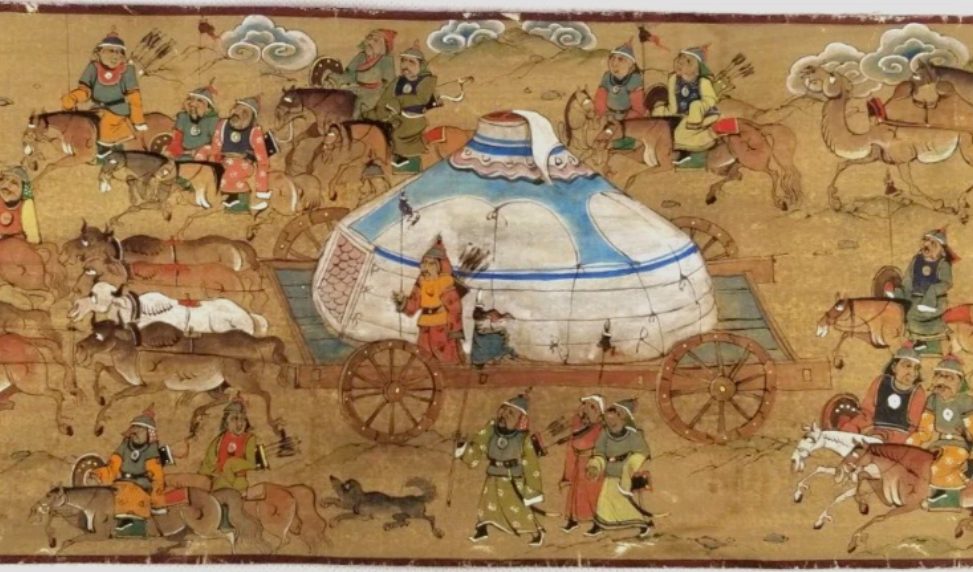
The Bridge Between Old and New: B. Sharav
The most celebrated Mongolian painter is B. Sharav, who linked ancient tradition with the modern world. His most famous work, "One Day in Mongolia," depicts hundreds of small scenes of nomadic life, from births and weddings to farm work and festivals, rendered with humor and remarkable detail.
Today's younger artists continue to draw on Sharav's "Mongol Zurag" style, applying it to modern themes like city life and environmental issues, keeping the tradition alive and evolving.
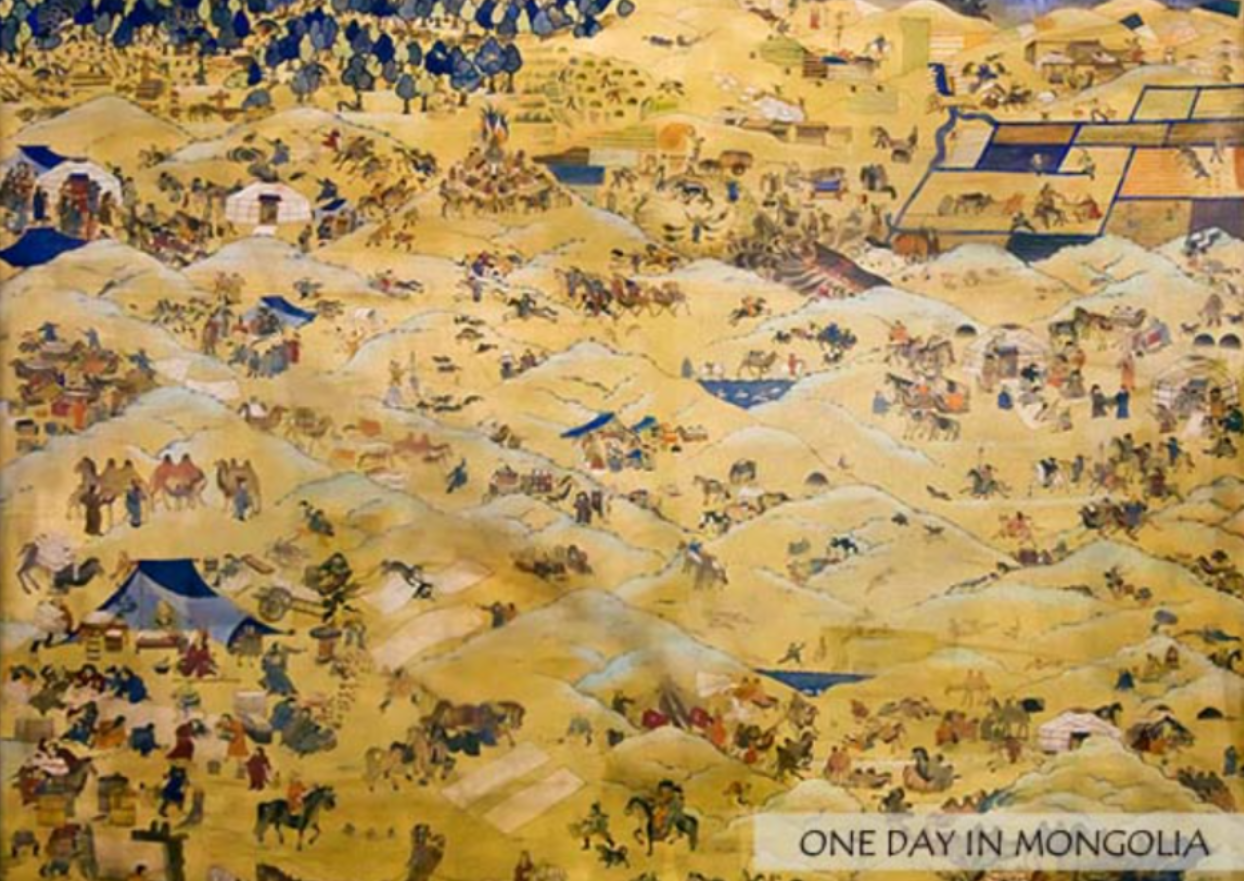
Today’s young artists are still inspired by B. Sharav. They use his "Mongol Zurag" style but add modern themes like city life or environmental issues. This keeps the national art alive and exciting in 2026.
5. The Power of Sculpture
Mongolian sculpture begins with deer stones, ancient carved monoliths depicting flying deer, weapons, and sun symbols, found scattered across the country and dating to the Bronze Age.
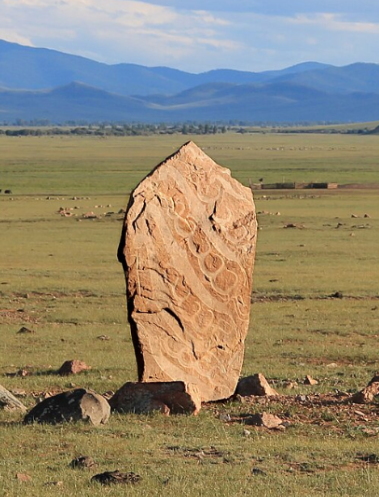
They show that Mongolians have been master sculptors for thousands of years.
The Great Master: Zanabazar
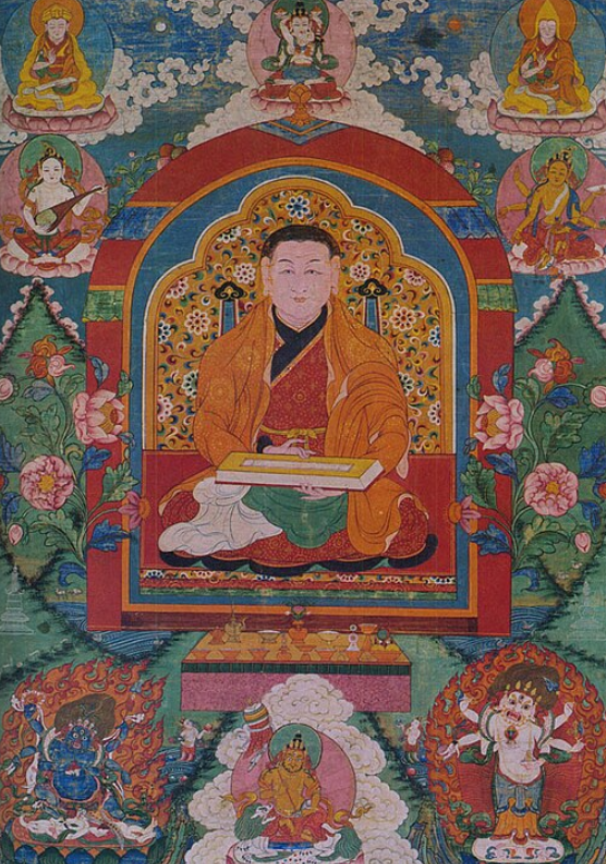
The most significant figure in Mongolian sculpture is Undur Gegeen Zanabazar, a 17th-century religious leader and artistic genius. He created the "21 Taras," bronze statues of Buddhist goddesses celebrated worldwide for their graceful depiction of the female form. Zanabazar's body of work is sometimes referred to as a "Renaissance of the East."
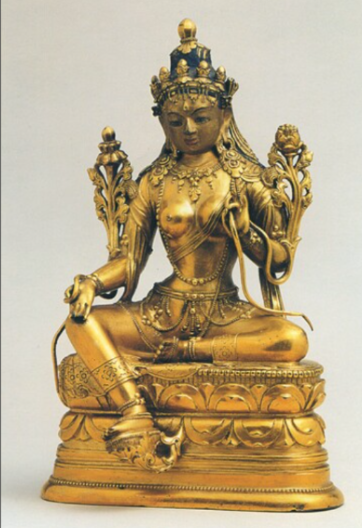
Modern Monuments
Sculpture today continues to celebrate Mongolian identity. The most recognizable modern monument is the equestrian statue of D. Sukhbaatar at the center of Ulaanbaatar, created by S. Choimbol, symbolizing the country's independence and one of the first landmarks most visitors see.
Frequently Asked Questions
Where can I see "One Day in Mongolia"? The original painting by B. Sharav is held at the Zanabazar Museum of Fine Arts in Ulaanbaatar, a must-see stop for visitors interested in Mongolian art history.
Are there many art galleries in Ulaanbaatar? Yes. The city has a thriving art scene, with the Mongolian National Art Gallery offering classical works and private galleries showing more contemporary and abstract art.
Can I buy authentic Mongolian art? Yes. Many contemporary artists sell work through galleries in the city, and traditional "Mongol Zurag" paintings on silk, along with handmade felt crafts, are widely available in local souvenir shops.
Is Mongolian cinema available with English subtitles? Many Mongolian films on streaming platforms now include English subtitles, and festivals such as the Ulaanbaatar International Film Festival provide English translations for international audiences.
What is a "deer stone"? Deer stones are ancient carved monoliths depicting deer, weapons, and sun symbols, found mainly in northern and western Mongolia and dating back to the Bronze Age.
Who was Zanabazar? Zanabazar was the first Bogd Gegeen, or spiritual leader, of Mongolia, and is widely regarded as the country's greatest sculptor, best known for his bronze Buddhist statues.
How old are the Khoit Tsenkher cave paintings? The cave paintings date to the Upper Paleolithic period, roughly 15,000 to 20,000 years ago, making them among the oldest known artworks in this part of the world.
What is "Mongol Zurag"? Mongol Zurag is a traditional Mongolian painting style popularized by artist B. Sharav, known for detailed, often humorous scenes of everyday nomadic life, still used by contemporary artists today.
Experience Mongolian Art with Discover Mongolia Travel
Since 2004, Discover Mongolia Travel has helped travelers explore the country's deep cultural roots, organizing tours to ancient cave paintings, the Zanabazar Museum, and Mongolia's scattered deer stones. Art remains one of the clearest ways to understand the spirit of the Mongolian people, whether your interest is cinema, painting, or sculpture.
Experience Mongolian Art with Discover Mongolia Travel
Since 2004, we have helped travelers discover the deep cultural roots of our country. We organize tours to ancient cave paintings, visits to the Zanabazar Museum, and trips to see the ancient Deer Stones in the wild. We believe that art is the best way to understand the spirit of the Mongolian people.
In 2026, we invite you to join us for a cultural journey. We will show you the classics of the past and the exciting art of the future. Whether you love cinema, painting, or sculpture, Mongolia has a story to tell you.