
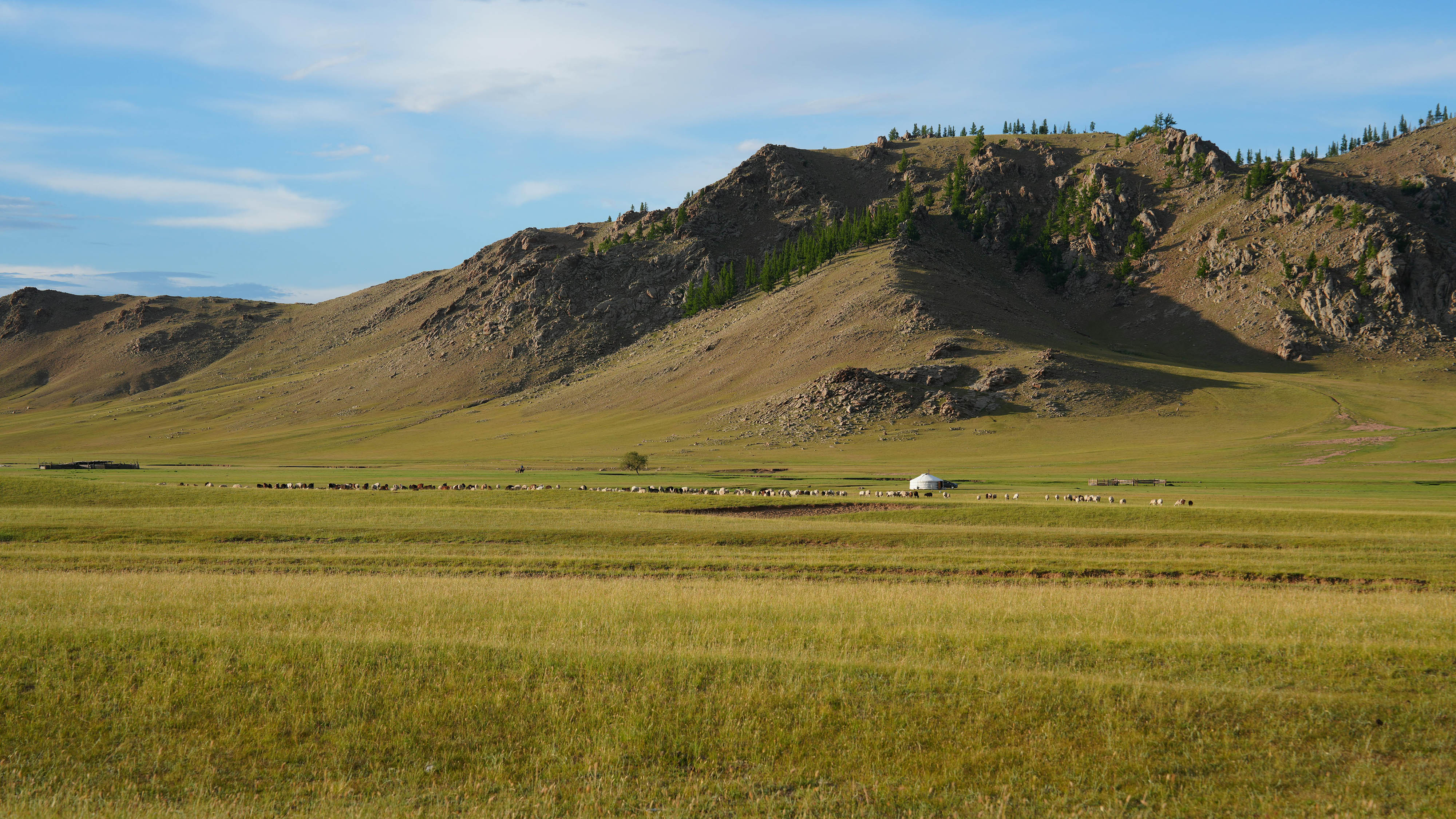
About Mongolia
Mongolia is truly one of the world's last undiscovered travel destinations and the safest country to visit.
A ger is a traditional Mongolian dwelling: a round, portable home built from a collapsible wooden frame covered in layers of felt and canvas, designed to be assembled or taken down in just a few hours. Known outside Mongolia as a "yurt," a Russian-derived term Mongolians don't generally use themselves, the ger remains in everyday use, both among rural herding families and, increasingly, among city residents on the outskirts of Ulaanbaatar.
What Is a Mongolian Ger?
A ger is a traditional Mongolian home built specifically for mobility and extreme weather. Its round shape resists strong wind, while thick layers of felt provide insulation that keeps the interior warm in winter and comparatively cool in summer.
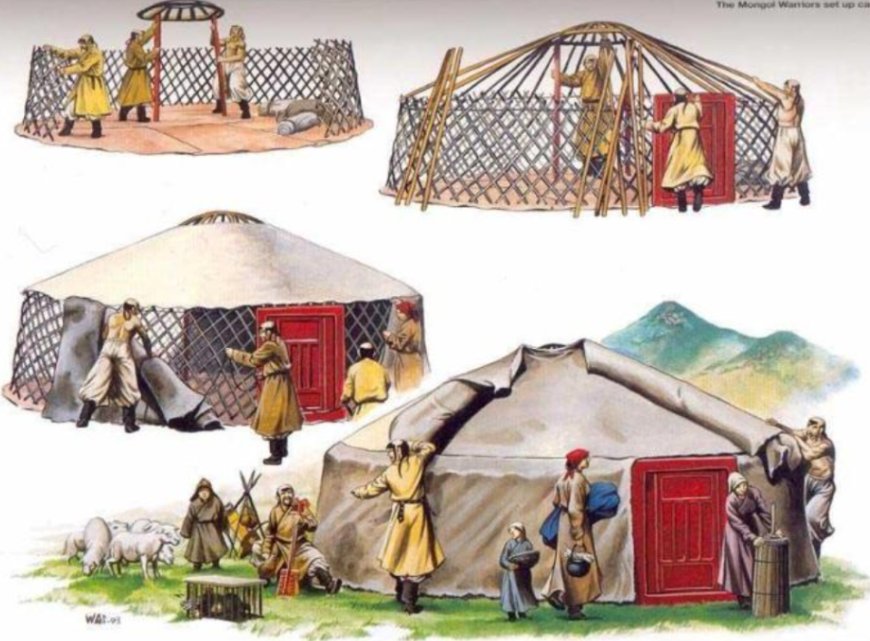
Unlike a permanent house, a ger can be packed up, transported, and rebuilt within a few hours, an essential feature for herders who move with the seasons.
Key characteristics:
- Circular shape that deflects wind and helps retain heat
- Portable, collapsible design that can be assembled or taken down quickly
- Natural materials, primarily wood and sheep wool felt, for insulation
- Built without nails, traditionally held together with wooden joints and rope
The Parts of a Ger
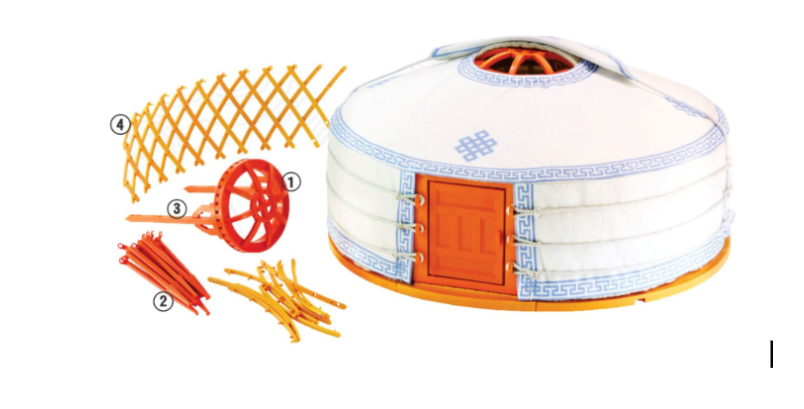
Understanding a ger's structure makes it easier to appreciate the engineering behind it:
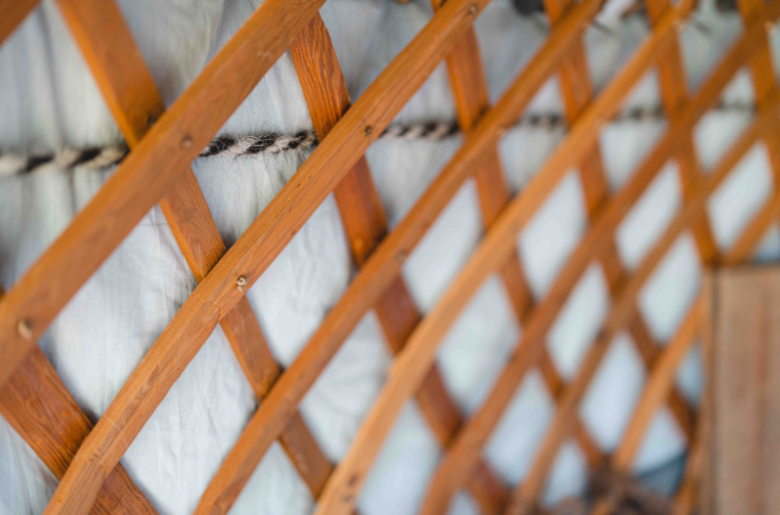
- Khana – the expandable wooden lattice wall sections that form the ger's circular frame
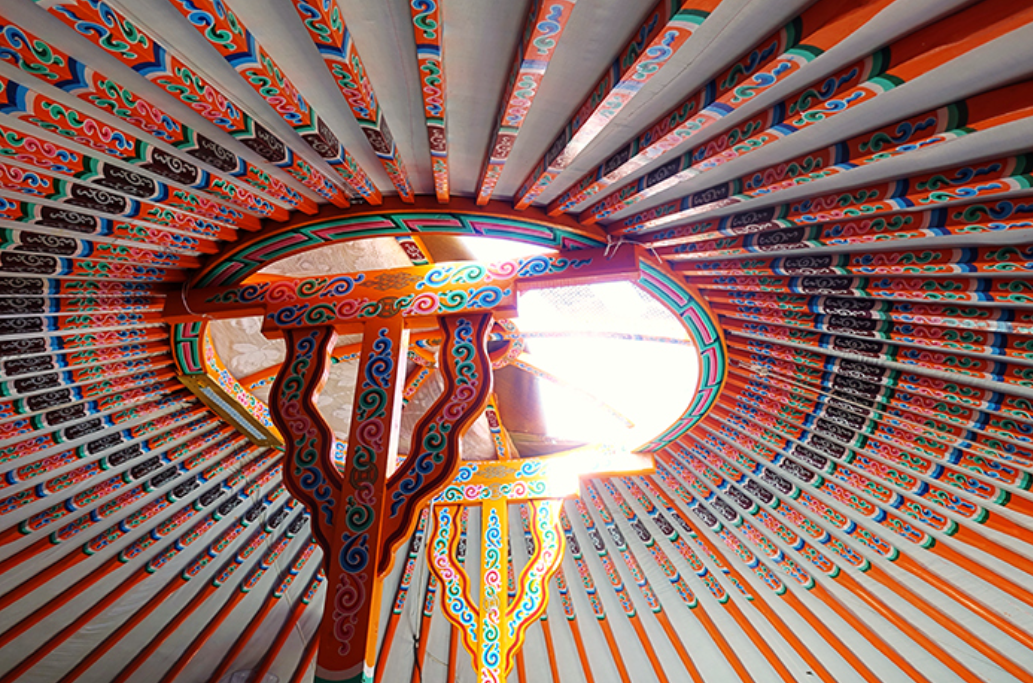
- Uni – the long wooden roof poles that angle up from the khana to the center
- Toono – the circular wooden crown at the top of the roof, where the uni poles meet; it lets smoke escape and light in, and is often considered the ger's most symbolically important part
- Felt (esgii) – thick sheep wool panels that insulate the frame, layered for winter and reduced for summer
- Canvas cover – a weatherproof outer layer over the felt, protecting against rain and wind
- Door (khaalga) – traditionally facing south to maximize sunlight and reduce exposure to cold northern wind.
History of the Ger
Some early Mongolian gers were built large enough to require transport on carts pulled by oxen or yaks. These mobile dwellings, known as ger tereg, or wagon gers, could be enormous. Historical accounts from the 13th-century Mongol Empire describe royal gers mounted on carts requiring 20 or more oxen to move across the steppe, allowing rulers and their courts to travel in comfort.
Over time, the design became more compact and practical. During the medieval period, nomadic communities developed the foldable wooden lattice wall system still used today, making it possible to assemble and dismantle a ger far more efficiently and allowing families to migrate between seasonal pastures with less effort.
Why Is the Ger Round?
The circular shape isn't just tradition, it's functional engineering. The round design reduces wind resistance, letting strong winds flow around the structure instead of pushing directly against flat walls. It also distributes structural pressure evenly and helps retain heat radiating from the central stove, keeping the ger stable and warm in Mongolia's extreme climate. The circular interior also maximizes usable space and reflects traditional Mongolian ideas of balance and harmony within the home.
Interior Layout and Cultural Meaning
Every area of a ger has a specific purpose and cultural meaning, following a layout passed down through generations.
Three main areas:
- Western side (men's area, left when entering): stores men's belongings, including horse equipment and bridles, airag, and arkhi (traditional vodka), along with tools and musical instruments.
- Eastern side (women's area, right when entering): holds kitchen utensils, cooking equipment, food storage, and children's belongings.
- Khoimor (northern area, opposite the entrance): houses the family altar or Buddhist shrine, displays family photographs and valuables, and serves as the seating area for honored guests.
Social etiquette inside a ger:
- Don't step on the door threshold
- Walk clockwise inside
- Don't lean against the central columns, which symbolize stability and support
- Accept food or drink with your right hand, or both hands
- Avoid pointing your feet toward the altar
Ger vs. Modern Housing: How They Compare
- Portability: A ger can be assembled in a few hours; an apartment is fixed and takes months to build.
- Climate adaptation: Gers are highly adapted to Mongolia's extreme swings, staying warm in winter and comparatively cool in summer, while apartments rely on centralized systems with more moderate control.
- Cultural value: A ger reflects centuries of nomadic tradition and carries deep symbolic meaning; an apartment generally carries little cultural significance by comparison.
- Materials and cost: A ger uses natural, relatively affordable materials (wood, felt, canvas); modern apartments require significantly more capital, labor, and infrastructure to build.
Ger Districts in Ulaanbaatar Today
The ger isn't only a countryside dwelling. An estimated 60% of Ulaanbaatar's population, well over 800,000 people, lives in the city's ger districts, informal settlements on the capital's outskirts made up of both traditional gers and simple detached houses. Many residents moved here from rural provinces in search of work, healthcare, and education.
Travelers should be aware that these districts are a significant source of Ulaanbaatar's serious winter air pollution, since many households rely on coal and wood stoves for heat in a city where temperatures regularly fall below -20°C. This is a real part of Mongolia's modern urban story worth understanding, alongside the ger's more romanticized countryside image, and it's an active area of government and international attention.
Can Tourists Stay in a Ger?
Yes, and it's one of the most popular ways to experience Mongolia firsthand. Countryside ger camps, ranging from simple family-run stays to more comfortable tourist-oriented camps, let visitors sleep in a traditional-style dwelling, join nomadic daily life, and experience genuine hospitality.
What to expect at a tourist ger camp:
- Most tourist camps provide beds, bedding, and a wood or dung-burning stove for heat rather than requiring guests to bring their own supplies
- Facilities vary widely, from basic outdoor toilets at simple family camps to attached bathrooms at higher-end tourist camps
- Camps are typically seasonal, operating from around May through September
- Meals are often included and may feature traditional dishes prepared by the host family
- Electricity may be limited to solar power or a generator running certain hours, so it's worth asking in advance if charging devices is a priority
Frequently Asked Questions
What is a Mongolian ger?
A ger is a portable, circular dwelling made from a wooden frame covered with felt and canvas, traditionally used by Mongolian nomads and still common in both rural and urban Mongolia today.
Why is it called a ger and not a yurt?
"Ger" is the Mongolian name for the dwelling. "Yurt" comes from a Russian-derived term and isn't the word Mongolians typically use themselves.
Do Mongolians still live in gers today?
Yes, Many rural herding families live in gers year-round, and roughly 60% of Ulaanbaatar's population also lives in the city's ger districts.
How long does it take to build a ger?
An experienced family can typically assemble a ger in one to three hours, thanks to its lightweight lattice wall and pole system.
Are gers warm in winter?
Yes, Thick felt insulation combined with a central stove keeps the interior warm even in extreme cold, though ventilation and heating methods vary between traditional and tourist-oriented setups.? Yes. Thick felt insulation combined with a central stove keeps the interior warm even in extreme cold, though ventilation and heating methods vary between traditional and tourist-oriented setups.
Can tourists stay in a ger?
Yes, Many countryside camps offer ger accommodations as part of cultural tours, typically operating during the warmer months from around May to September.
Why does the door of a ger face south?
A south-facing door maximizes sunlight exposure and reduces exposure to Mongolia's cold northern winds.
What is the toono on top of a ger?
The toono is the circular wooden crown at the top of the roof, where the roof poles (uni) meet. It lets smoke from the stove escape and daylight in, and is considered one of the most symbolically important parts of the structure.