
About Mongolia
Mongolia is truly one of the world's last undiscovered travel destinations and the safest country to visit.
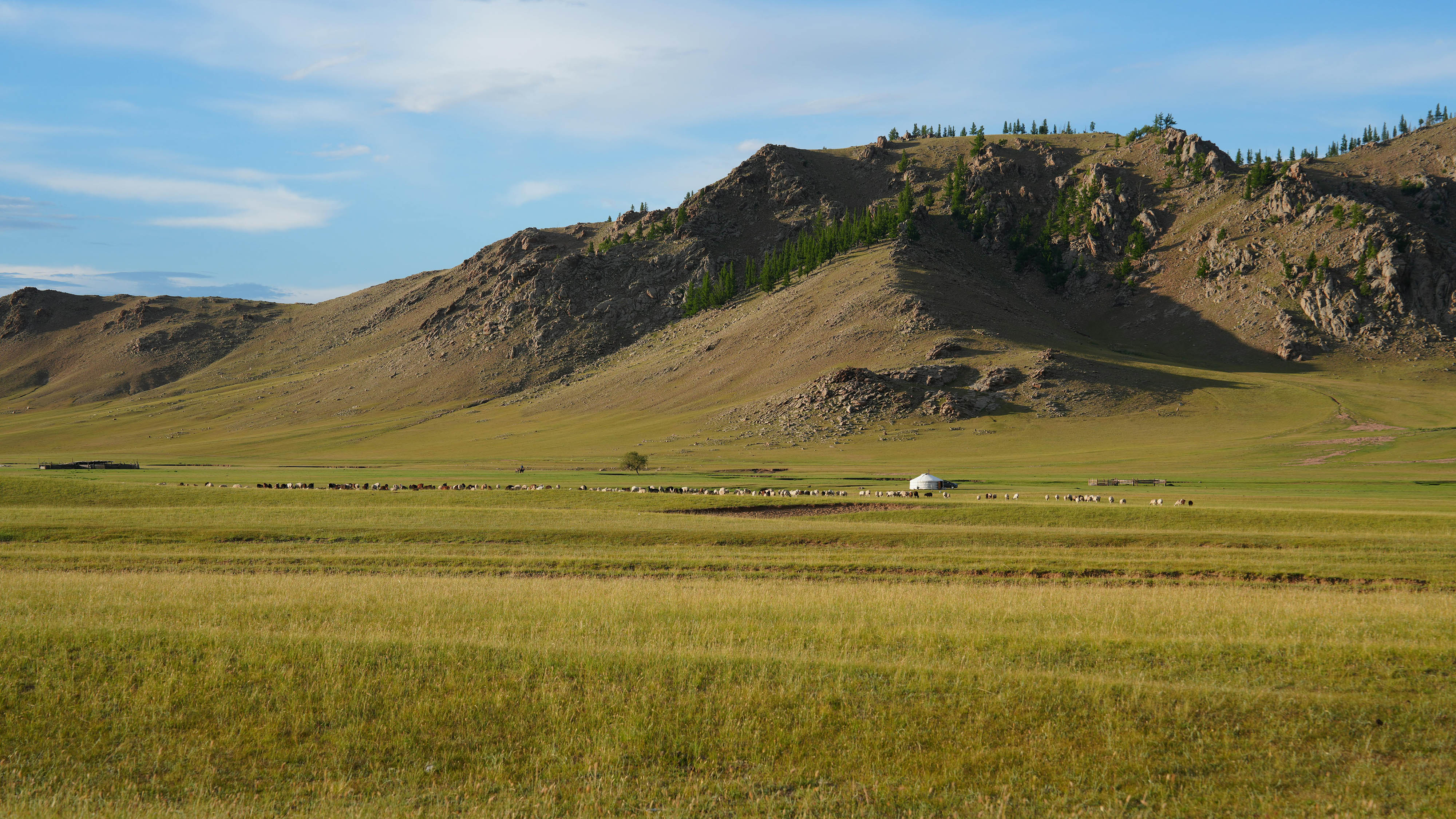
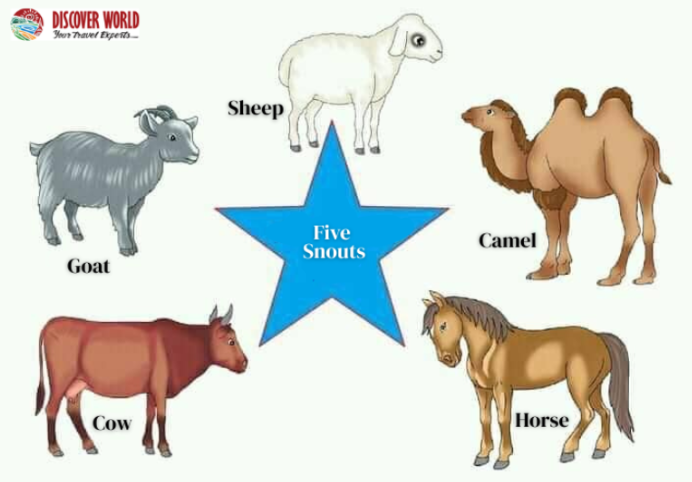
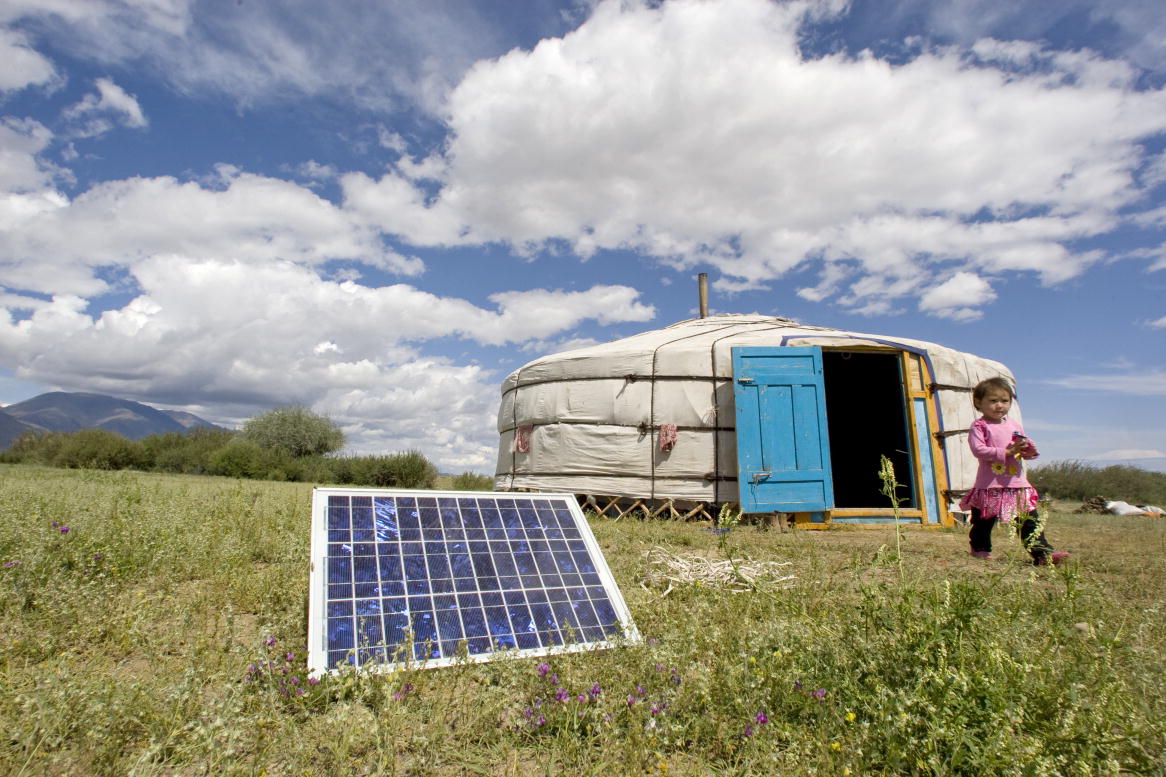
Roughly 25–30% of Mongolia's population, an estimated 600,000 to 700,000 people, still live a nomadic or semi-nomadic herding lifestyle, moving seasonally with their livestock across the open steppe. This system has existed for over 2,000 years and depends on the "Five Snouts": sheep, goats, cattle or yak, horses, and camels. While solar panels and mobile phones have reached even remote herding families, the underlying rhythm of seasonal migration remains largely unchanged, though it faces real pressure from increasingly severe winter disasters called dzud.
What is the nomadic lifestyle in mongolia?
The Mongolian nomadic lifestyle is a traditional system of pastoral herding that has existed for over 2,000 years. Families move seasonally across the steppe to ensure their animals always have access to fresh grass and water. This movement isn't random. It follows climate patterns, pasture cycles, and survival needs refined over many generations.
Key terms to know
- Ger – a circular, portable home made of a wooden lattice frame covered with felt and canvas, assembled or dismantled in a few hours
- Malchin – the Mongolian word for herder or livestock keeper
- Tavan Khoshuu Mal – the "Five Snouts": sheep, goats, cattle (including yak), horses, and Bactrian camels
- Dzud (Zud) – a severe winter disaster where snow or ice prevents animals from grazing, often causing massive livestock deaths
How often do mongolian nomads move?
Most nomadic families move 2 to 4 times per year, generally following this pattern:
- Spring – relocating for new grass growth
- Summer – moving to higher pasture areas
- Autumn – settling where livestock can fatten up before winter
- Winter – seeking sheltered grazing land
Exact timing and distance depend entirely on weather and local pasture conditions, which is why no two families follow an identical schedule year to year.
The five snouts: what role does each animal play?
Sheep and goats form the backbone of nomadic life, making up about 90% of a typical family's livestock. They provide meat for winter survival, wool and cashmere, and leather for clothing and tools. Sheep wool is essential for making felt, the insulating material used to cover a ger.
Cattle and yaks are raised primarily for milk and meat, with yaks dominating the colder, higher-altitude regions where cattle struggle. They're valued for high-fat milk used in butter and dairy production, strong resistance to extreme cold, and the strength to carry loads. A hybrid known as hainag, a yak-cow crossbreed, combines strong milk production with added hardiness.
Horses are central to nomadic identity from early childhood. Mongolian children often begin riding as young as 3 to 5 years old, since riding is treated as a core survival skill rather than a hobby. Horses are used for herding across vast distances, long-distance travel, and producing airag, Mongolia's traditional fermented mare's milk drink. For more on how airag is made and served, see our guide: What Is Airag?
Bactrian camels are essential in the Gobi Desert, providing transport across difficult terrain, heavy load-carrying during migration, and warm, insulating wool. Their ability to survive long periods without water makes them uniquely suited to Mongolia's most extreme environments.
What Role Does Each Animal play?
Sheep and Goats
Sheep and goats form the backbone of nomadic life, making up about 90% of livestock.
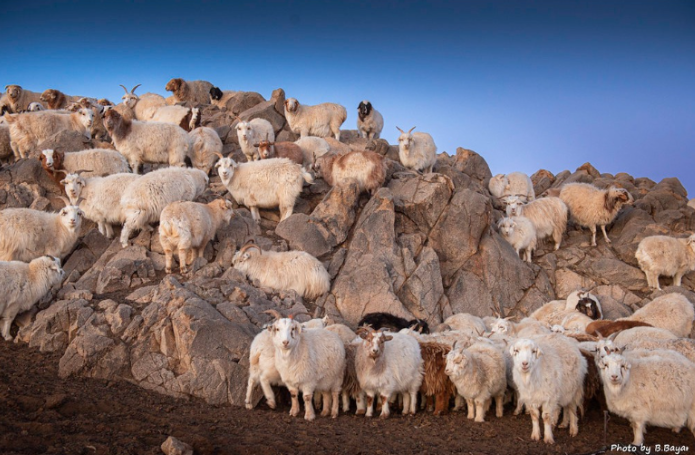
They provide:
- Meat for winter survival
- Wool and cashmere
- Leather for clothing and tools
Sheep wool is essential for making felt, the insulating material used in gers.
Cattle and Yaks
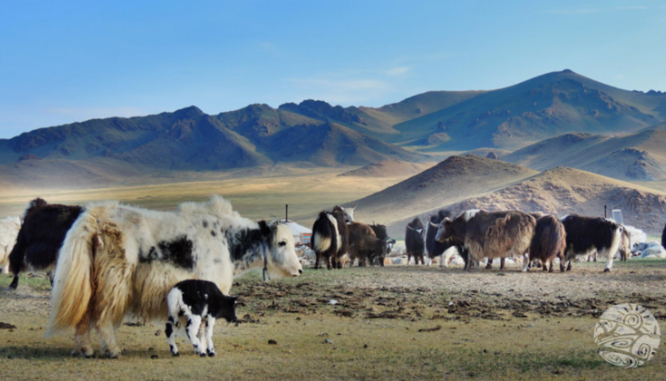
Cattle are raised for milk and meat, while yaks dominate colder mountainous regions.
They are valued because:
- High-fat milk for butter and dairy
- Resistance to extreme cold
- Strength for carrying loads
A hybrid called hainag (yak–cow crossbreed) combines milk production and strength.
Horses
From a young age, Mongolian children typically learn to ride horses. Riding is a survival skill.
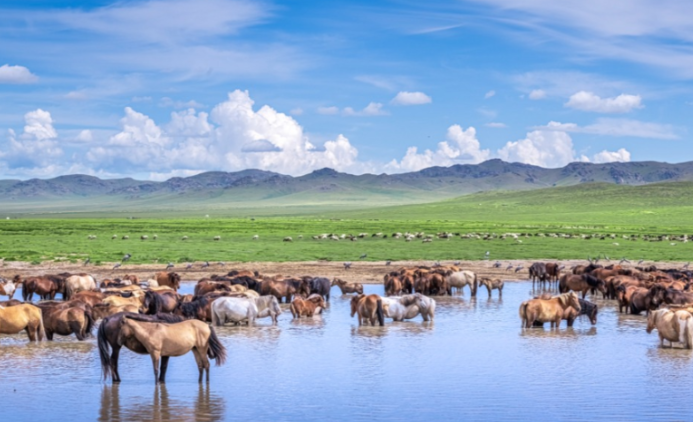
Horses are used for:
- Herding across vast landscapes
- Long-distance travel
- Producing airag (fermented mare’s milk)
Children as young as 3–5 years old often begin riding.
Bactrian Camels
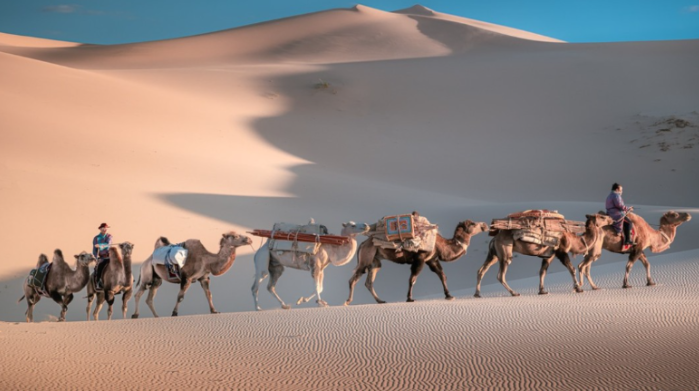
Camels are essential in the Gobi Desert.
They provide:
- Transport across desert terrain
- Heavy load carrying during migration
- Warm, insulating wool
They can survive long periods without water, making them ideal for extreme environments.
What is a Dzud, and Why Does it Matter?
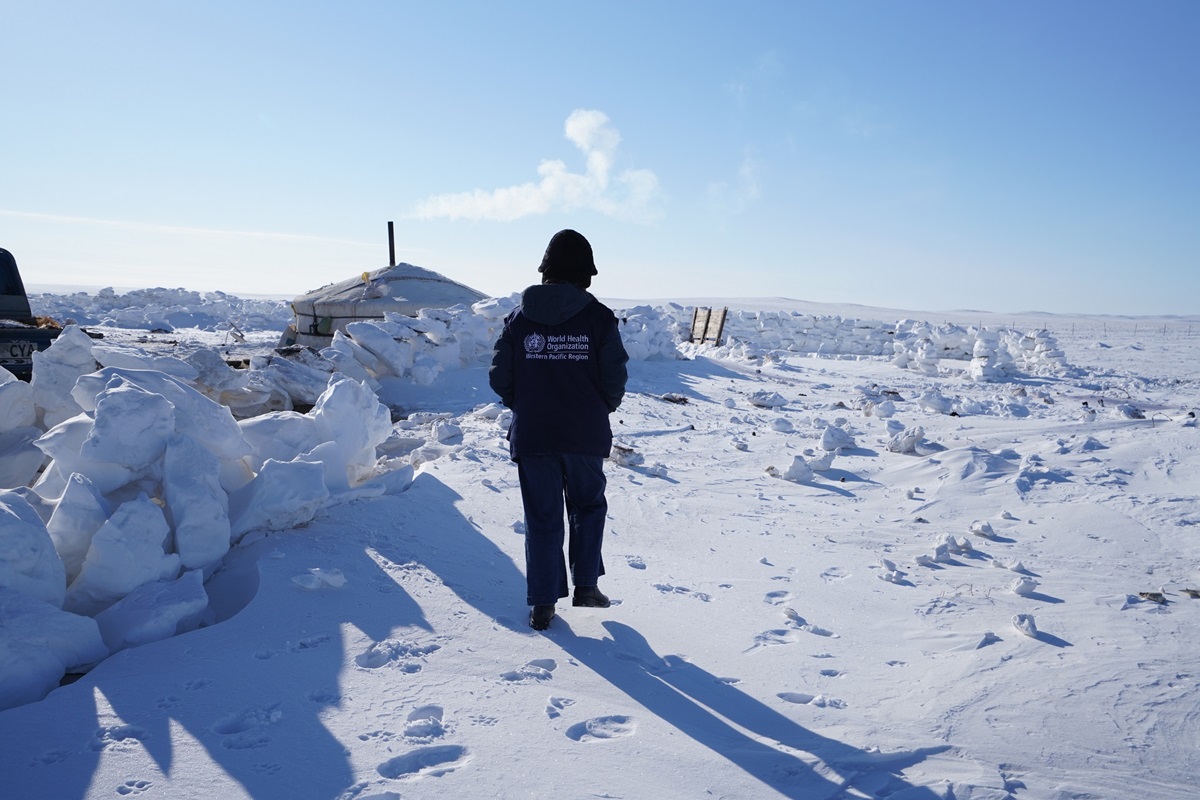
A dzud is one of the most dangerous natural events a nomadic family can face, occurring when snow becomes too deep or ice layers block access to grass, preventing livestock from feeding. Dzuds have become more frequent and severe in recent years due to climate change, and they represent one of the single biggest threats to nomadic life in Mongolia today.
The scale can be significant. Mongolia's national livestock count fell from a pre-dzud high of about 71.1 million animals in 2022 to roughly 58.1 million by 2025, and the severe 2023–2024 dzud alone killed an estimated 8.1 million animals, with nearly 5,000 households losing more than 70% of their herd. Recovery from an event like this can take herding families years.
What is inside a ger?
A ger's layout follows a structure passed down through generations:
- Always faces south, toward sunlight and away from prevailing wind
- A central hearth handles cooking and heating
- The left side (as you enter) traditionally holds women's household items
- The right side traditionally holds men's tools and saddles
- A wooden crown at the top, called the toono, lets smoke escape and daylight in
For a full breakdown of ger construction and the meaning behind each part, see our guide: What Is a Mongolian Ger?
How do Mongolians nomads survive winter?
Winter survival depends on careful preparation that begins months in advance:
- Allowing livestock to build up fat reserves during autumn grazing
- Storing dried meat and dairy products through the warmer months
- Selecting sheltered grazing areas ahead of the coldest weather
- Preparing extra fodder in case grazing becomes difficult
- Maintaining a herd size large enough for stability, generally a minimum of around 200 to 300 animals
Even with careful preparation, a severe dzud can overwhelm these safeguards, which is part of why the tradition faces real pressure today.
Do Mongolian nomads still live this way today?
Yes, though the lifestyle is changing. Modern influences increasingly reach even remote herding families, including solar panels installed in gers, mobile phones and internet access, migration to cities, especially Ulaanbaatar, and economic pressure from global cashmere demand, which has contributed to overgrazing in some regions as herders expand goat numbers to meet market demand. Despite these changes, nomadic culture remains central to Mongolia's national identity.
Modern challenges facing nomadic life
- Dzud disasters increasing in frequency and severity with climate change
- Desertification linked to overgrazing, particularly from larger goat herds
- Rural-to-urban migration, especially among younger generations
- Economic pressure tied to global cashmere market demand
Experiencing nomadic life as a traveler
For visitors, spending time with a nomadic family is one of the most meaningful ways to understand Mongolia beyond its cities.
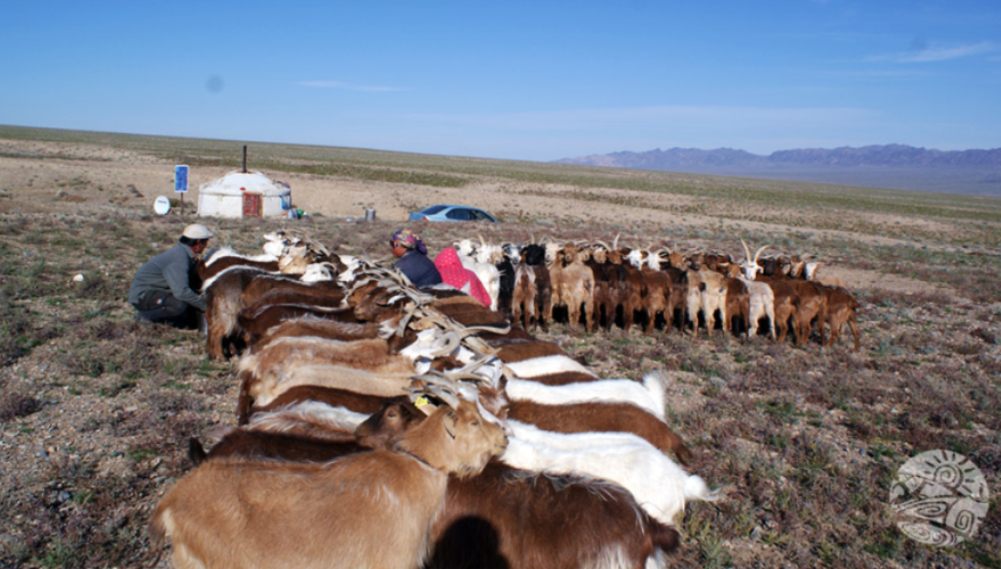
- Homestays with herding families let travelers see daily chores, milking, and ger life firsthand, usually arranged through a local tour operator
- Best season: summer (June–September) offers the most accessible conditions and the greatest chance of seeing multiple generations of a family together during the busiest herding months
- Respectful visiting: accept food and drink offered with your right hand, ask before photographing people or animals, and follow your host's lead on entering and moving around inside the ger
- Understand the impact of your visit: responsible tourism can provide meaningful income for herding families facing real economic pressure, so choosing operators who work directly and fairly with local families
Frequently asked questions
Do people still live as nomads in Mongolia?
Yes, Around 600,000 to 700,000 people, roughly 25–30% of the population, still live a nomadic or semi-nomadic lifestyle, herding livestock across the steppe.
How do Mongolian nomads eat?
Their diet relies heavily on meat, dairy products, and preserved foods, particularly dried meat and fat-rich dairy stored ahead of winter.
What do Mongolian nomads eat in winter?
Mostly dried meat, fat-rich dairy products, and other stored animal products prepared during the warmer months.
What is a dzud in Mongolia?
A dzud is a severe winter event, caused by deep snow or ice layers, that blocks livestock from grazing and can cause mass animal deaths. The 2023–2024 dzud alone killed an estimated 8.1 million animals nationwide.
How big is a typical nomad herd?
A herd generally needs at least 200 to 300 animals to remain stable and provide a sustainable living for a family.
Do Mongolian nomads have electricity or internet?
Many do today. Solar panels and mobile networks have reached even fairly remote herding families in recent years.? Many do today. Solar panels and mobile networks have reached even fairly remote herding families in recent years.
Is nomadic culture disappearing?
It's declining in some areas, particularly as younger generations move to cities, but it remains strong and economically significant across rural Mongolia.
Can travelers stay with a nomadic family?
Yes, Homestays with herding families are one of the most popular cultural experiences in Mongolia, typically arranged through a local tour operator and most accessible during the summer months.