
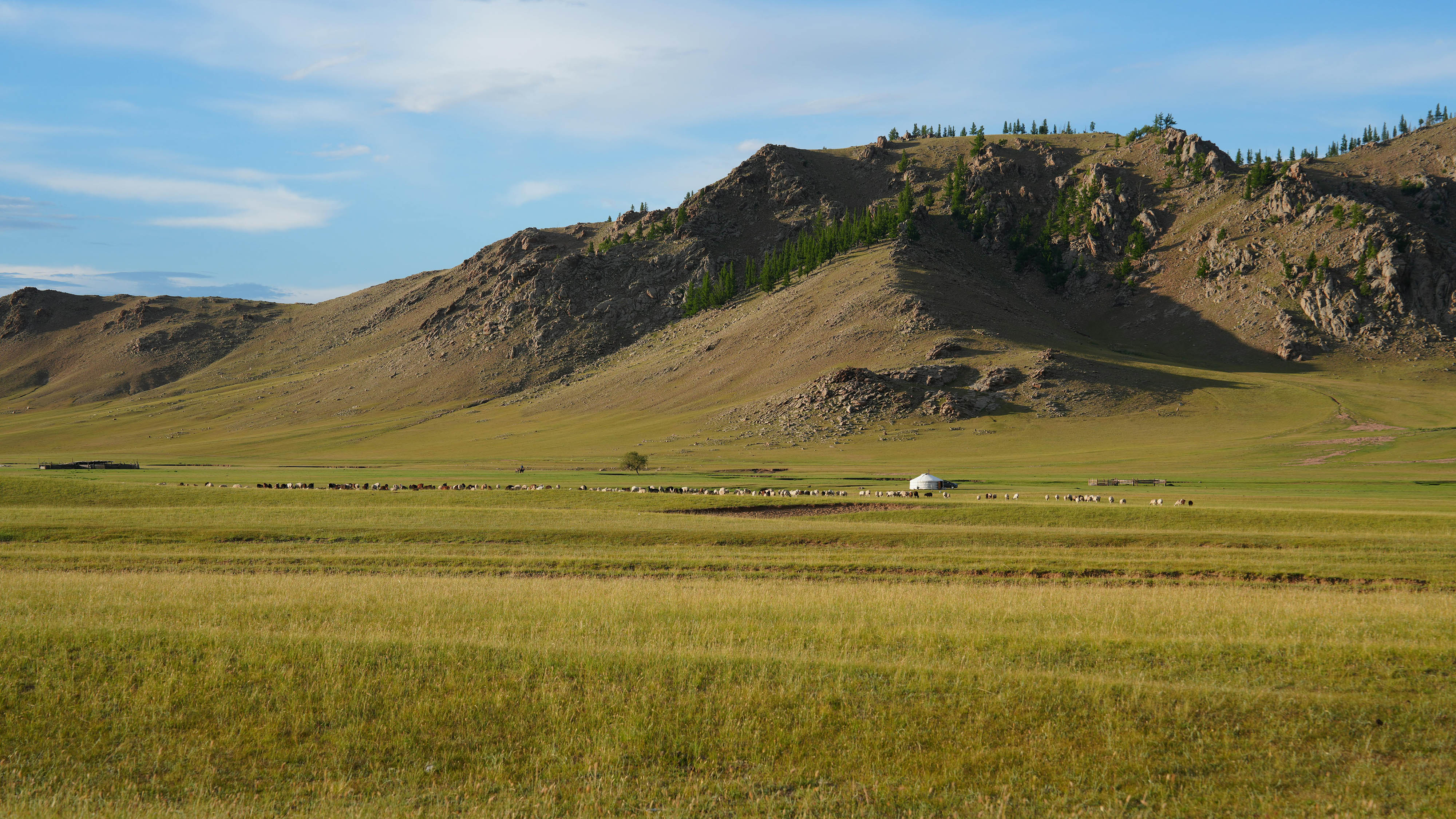
About Mongolia
Mongolia is truly one of the world's last undiscovered travel destinations and the safest country to visit.
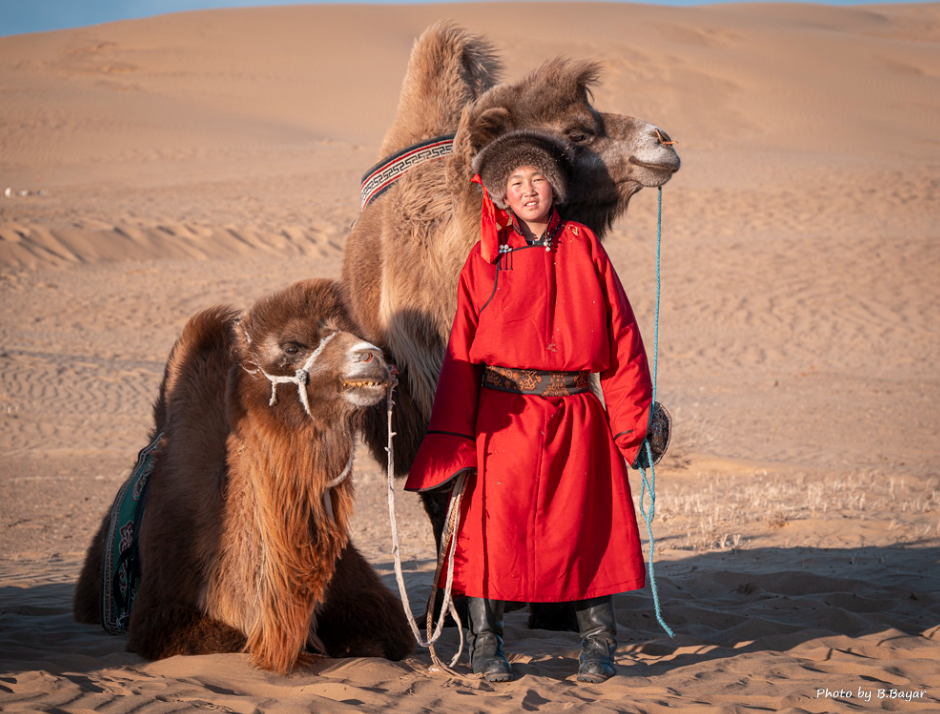
Mongolian traditional clothing centers on the deel, a long, calf-length robe fastened at the side with a sash, worn by both men and women. Its design has remained largely unchanged for centuries because it's already well suited to horseback riding, extreme temperature swings, and life on the open steppe. Styles vary by season, gender, social status, and ethnic group, with the deel typically paired with a sash (bus), boots (gutal), and, for special occasions, an elaborate hat.
What Is a Mongolian Deel?
The deel is the core garment of Mongolian traditional dress, a long, calf-length robe made from a single piece of fabric and secured with a belt. Its overall silhouette has stayed remarkably consistent because it was already well adapted to nomadic life by the time the modern form took shape roughly 800 years ago, during the era of the Mongol Empire.
Key features of the deel:
- High collar
- Long sleeves with wide cuffs
- Overlapping front panel fastening on the right side
- Cloth or metal knot buttons
- Worn with a long silk or cotton sash
The deel is practical by design. It's worn daily to stay warm and block wind, works well for horseback riding, and can double as a blanket or pillow when sleeping outdoors. Its structure has changed very little over the centuries simply because it was already close to ideal for Mongolia's climate.
Seasonal Types of Deel
There are three main types of deel, each suited to Mongolia's extreme seasonal swings:
1. Dan Deel (Summer Deel)
- Lightweight fabric
- Bright colors
- Worn mainly in late spring and summer
- Common among women
2. Terleg (Mid-Season Deel)
- Light padding
- Suitable for spring and autumn
- Worn by both men and women
3. Winter Deel
- Heavily padded
- Lined with sheepskin or cotton
- Thick outer material such as wool or brocade
- Designed for temperatures below -30°C
The overall design stays the same across all three; what changes is the fabric and padding used for the season.
Men's vs. Women's Traditional Dress: How They Compare
- Fit: Men's deels are cut wider for freedom of movement while riding and working; women's deels are more fitted and decorative.
- Color: Men's clothing tends toward darker, practical tones like brown, grey, or deep blue; women's deels often use bright colors in silk or brocade.
- Ornamentation: Men's dress uses minimal decoration; women's dress can include elaborate headdresses, temple pieces with small bells, and silver or pearl jewelry.
- Symbolism: Women's headwear and accessories often signal marital status, social standing, and geographic origin, while men's clothing more often reflects practical needs and, to a lesser degree, social status.
WHAT DO MONGOLIAN WOMEN WEAR?
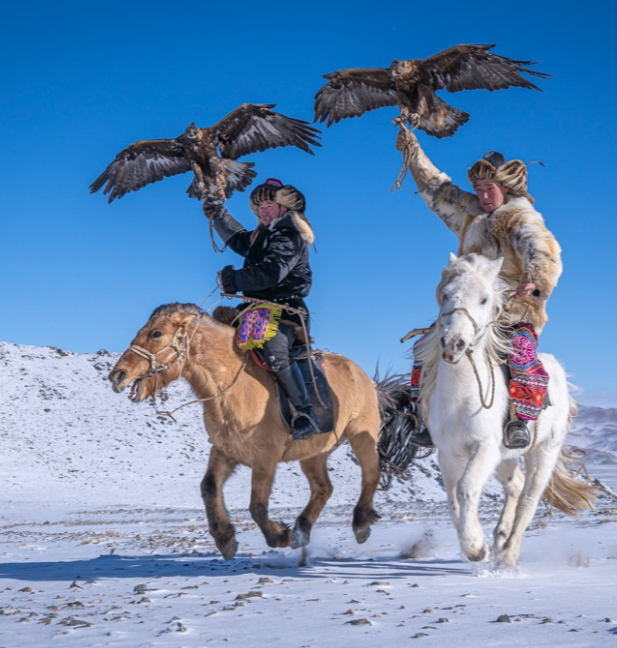
The traditional clothing of Mongolian women is ornamental and symbolic, signifying marital status, social standing, and geographic origin. Unlike men’s functional clothing, women’s clothing may feature complex designs, accessories, and headpieces.
Key Features
- Bright and colorful deels with silk or brocade fabrics
- Elaborate headdresses featuring coral, turquoise, and silver ornaments
- Temple pieces with small bells fixed to the hair
- 32-stitch crown detail on some ceremonial hats, symbolizing the unification of 32 Mongolian tribes
- Silver and pearl jewelry for added status and decoration
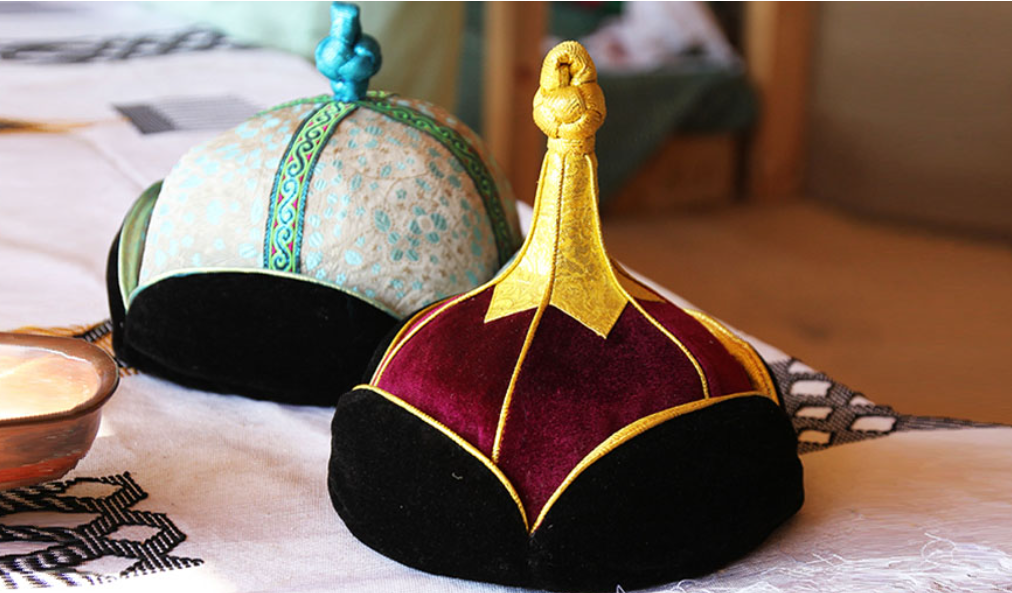
Mongolian Traditional Hats
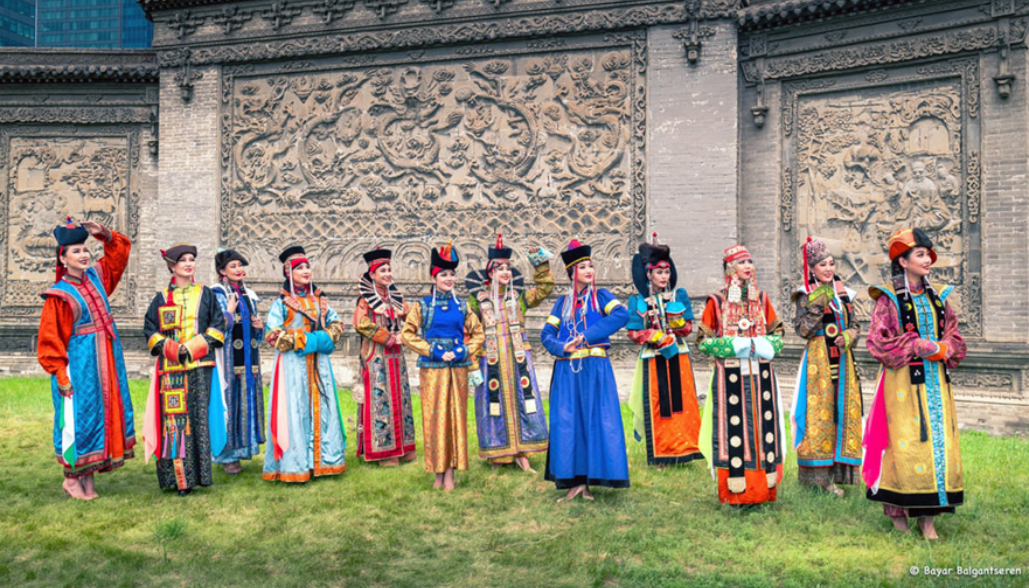
Traditional headwear is one of the most colorful and distinctive parts of Mongolian dress, with over 400 documented styles varying by social status, gender, and ethnic group.
Among the Khalkh, Mongolia's largest ethnic group, the most iconic hat design carries deep symbolism: 32 vertical stitches on the crown represent 32 Mongolian tribes united around a sacred mountain, a red button on top represents the sun, and a black flap at the back represents surrounding enemies, with a red veil symbolizing their defeat.
In the Middle Ages, both men and women wore summer hats made from plush velvet with upturned brims and pointed, brocaded tops, often crowned with a decorative knot believed to intimidate enemies. During summer, Mongols also commonly wore the flat-topped "Toortsog" hat, built from six separate fabric pieces rather than a single piece of cloth. Certain elaborate styles were traditionally restricted to unmarried women and men, since married women wore different headwear.
Women's holiday headwear was especially elaborate, often including a velvet-and-silk holiday hat, a full hair ornament set decorated with coral, pearl, and mother-of-pearl, and silver temple pieces hung with small bells.
Mongolian Traditional Boots (Gutal)
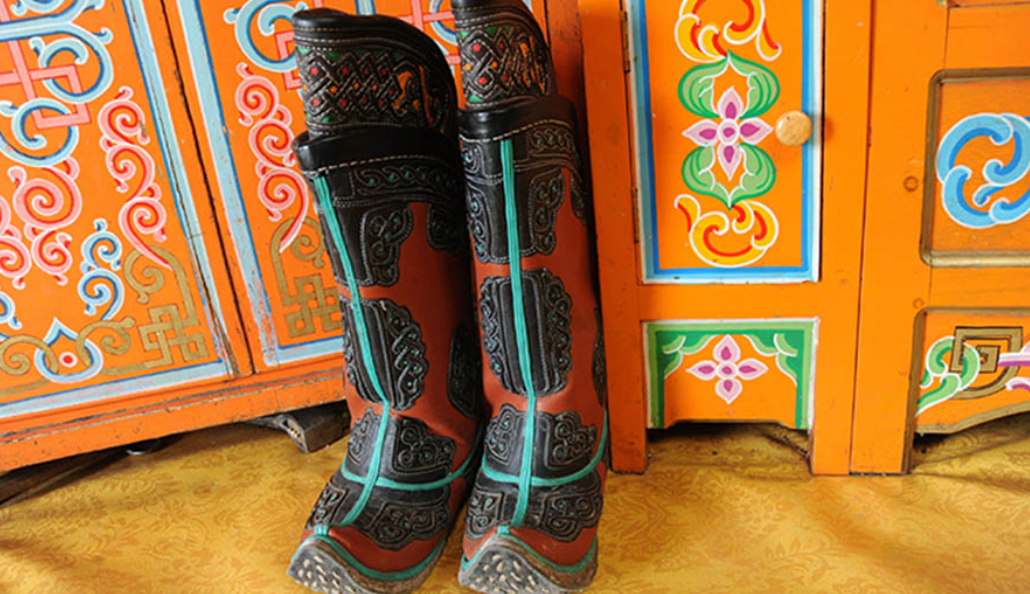
Mongolian boots are instantly recognizable for their upturned toes. There are both practical and cultural explanations for the design: the upturned tip helps keep a rider's foot from slipping out of the stirrup, and some sources also connect the shape to Buddhist principles of avoiding harm to living things underfoot, following Buddhism's spread in Mongolia after 1578.
Key features:
- Made from thick, unbending "buligar" leather
- Decorated tops with leather appliqués
- Identical left and right shape, unlike Western shoes
- No laces or zippers, making them quick to put on or take off
- Worn year-round, with thick felt socks added in winter
Boot styles also vary by ethnic group, with the number of decorative loops or ornaments ranging from as few as 8 to as many as 32, and more ornate boots historically signaling higher status. These tall boots are still worn today, especially in rural areas, and remain part of Mongolian wrestlers' traditional competition dress.
Why Traditional Clothing Suits Nomadic Life
- Designed for horseback riding: The loose cut and side fastening let riders sit comfortably for long stretches, with a wide fit that allows full freedom of movement.
- Layering for extreme weather: With temperatures ranging from hot summers to winters below -30°C, the deel's structure allows easy layering underneath without restricting movement.
- Protection from wind and dust: The high collar and overlapping front shield the chest from cold wind and desert dust storms.
- The belt as a functional tool: The long sash (bus) supports the lower back during riding and physical work, and creates a practical space to carry small items like a knife or snuff bottle.
- A genuinely multi-purpose garment: A deel can serve as outerwear, work clothing, ceremonial dress, bedding, and temporary storage, reflecting the efficiency nomadic life demands.
Where Travelers Can Experience Traditional Dress
- Many cultural tours and countryside homestays let visitors try on a deel and take photos
- Traditional dress is on full display during Naadam and Tsagaan Sar, particularly at opening ceremonies and parades
- Handmade deels, boots, and accessories are sold in Ulaanbaatar, particularly around the State Department Store, and make a distinctive, functional souvenir
Frequently Asked Questions
What is a Mongolian deel?
A deel is a long, calf-length robe worn by both men and women, made from a single piece of fabric and fastened at the side with a sash. It's Mongolia's core traditional garment and has changed very little in design over the past 800 years.
Do Mongolians still wear traditional clothes today?
Yes, Traditional dress is especially common during festivals like Naadam and Tsagaan Sar, at weddings, and as everyday wear in many rural areas, though city dwellers more often wear it for special occasions.
What materials are traditional Mongolian clothes made from?
Common materials include silk, wool, cotton, brocade, sheepskin, and leather, with the choice depending on the season and the specific garment.
What is the difference between men's and women's traditional dress?
Men's clothing is generally simpler, darker in color, and built for practicality while riding or working, while women's dress is more decorative, often including bright silk deels, elaborate headdresses, and silver jewelry.
Why do Mongolian boots have upturned toes?
The upturned toe helps prevent a rider's foot from slipping out of the stirrup, and some sources also link the design to Buddhist principles about avoiding harm to living creatures underfoot.
Are there regional or ethnic differences in Mongolian traditional dress?
Yes, Color, embroidery, hat styles, and the number of decorative elements on boots all vary across Mongolia's different ethnic groups, including the Khalkh, Buryat, and others.
Can tourists try on traditional Mongolian clothing?
Yes, Many cultural tours, homestays, and festival experiences allow visitors to wear a deel and take photos, and handmade deels and accessories are also sold as souvenirs in Ulaanbaatar.
How old is the design of the Mongolian deel?
The deel's modern form has remained largely consistent for about 800 years, since the era of the Mongol Empire, though some historians trace its origins back over 2,000 years to the ancient Khunnu Empire.
Discover Mongolia Travel has operated since 2004 and organizes travel tours across Mongolia, including cultural experiences during major national festivals.