How Does Mongolian Horse Racing Work? Naadam Guide 2026
Mongolian horse racing is very different from racing on a conventional track. During Naadam, horses race long distances across open steppe, with separate competitions based on the horse's age. The races are about more than speed. They bring together horse trainers, young riders, families, songs, ceremonies, airag, and generations of knowledge about selecting and preparing horses.
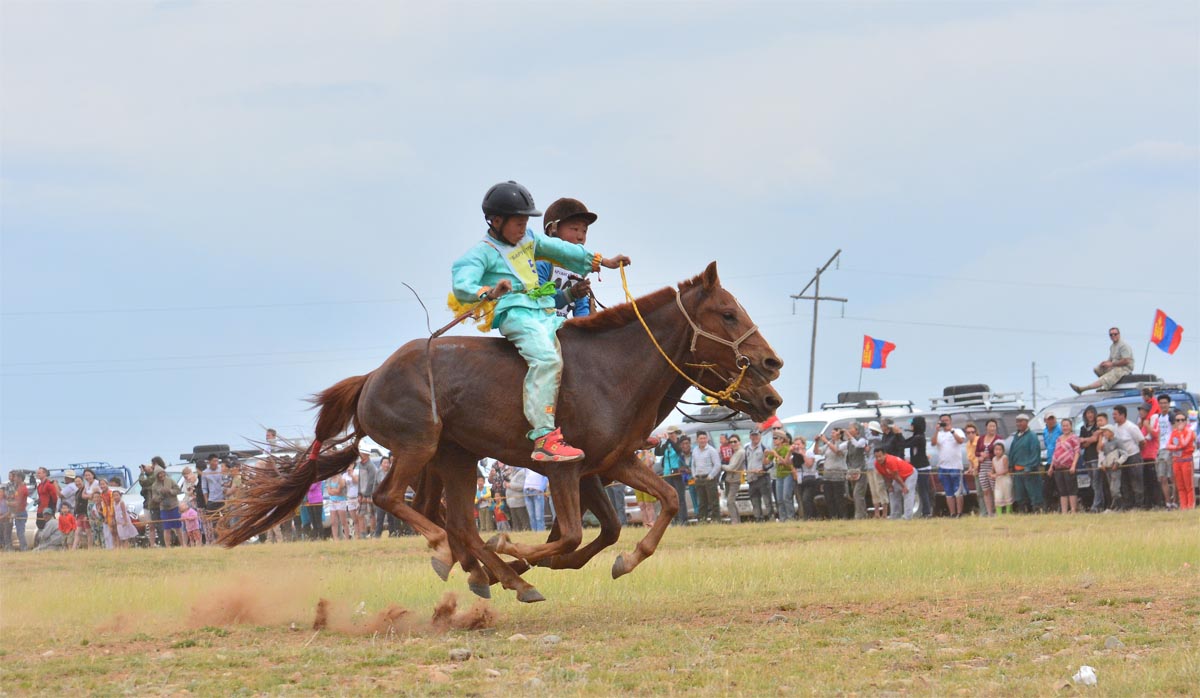
Mongolian horse racing is a long-distance form of racing traditionally held during Naadam and other celebrations. At the National Naadam, horses compete in six main age categories over distances of approximately 10 to 26 km, depending on age.
Unlike most international horse racing, the horses run across natural open terrain rather than around a prepared oval track. The National Naadam is celebrated July 11–13, although the Ulaanbaatar horse-racing program can begin on July 10.
Horses have been central to Mongolian life for centuries.
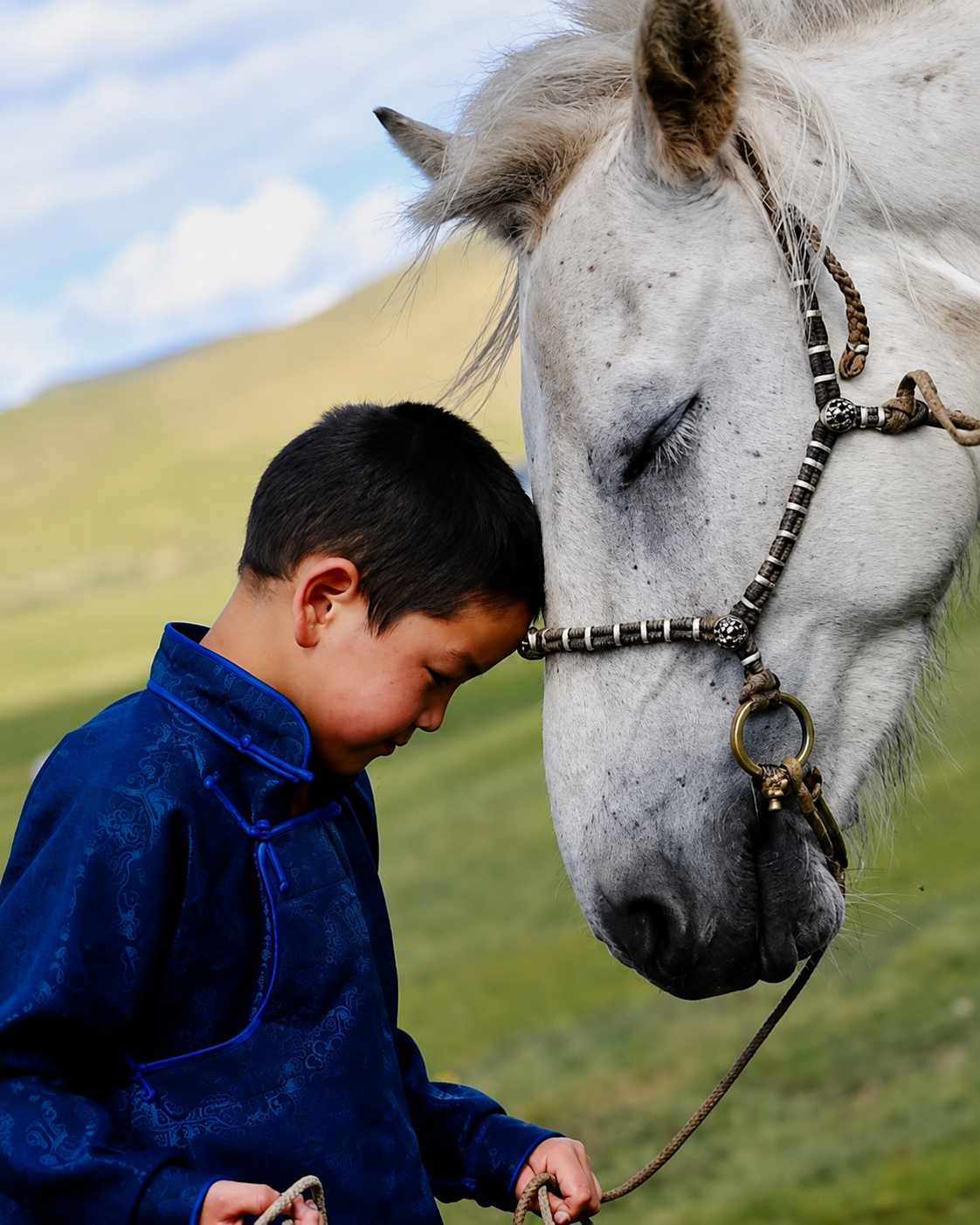
They provided transportation across the steppe, helped herders manage livestock, supplied mare's milk for airag, and played important roles in warfare, communication, celebrations, and everyday mobility.
Even today, horses remain an important symbol of Mongolian identity.
Naadam horse racing reflects this relationship. The emphasis is not simply on the person riding but on the horse, the trainer's knowledge, and the work required to prepare an animal for a long-distance race.
Naadam itself was inscribed on UNESCO's Representative List of the Intangible Cultural Heritage of Humanity in 2010.
The main National Naadam horse races near Ulaanbaatar take place at Khui Doloon Khudag, a large open area outside the city.
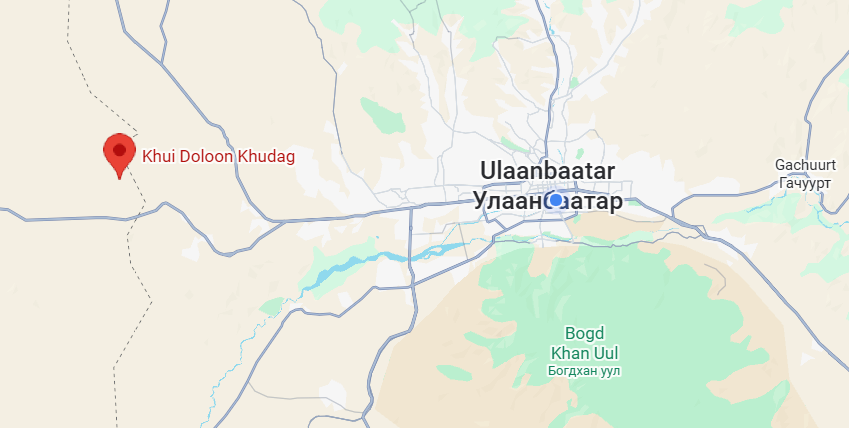
This is separate from the Central Stadium, where the main wrestling events and opening ceremony take place.
At Khui Doloon Khudag, visitors can see:
The atmosphere feels more like a huge countryside gathering than a conventional sports stadium.
In 2026, Khui Doloon Khudag also hosted major World Horse Day activities from July 10–13, including races, cultural performances, equestrian events, and a large horsemen's parade.
Race distance depends mainly on the horse's age category.
According to the official Naadam horse-racing information, the traditional distances are:
These are considerably longer than many conventional flat races.
The exact route can vary according to local geography and race organization.
Mongolian racehorses are traditionally grouped according to age.
Daaga
Daaga are two-year-old horses.
They are the youngest horses in the main age-category races and usually cover around 10–12 km. Recent National Naadam reporting continues to identify daaga as the two-year-old category.
Shüdlen
Shüdlen are three-year-old horses.
Their official race distance is approximately 12–14 km.
Khyazaalan
Khyazaalan are four-year-old horses.
Their official distance is approximately 16–18 km. In the 2025 National Naadam, the Khyazaalan event opened the main national horse-racing competitions.
Soyolon
Soyolon are five-year-old horses.
This is one of the most closely watched races during Naadam. The official race distance is approximately 22–24 km.
Azarga
Azarga refers to stallions.
They race approximately 22–24 km.
Ikh Nas
Ikh nas, meaning the older or mature category, includes horses above five years old.
They run the longest official distance, approximately 24–26 km.
The differences are easy to see.
A Mongolian Naadam race is therefore closer to a long cross-country endurance-style contest than the short oval races many visitors know from home.
Not in the usual sense.
Mongolian horses race across open grassland rather than repeatedly circling a constructed oval.
The terrain can include:
This is one reason distance can vary slightly between locations.
The open landscape is an important part of the visual experience.
From a distance, hundreds of horses can appear as a moving cloud across the steppe before reaching the finish area.
Preparing a Naadam horse is a specialist skill.
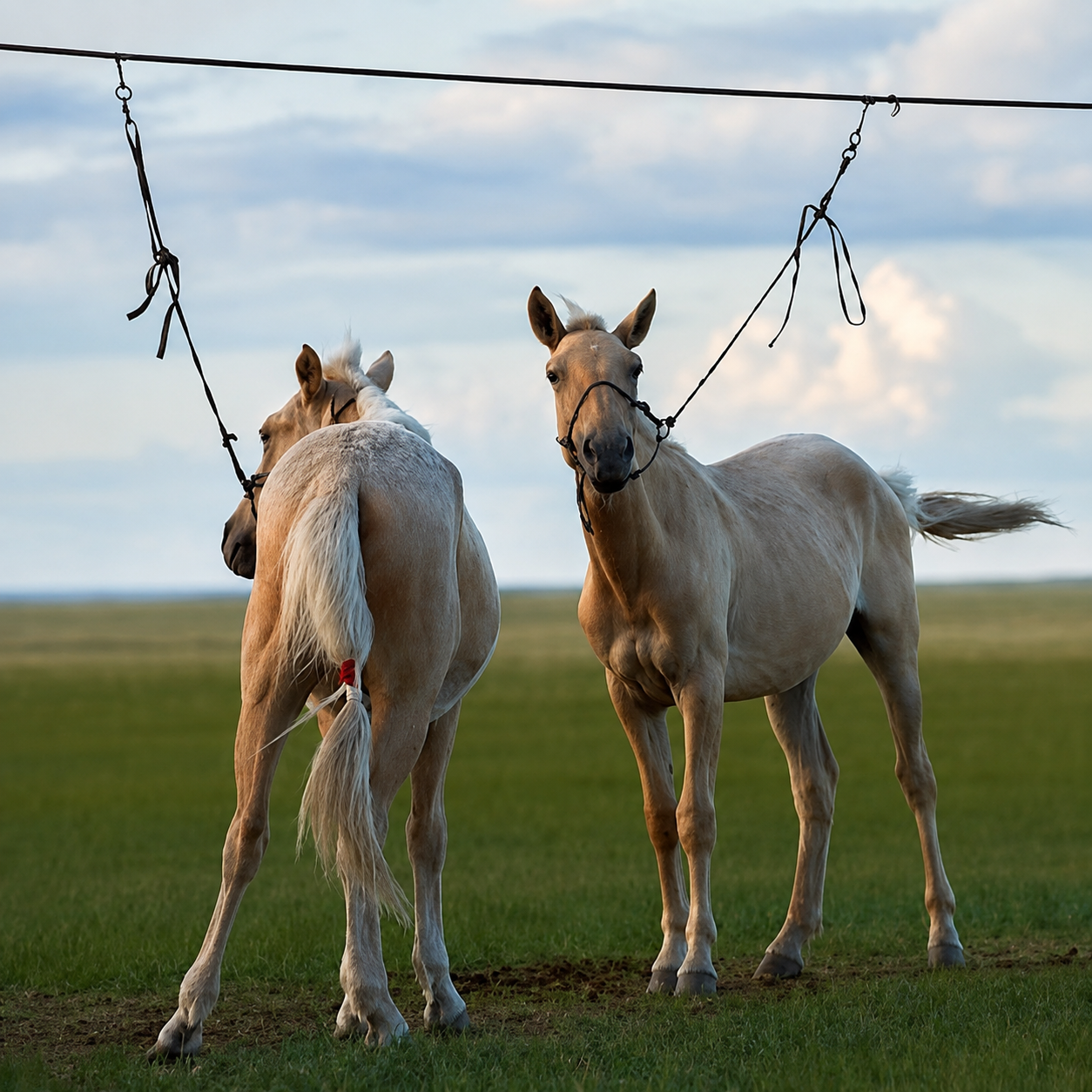
The Mongolian word uyaach refers to a horse trainer who selects, conditions, feeds, and prepares racehorses.
Traditional knowledge includes judging a horse's physical characteristics, controlling exercise, managing food and water, and gradually preparing the horse for the required distance.
Mongolia's cultural-heritage records recognize the traditional knowledge of choosing, training, and racing swift horses as an important practice transmitted between generations.
The trainer's reputation can become almost as important as the horse's.
Winning at a major Naadam is a source of considerable prestige.
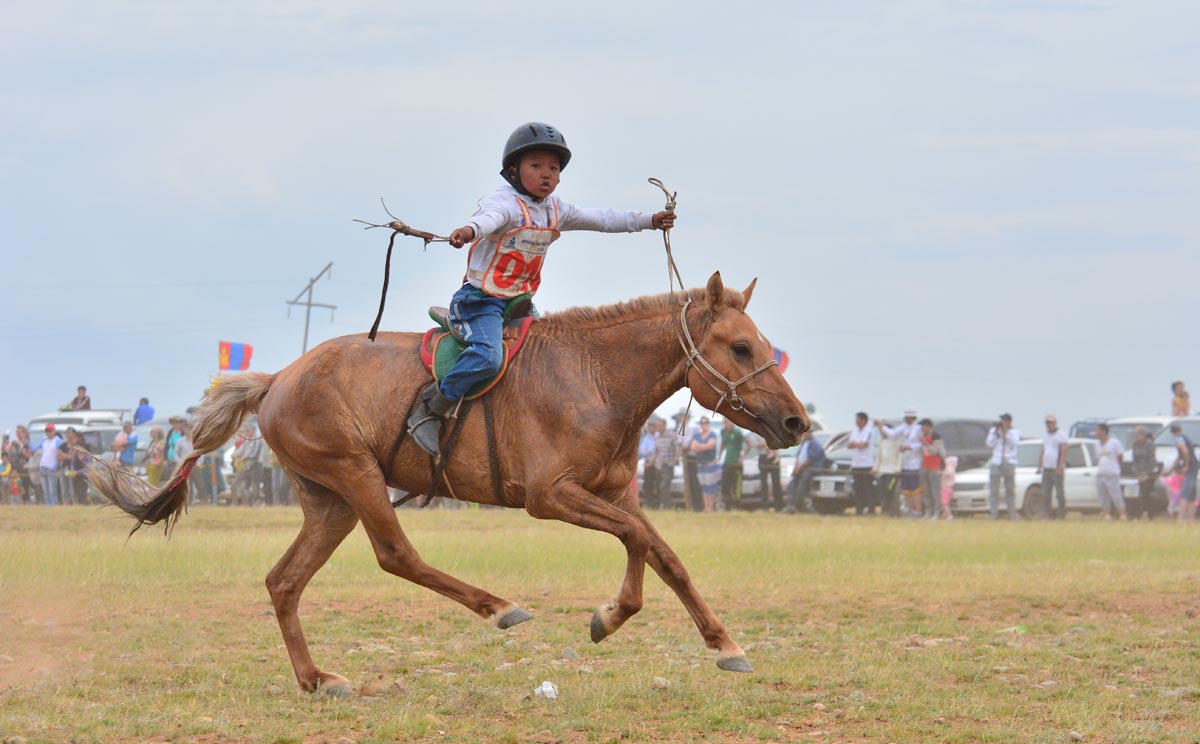
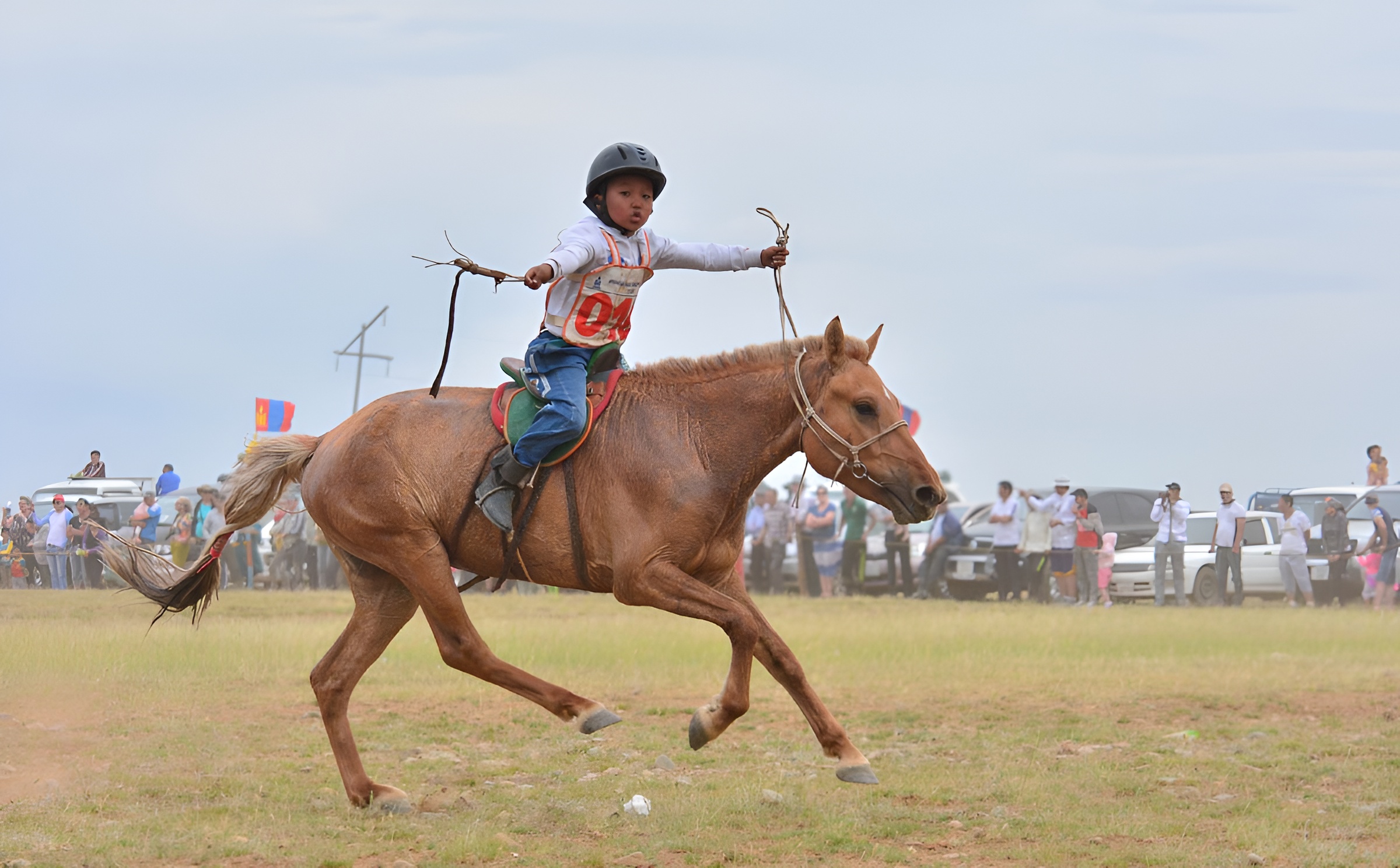
Children traditionally ride the horses in Mongolian long-distance racing.
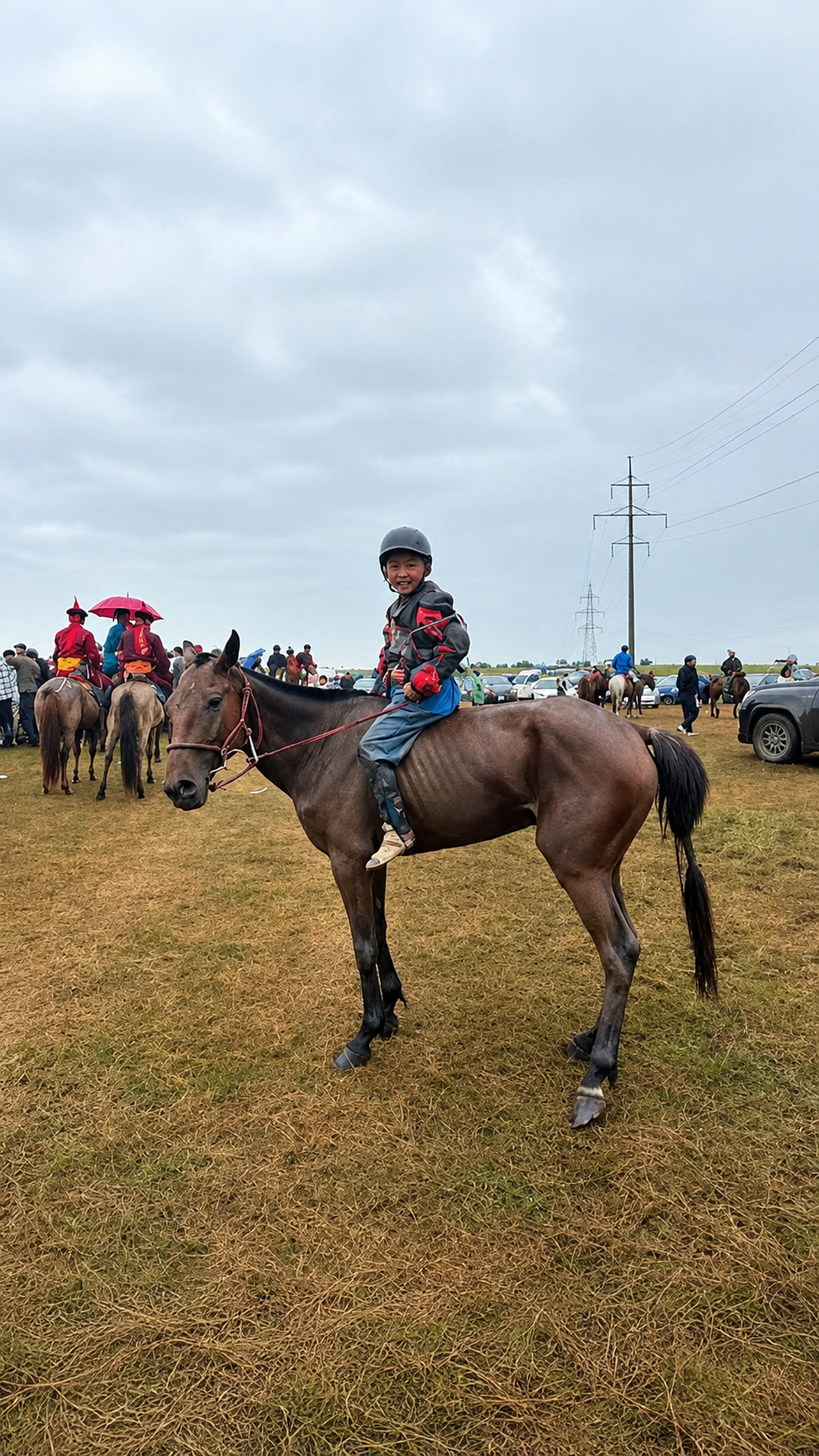
The reason historically given is their light body weight, but the practice also reflects the way riding skills have traditionally been learned from an early age in herding communities.
Boys and girls can both participate.
However, child jockey participation is also one of the most debated parts of modern Mongolian horse racing.
Mongolian law now sets eight years old as the minimum age for a child riding a racehorse in National Naadam competition.
The minimum was raised from seven to eight in 2022.
Current child-protection law requires measures including:
Helmets and other protective equipment are therefore part of modern regulated Naadam racing.
Yes.
Horse racing is an important part of Mongolian cultural heritage, but child safety remains a serious concern.
The International Labour Organization and other international bodies have repeatedly raised concerns about injury risks and children's involvement in hazardous horse racing. Mongolia has introduced legal changes, insurance requirements, protective equipment standards, seasonal restrictions, and stronger child-protection rules in response.
Visitors can appreciate the cultural importance of Naadam horse racing while also understanding that debate over child-jockey safety continues.
The two ideas are not mutually exclusive.
One of the distinctive sounds associated with Mongolian horse racing is giingoo.
Giingoo is a traditional vocal call or song associated with horse riders and racing.
The tradition is culturally important enough that Mongolia's national intangible-cultural-heritage records specifically list Marzai and giingoo, songs of horse jockeys.
Visitors may hear these calls around racing horses and riders during Naadam.
They are part of the cultural atmosphere surrounding the race rather than simply a command used to make a horse run faster.
The horse is the main champion.
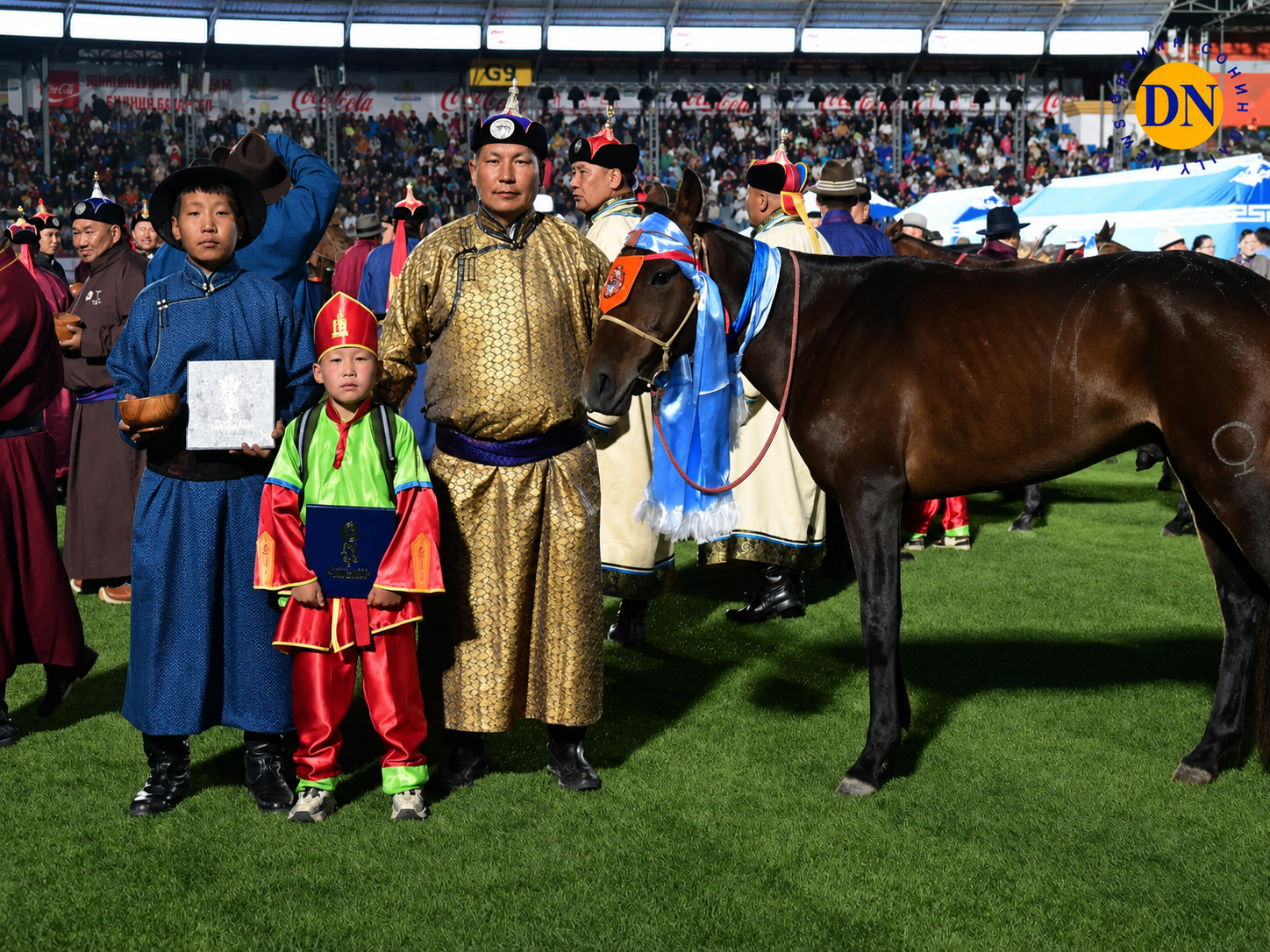
The first five horses in each major category receive special recognition and are commonly known as the airgiin tav, or the top five horses of the race.
Official Naadam information describes a traditional praise ceremony in which the horse's home region, appearance, origin, trainer, and rider are celebrated in poetic language.
This praise tradition shows how differently the race is understood from many international horse sports.
People celebrate:
The winning animal is not simply recorded as first place and taken away.
Its achievement becomes part of a ceremonial story.
Airag is fermented mare's milk and one of Mongolia's most famous traditional drinks.
It has a natural connection with horse culture because it is made from mare's milk.
Airag is widely associated with Naadam gatherings, especially at Khui Doloon Khudag, where families, horse trainers, spectators, and food sellers gather during racing days.
Horse-racing ceremonies have also traditionally used airag as part of honoring successful horses.
For visitors, tasting airag at Naadam can be a cultural experience, but start with a small amount if you have never tried fermented mare's milk before.
The Soyolon race is one of the most anticipated horse races during Naadam.
Soyolon are five-year-old horses, and their race is often watched by large crowds as part of the July 12 program.
In 2025, for example, 195 Soyolon horses registered, with 128 meeting the official standards and starting the race.
For travelers who can attend only one race day, Soyolon day can provide a particularly strong Naadam atmosphere.
However, every category has its own traditions and supporters.
There is no small fixed field like the 10 or 15 horses visitors may expect at an ordinary racetrack.
Major Naadam categories can attract hundreds of registrations.
For example, during the 2025 National Naadam:
Not every registered horse starts because horses must meet current race requirements, including measurements and other eligibility checks.
Seeing such a large group approach the finish line is one reason Naadam racing feels so different from conventional horse racing.
The National Naadam itself is officially celebrated July 11–13 each year.
Horse-racing activities can begin before the formal opening.
In 2026, major racing and horse events at Khui Doloon Khudag ran from July 10 through July 13. The program included age-category races as well as additional equestrian events connected with the first major World Horse Day celebration in Mongolia.
The race schedule can change from year to year.
Always check the current Naadam program before deciding which day to visit.
Travelers can see horse racing outside Ulaanbaatar too.
National Naadam at Khui Doloon Khudag
Local Naadam
Neither experience is automatically better.
The National Naadam gives you scale. A countryside Naadam can give you intimacy.
Travelers with enough time may enjoy seeing both.
The horse-racing area at Khui Doloon Khudag is generally much more open than the ticketed seating at the Central Stadium.
However, transport, parking rules, designated spectator areas, and festival arrangements can change each year.
Check the current Naadam visitor information before leaving Ulaanbaatar.
Arrive early if there is a particular race you want to see.
Traffic toward Khui Doloon Khudag can become very heavy during the festival.
Watching the start is not always the easiest option for a first-time visitor.
The finish area is usually more exciting because this is where crowds gather, families wait, horses arrive, and celebrations begin.
A practical visit looks like this:
Do not stand directly in an open route used by horses.
Riders and horses may continue moving quickly around the finish area.
The horse races take place outdoors with limited protection from weather.
Bring:
July can be hot and sunny, but rain and wind can arrive quickly.
Wear footwear suitable for grass, dust, and uneven ground rather than city sandals.
Horse racing can be one of the best photography opportunities during Naadam.
Try:
Avoid stepping into the path of horses for a photograph.
Also ask before taking close portraits of children, trainers, or families.
A photograph is never worth creating a safety risk.
Do not approach a horse without the trainer's permission.
Immediately before and after a long race, horses need space and careful handling.
Avoid:
Racehorses are working animals.
Watch first and follow the trainer's instructions.
Yes.
Naadam is the largest racing event, but horse culture exists throughout Mongolia.
Travelers can also:
A short horse ride gives you only one part of the story.
Seeing how horses fit into everyday pastoral life makes Naadam racing much easier to understand.
Discover Mongolia has organized tailor-made journeys since 2004, and Naadam trips can be combined with countryside stays and horse-related cultural experiences rather than treating the races as an isolated sporting event.
To make the day easier:
The racing itself may last only part of your visit.
The people, horses, camps, food, clothes, and atmosphere around Khui Doloon Khudag are equally important parts of the experience.
How long is a Mongolian horse race?
Naadam race distances depend on the age category of the horse and range from approximately 10 to 26 km. Two-year-old daaga run the shortest distance, while mature Ikh Nas horses run approximately 24–26 km.
Where are the Naadam horse races held in Ulaanbaatar?
The main races are held at Khui Doloon Khudag outside central Ulaanbaatar. This is a separate venue from the Central Stadium used for major wrestling and ceremonial events.
How many horse-racing categories are there at Naadam?
There are six main traditional categories: Daaga, Shüdlen, Khyazaalan, Soyolon, Azarga, and Ikh Nas. The categories are based primarily on the horse's age, with stallions having their own category.
How old are Mongolian horse-racing jockeys?
Mongolian law sets the minimum age at eight years old for children riding horses in National Naadam races. Current child-protection rules also require measures including medical checks, protective equipment, accident insurance, and parental agreements.
Do Mongolian horses race on a racetrack?
No, traditional Naadam races take place across open natural terrain rather than around a conventional oval track. This creates a long-distance cross-country style of racing.
What is the most famous Naadam horse race?
The Soyolon race for five-year-old horses is one of the most eagerly watched events. It usually takes place during the main Naadam racing program at Khui Doloon Khudag.
When are the Naadam horse races?
The National Naadam is officially celebrated July 11–13, but horse-racing events can begin earlier. In 2026, racing activities at Khui Doloon Khudag ran from July 10 through July 13.
Can tourists watch Mongolian horse racing?
Yes, visitors can watch the National Naadam races at Khui Doloon Khudag or attend smaller provincial and soum Naadam celebrations. Arrive early, prepare for outdoor conditions, and stay well clear of moving horses around the race area.
Discover Mongolia has organized tailor-made tours since 2004.
We handle flights, accommodation, guides, vehicles — you focus on the journey.