How Does Mongolian Horse Racing Work? Naadam Guide 2026
Mongolia's 5 best trekking destinations are the Altai Mountains (hardest, highest peaks at 4,374m), Kharkhiraa-Turgen Mountains (4,208m), Khangai Range (highest peak 4,031m), Khagiin Khar Lake -- a circular volcanic crater lake (moderate, 2,400m), and Bogd Khan Mountain near Ulaanbaatar (easy, 2,256m, suitable as a day hike). Best trekking season is June through September.
Mongolia is one of the world's great trekking frontiers -- but it is a frontier in the truest sense of the word. There are no waymarked trails, no rescue helicopters on standby, and almost no tourist infrastructure beyond the aimag capital towns. What Mongolia offers in their place is something far more compelling: total freedom to walk through an ancient, unfenced landscape of extraordinary beauty, guided by nothing more than the lie of the land and a skilled local guide who has known these mountains since childhood.
Approximately 30% of Mongolia's total land area is under some form of protected status, but even within national parks the trails are unmarked and the routes informal. The conditions that make Mongolia trekking genuinely wild also make it genuinely rewarding. With a population density of just 2 people per square kilometre, trekkers in the Mongolian mountains can walk for days without seeing another trekking party.
This guide covers Mongolia's five best trekking destinations, ranked broadly from most to least challenging. Each section includes the key facts you need to make an informed decision about which route suits your fitness level, available time, and appetite for adventure.
This guide covers Mongolia's five best trekking destinations, ranked broadly from most to least challenging. Each section includes the key facts you need to make an informed decision about which route suits your fitness level, available time, and appetite for adventure.
• No fences or private land barriers: In approximately 95% of Mongolia's countryside, the land is communal and unfenced. Trekkers are free to move through the landscape without restriction.
• Minimal other trekkers: Even on Mongolia's most popular routes, encountering more than a handful of other trekking parties in a week of walking is unusual outside of peak season.
• Nomadic hospitality: An approach to a ger invariably results in an offer of tea, airag, and food -- a form of human connection that trail huts and mountain refuges cannot replicate.
• Extraordinary wildlife: High-altitude routes support argali sheep (the world's largest wild sheep), Siberian ibex, snow leopard, wolverine, golden eagle, and lammergeier vultures.
• Diverse landscapes: From glaciated high-altitude peaks to larch forests, river valleys, volcanic crater lakes, and rolling grassy highlands, Mongolia's trekking landscape offers extraordinary variety.
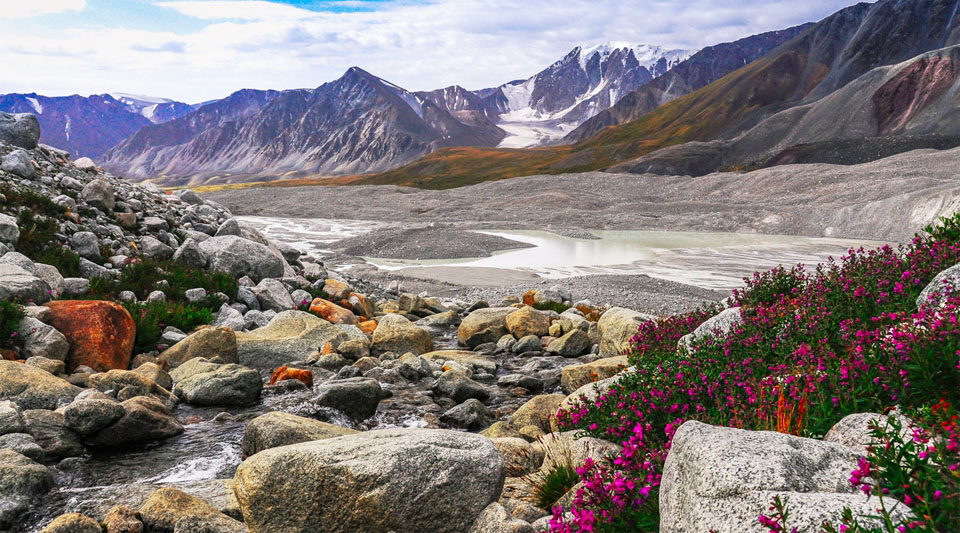
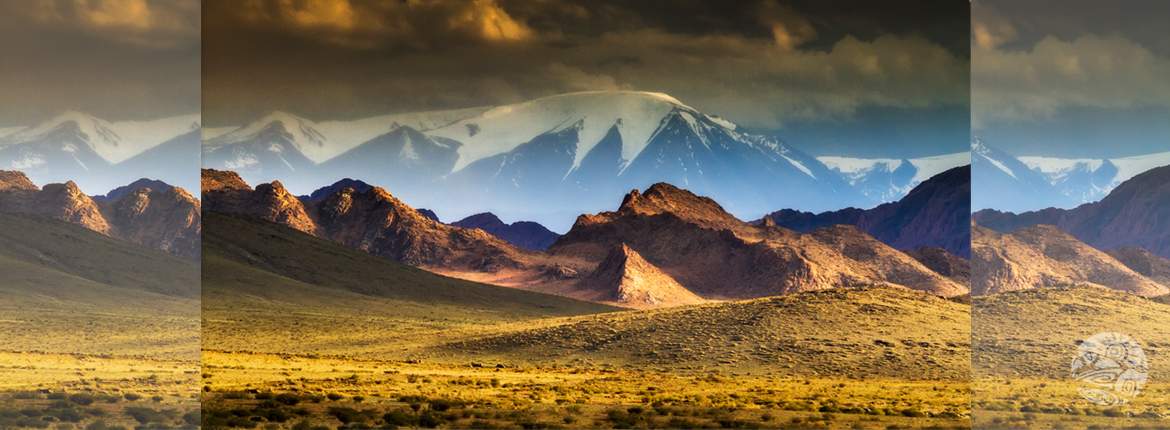
Altai Tavan Bogd National Park in Bayan-Ulgii Province contains Mongolia's highest peaks and most challenging trekking terrain. The name Tavan Bogd means "Five Saints" -- a reference to the five major peaks that form the park's centrepiece, including Khuiten Peak (4,374 m), the highest point in Mongolia, which sits on the tri-border junction of Mongolia, Russia, and China.
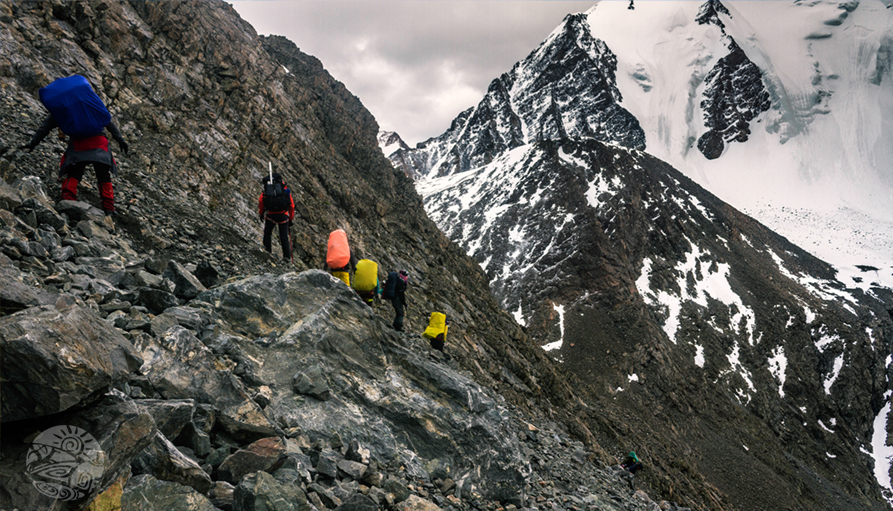
Difficulty: Expert. High altitude, glacier crossings, and technical sections on the Khuiten Peak summit route require crampons, ice axe, and prior mountaineering experience. Lower routes within the park are Challenging.
Distance from UB: 1,700 km west -- fly to Ulgii (2.5 hours from UB), then drive approximately 200 km to the park entrance (5 to 7 hours, partly on rough track).
Trek Length: 7 to 14 days for a comprehensive circuit; 4 to 5 days for the Khuiten Peak base camp route only.
Elevation: Up to 4,374 m (Khuiten Peak summit). Most trekking occurs between 2,200 m and 3,800 m.
The park contains five permanent glaciers, including the Potanin Glacier (7 km long), the longest glacier in Central Asia outside of the Pamirs and Tian Shan. The trekking here is remote in the true sense -- there is no mobile coverage, no emergency services, and the nearest significant medical facility is in Ulgii (a 7-hour drive from the park entrance).
The cultural dimension of the Tavan Bogd region is as significant as the physical landscape. The park is surrounded by Kazakh nomadic communities whose eagle hunting tradition (berkutchi) has been practised continuously for hundreds of years. Visiting a Kazakh family camp and watching them hunt with their golden eagles is an experience that has no equivalent anywhere else in the world.
Acclimatisation: Allow 1 to 2 days at moderate altitude (around 2,500 m) before ascending to the higher routes. Ascend no more than 300 to 500 m of sleeping altitude per day above 3,000 m to minimise the risk of acute mountain sickness.
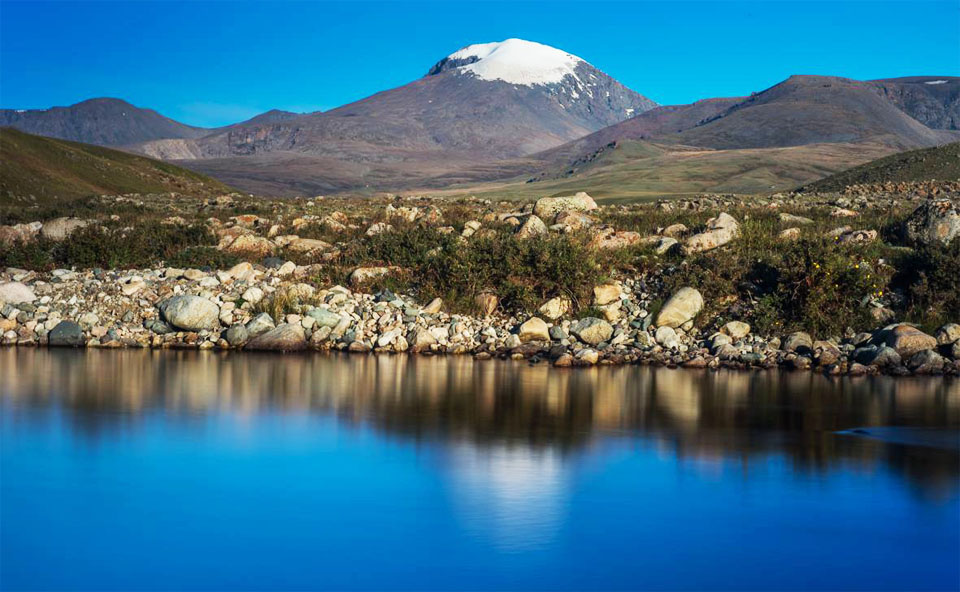
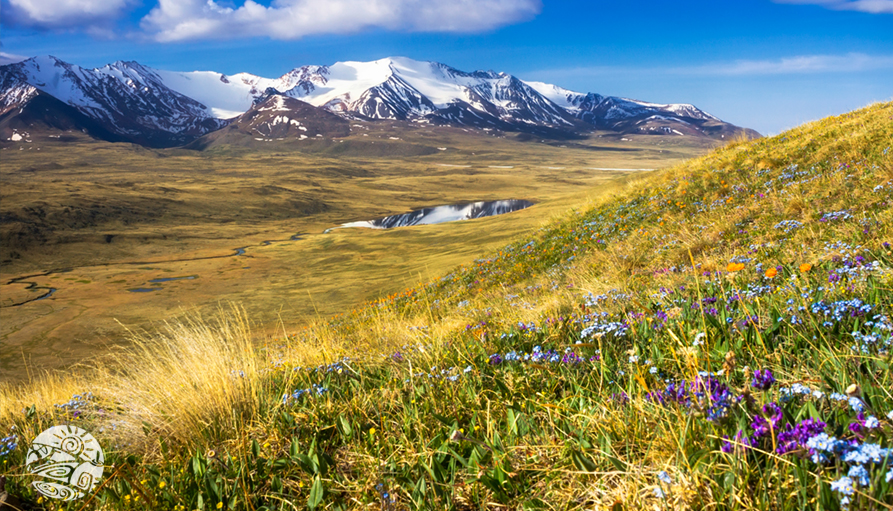
The Kharkhiraa and Turgen mountains in Uvs Province represent some of the most remote serious trekking terrain in Mongolia. The two main peaks -- Kharkhiraa (4,037 m) and Turgen (4,208 m) -- are dormant volcanic mountains whose flanks are deeply dissected by glacial valleys, moraines, and crystal-clear meltwater streams. Very few international trekking groups visit this area each season.
Difficulty: Challenging. No technical climbing required for the main valleys, but routes involve rough unmarked terrain, river crossings, and altitude exposure.
Distance from UB: Fly to Ulaangom (2 hours from UB), then drive 70 to 100 km to trek starting points.
Trek Length: 5 to 10 days depending on route choice.
Elevation: Up to 4,208 m (Turgen Peak). Main valley trekking between 1,800 m and 3,200 m.
The wildlife here is exceptional: argali sheep (adults can weigh up to 180 kg) are found on the high rocky slopes; ibex occur on near-vertical cliff faces; snow leopard signs (tracks, scrapes, scat) are regularly found by experienced local guides. The area also supports populations of wolverine and brown bear in the upper valleys.
One of the particular rewards of Kharkhiraa-Turgen trekking is the quality of water: streams fed by snowmelt and glaciers run clear and cold from their source. Trekkers frequently camp beside rivers that have never seen another tent pitched on their banks.
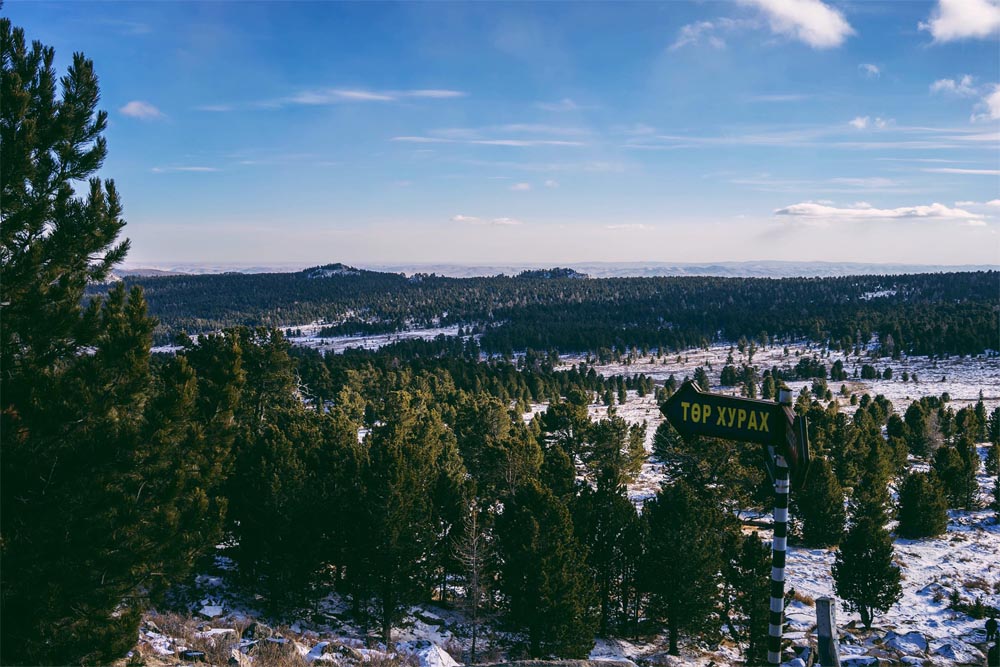
The Khangai Range runs for approximately 700 km across central Mongolia and offers the most accessible of Mongolia's multi-day mountain trekking options. The range is heavily forested by Mongolian standards -- larch and birch forests cover the northern slopes -- and is dotted with lakes, waterfalls, and valley meadows that make for beautiful walking even at lower elevations.
Difficulty: Moderate to Challenging depending on route. Approaches to Otgontenger Peak are challenging; valley circuits are moderate.
Distance from UB: 650 km west -- fly to Tsetserleg or drive (10 to 12 hours).
Trek Length: 3 to 7 days.
Elevation: Up to 4,031 m (Otgontenger Peak, highest in Khangai range).
Otgontenger is considered one of Mongolia's most sacred mountains with ongoing restrictions on access. Permits from local authorities and the monastery at the mountain's base are required. Below the high peaks, the Khangai offers extraordinary trekking through larch forest corridors with 250 or more species of alpine flora, past volcanic crater lakes, and along the upper Orkhon River valley.
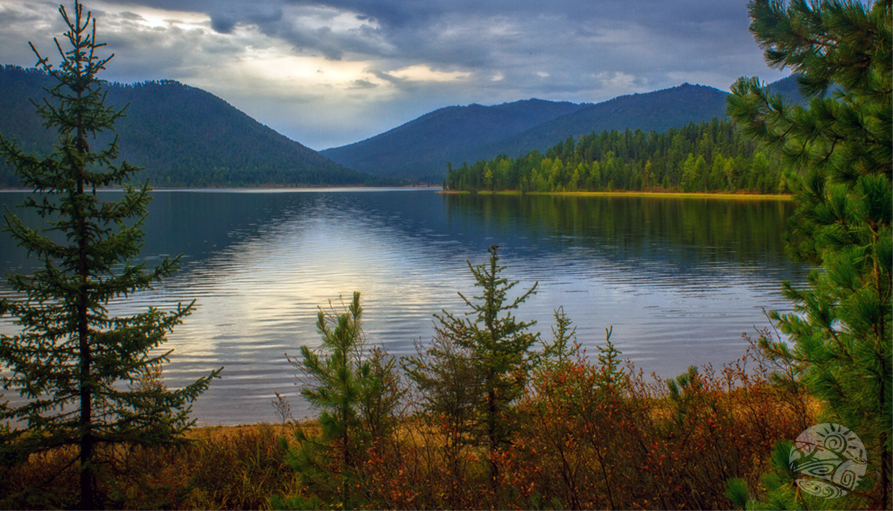
Khagiin Khar is one of Mongolia's hidden gems: a perfectly circular volcanic crater lake set in larch forest in the Khangai region, at approximately 2,400 metres altitude. The lake's circular shape is striking from the rim above it, and the surrounding forest and mountain scenery is beautiful. Almost no tourist infrastructure exists at the lake itself, making it a camping-only destination.
Difficulty: Moderate. Steady ascent through forest to the crater rim, no technical terrain.
Distance from UB: 700 km. Access is by road via Tsetserleg and then unpaved track.
Trek Length: 3 to 5 days for a full circuit including approach.
Elevation: 2,400 m at the lake surface.
The lake supports excellent fishing (Mongolian lenok trout and grayling) and is a productive birdwatching location. The surrounding forest is alive with woodpeckers, raptors, and Siberian bird species. The near-total absence of other visitors makes Khagiin Khar a powerful destination for travellers seeking solitude and natural beauty without the commitment of high-altitude mountaineering.
Bogd Khan Mountain is a remarkable destination for its history as much as its scenery. The forested massif immediately south of Ulaanbaatar holds the distinction of being the world's oldest formally protected area -- it has been under official protection since 1778, predating Yellowstone National Park by nearly 100 years. The mountain is also considered sacred in Mongolian Buddhism.
Difficulty: Easy to Moderate. The most popular route to Tsetsee Gun peak (2,256 m) is a clear, well-trodden path requiring no technical skills.
Distance from UB Centre: 15 km. Accessible by taxi or public transport.
Trek Length: 1 day (5 to 6 hours round trip to summit and back).
Elevation: 2,256 m (Tsetsee Gun peak, the highest point on the massif).
The Manzushir Monastery ruins at the mountain's southern base are a significant historical site -- the monastery was destroyed during the Stalinist purges of the 1930s, and the museum on site preserves artefacts and tells the story of this destruction. From the summit on a clear day, the expanse of the Mongolian steppe to the south and north is extraordinary.
Bogd Khan is the one route on this list that can be accomplished independently without a guide, making it ideal for travellers with a free day in Ulaanbaatar who want to experience authentic Mongolian wilderness without logistical complexity.
The trekking season runs from June to September. Within that window:
• June: Excellent conditions -- wildflowers blooming, trails not yet crowded, comfortable temperatures at altitude. River crossings may be higher due to snowmelt.
• July: Warmest month and peak season. Best for high-altitude routes. Mosquitoes active at lower elevations near rivers and lakes.
• August: Still warm and excellent. Slightly fewer visitors than July. Berry season in forested ranges.
• September: Often the best month for experienced trekkers. Dramatically fewer other parties, golden larch colours in forested ranges, and settled weather. Some high passes may receive early snow after mid-September.
• October and beyond: Snow increasingly likely above 2,500 m. Most ger camps closed. Not recommended except for the very experienced with proper winter equipment.
Weather in Mongolia's mountains can change very rapidly at any time of year. A sunny morning can give way to a blizzard by afternoon at high altitude, even in August. Always carry warm and waterproof layers regardless of the forecast.
• No marked trails: There are no waymarkers, coloured blazes, or signposts on Mongolian mountain routes. Navigation is by landmark, ridge identification, river valley, and GPS. Download offline maps before leaving UB and share your route plan with your tour operator.
• Hire a local guide: This is the single most important preparation step for all routes except Bogd Khan. A skilled local guide knows the seasonal track conditions, can navigate without GPS in their home terrain, speaks Mongolian, and can respond effectively to emergencies.
• No mountain rescue service: Outside of Ulaanbaatar's immediate vicinity, there is no organised mountain rescue capability in Mongolia. Emergency evacuation in the case of serious injury requires helicopter charter at typical costs of $2,000 to $6,000 USD. Comprehensive travel insurance with emergency medical evacuation coverage is essential.
• No ATMs or shops outside towns: All supplies must be purchased in the last town before the trek and carried for the entire duration.
• Water sources: Rivers and streams in high-altitude areas are generally clean but always purify drinking water using tablets, a filter, or boiling.
• Carry emergency supplies: At minimum, extra food for 2 to 3 days beyond the planned trek duration, a comprehensive first-aid kit, emergency shelter, and a means of signalling for help.
Do I need a permit to trek in Mongolia?
National parks charge entry fees of approximately $5 to $10 USD per person. Tavan Bogd National Park, Gurvan Saikhan (Gobi), and Bogd Khan are among the parks with formal entry fee systems. Otgontenger Mountain in Khangai has specific restricted access periods and requires permission from local authorities and the monastery warden -- this must be arranged in advance through a tour operator.
Can I trek independently in Mongolia?
Technically yes -- Mongolia has no law preventing independent trekking. In practice, independent trekking in remote areas is strongly discouraged and potentially dangerous. At a minimum, independent trekkers in remote areas should carry a GPS device with offline maps, a satellite communicator such as a Garmin inReach, a first-aid kit, emergency food, and emergency shelter. Bogd Khan Mountain near Ulaanbaatar is the one route genuinely suitable for independent trekking by experienced hikers.
What fitness level is required for Mongolia trekking?
Fitness requirements vary significantly. Bogd Khan requires moderate fitness -- comparable to a long day hike with 700 m of elevation gain. The Khangai range and Khagiin Khar require good cardiovascular fitness and experience with multi-day camping. Kharkhiraa-Turgen demands excellent fitness and altitude acclimatisation experience. Altai Tavan Bogd requires expert-level fitness and mountaineering skills including glacier travel, crampon use, and ice axe arrest techniques.
Is horse trekking a good alternative to hiking?
Yes, horse trekking is one of Mongolia's great traditions and a genuine alternative to foot trekking on many of the routes described here. The Khangai range and Lake Khuvsgul are especially popular for horse-supported expeditions. Note that Mongolian horses are ridden with relatively short stirrups using a specific position -- bring padded cycling shorts for multi-day rides, and allow a day of acclimatisation to the saddle before attempting long distances.
What wildlife might I encounter while trekking?
In the high Altai, the most exciting encounters include argali sheep (the world's largest wild sheep, with horns that can measure 1.5 m in length) and Siberian ibex on near-vertical cliffs. Marmots are abundant and entertaining across all steppe and alpine terrain above 1,500 m. Brown bear are present in forested ranges -- do not approach or attempt to feed them. Wolves are active at dusk and dawn but rarely approach human camps.
Are there any altitude sickness risks in Mongolia?
Yes, significant altitude sickness risk exists on all routes above 3,000 m, particularly in the Altai and Kharkhiraa-Turgen ranges. Standard acclimatisation protocol applies: sleep at a moderate altitude (around 2,500 m) for 1 to 2 days before ascending; ascend sleeping altitude by no more than 300 to 500 m per day above 3,000 m; descend immediately if symptoms of severe Acute Mountain Sickness appear. Symptoms include severe headache that does not respond to ibuprofen, loss of coordination, confusion, and difficulty breathing at rest -- these are medical emergencies requiring immediate descent and evacuation.
What gear do I need for trekking in Mongolia?
Essential gear for multi-day trekking includes: a layered clothing system (moisture-wicking base layer, insulating mid-layer, waterproof shell); sturdy waterproof hiking boots with ankle support; trekking poles (essential for river crossings and steep descents); sleeping bag rated to at least -10C for high-altitude routes; waterproof tent or bivouac shelter; headlamp with spare batteries; comprehensive first aid kit including altitude sickness medication (acetazolamide -- discuss with your doctor before travel); GPS device with offline maps; power bank; water purification system; and sunscreen SPF 50+ with UV-protective sunglasses.
Discover Mongolia has organized tailor-made tours since 2004.
We handle flights, accommodation, guides, vehicles — you focus on the journey.