
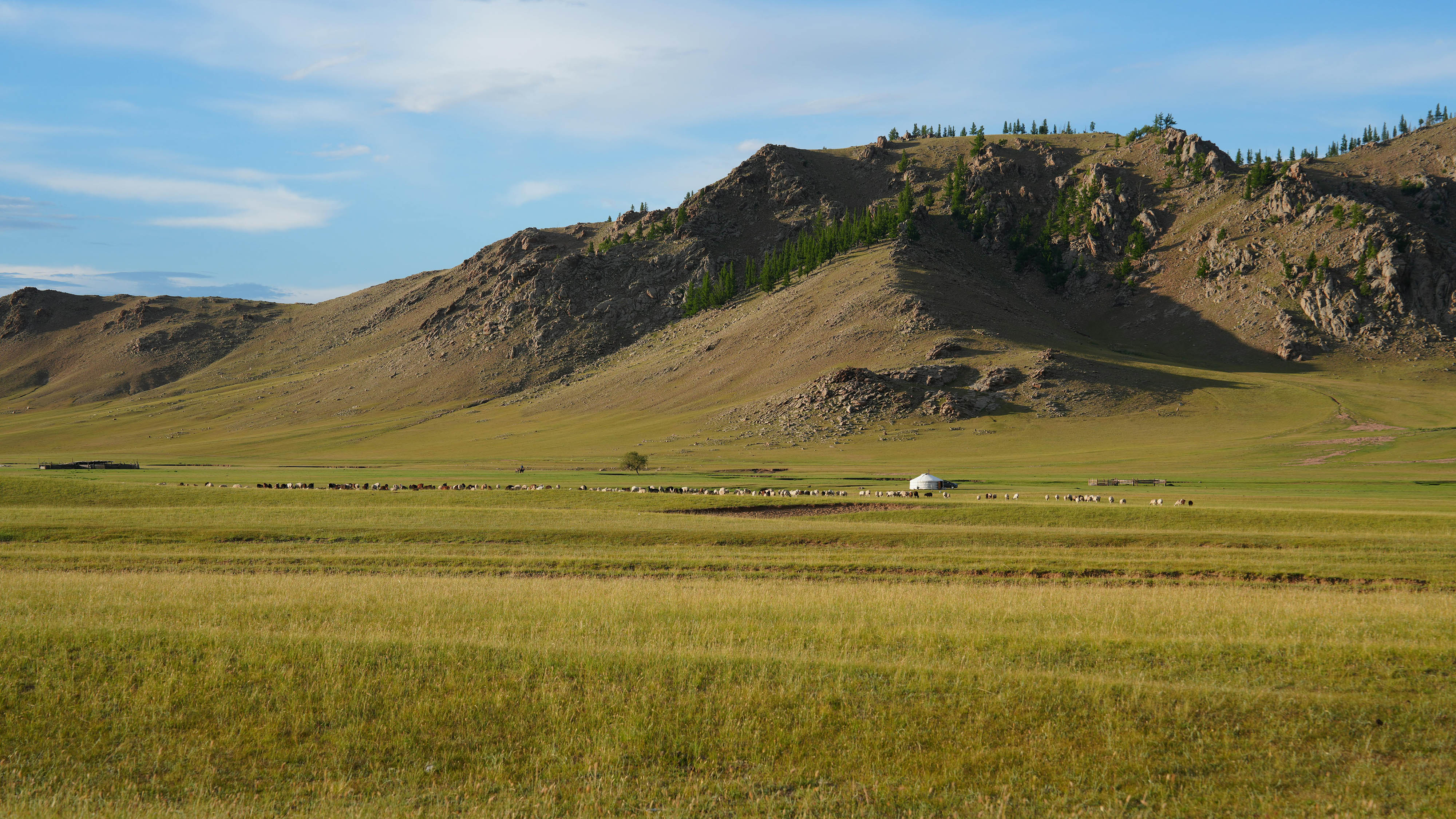
About Mongolia
Mongolia is truly one of the world's last undiscovered travel destinations and the safest country to visit.
Traditional Mongolian music centers on the morin khuur (horse-headed fiddle), long songs (urtiin duu), and khoomii (throat singing), three traditions so significant that UNESCO has recognized all of them as Masterpieces of the Intangible Cultural Heritage of Humanity. Music in Mongolia developed hand in hand with nomadic life, with instruments traditionally made from wood, bone, leather, and horsehair, and songs built around themes of horses, nature, and the vastness of the steppe.
UNESCO Recognition of Mongolian Music
Few countries have as many musical traditions formally recognized by UNESCO as Mongolia:
- Urtiin Duu (Traditional Folk Long Song) – proclaimed a Masterpiece of Oral and Intangible Heritage in 2003, formally inscribed on UNESCO's Representative List in 2008
- Traditional Music of the Morin Khuur – also proclaimed in 2003 and inscribed in 2008
- Khoomei (Mongolian Traditional Art of Singing) – inscribed on UNESCO's Representative List in 2010
This level of recognition reflects just how central these traditions are, not only to Mongolian identity, but to humanity's broader musical heritage.
Morin Khuur: The Horse-Headed Fiddle
The morin khuur is Mongolia's most iconic instrument and, by presidential recognition, its official national instrument, with a state orchestra established to preserve and perform its traditional repertoire.
Design and construction: The morin khuur is a two-stringed fiddle with a long, straight neck curving at the top into a carved horse's head. Both the strings and the bow are traditionally made from horsehair. Twelve animal figures, corresponding to the twelve-year cycle of the lunar calendar, are often carved along the neck, and five additional animals, horse, camel, cow, sheep, and goat, representing Mongolia's traditional symbols of wealth, appear near the top.
From ladle to fiddle: According to tradition, the instrument began as a simple milk ladle strung with strings, originally called shanagan khuur (shanaga meaning ladle). Over time, its body took on a trapezoid shape, and skilled carvers began decorating it with increasingly elaborate figures, eventually adding the horse's head that gave the instrument its modern name.
The legend of the morin khuur: According to legend, a poor herder once owned an extraordinary horse, faster than any bird and able to cover vast distances in an instant. When the horse died suddenly outside his ger, the grieving herder built a fiddle from its bones, tendons, and hair, mounting its head atop the instrument's neck. Playing the fiddle, he found he could recreate the horse's gallop, trot, and neigh, a way of staying spiritually connected to the animal he'd lost. This story remains the most widely told origin tale of the morin khuur today.
Nearly every Mongolian family aspires to own a morin khuur, despite the cost of a handmade instrument, and it remains the instrument most closely associated with Naadam, weddings, and other major ceremonies. For more on where to find one as a souvenir, see our guide: What to Buy in Mongolia
Long Song (Urtiin Duu)
Long song is considered the oldest form of Mongolian melody, closely tied to the vastness of the steppe and the solitude of nomadic life. Singers extend each syllable across long, sustained notes, modulating vowels for as long as possible, producing a style that's often melancholic and deeply evocative of open landscape. Long songs are performed at weddings, the inauguration of a new home, the birth of a child, and other major life events, and they remain a fixture of Naadam Festival as well.
Short Song (Bogino Duu)
Short song is a more recent musical form, quick, lively, and often humorous, covering everyday themes like love, home, horses, and daily life. Technically simpler than long song, it remains a constant presence in everyday Mongolian social life, from casual gatherings to celebrations.
Magtaal (Ode)
Magtaal is a form of poetic praise with roots in shamanic poetry, performed as an epic-like hymn dedicated to sacred mountains, a champion wrestler, or a winning racehorse. It's performed at all major events of nomadic life, and no Naadam Festival would feel complete without one.
Epic Songs
Mongolia's most notable epics, including the Geser and Jangar cycles, are passed down by bards in sung, versified form, sometimes accompanied by the morin khuur, the tovshuur (a traditional lute), or khoomii throat singing. These epic traditions represent some of the longest continuously performed oral literature in the world.
Khoomii (Throat Singing)
Khoomii, or overtone singing, is likely the oldest and most remarkable of Mongolia's vocal traditions. A single performer produces two or even three distinct pitches simultaneously, a low, continuous drone created by forcing air through a constricted throat, layered with higher harmonic tones shaped by precise tongue and mouth positioning. The result can sound remarkably close to a flute or a jaw harp.
Khoomii is closely linked to shamanism and traditionally imitates sounds from nature, wind, flowing rivers, and birdsong. It was historically practiced almost exclusively by men, though this has broadened over recent decades. For a modern example of khoomii reaching global audiences, see our guide to The Hu, the Mongolian band that blends throat singing and traditional instruments with heavy rock.
Bielgee: Mongolia's National Dance
Bielgee is Mongolia's classical traditional dance, particularly associated with western Mongolia, performed to instruments including the morin khuur and yochin (a hammered dulcimer). Traditionally performed within the confined space of a ger, seated in a circle around the hearth, bielgee relies almost entirely on upper-body movement, hand gestures, shoulder motion, and facial expression, since dancers have little room to move their feet.
Bielgee is fundamentally a descriptive dance, a kind of pantomime depicting everyday herding life: milking livestock, cooking, or hunting. The dance typically unfolds in two contrasting sections. The first, called elkhendeg, is slow and solemn, with graceful, sweeping arm movements. The second, joroo mori, shifts abruptly into a lighter, more energetic rhythm, imitating the gait of a trotting horse.
Experiencing Mongolian Music as a Traveler
- Live performances in Ulaanbaatar regularly combine morin khuur, khoomii, and traditional dance in a single show, often alongside contortion performances
- Naadam Festival, held every July, features live long song and magtaal performances as part of its opening ceremonies
- Countryside ger camps sometimes arrange evening performances by local musicians as part of a cultural stay
- Instrument shops in Ulaanbaatar sell handmade morin khuur and other traditional instruments, a distinctive and functional souvenir for travelers with a musical interest
Frequently Asked Questions
What is Mongolia's national instrument?
The morin khuur, or horse-headed fiddle, is recognized as Mongolia's national instrument and is central to ceremonies including weddings and Naadam.
Has UNESCO recognized Mongolian music?
Yes, Urtiin duu (long song) and the morin khuur were both inscribed on UNESCO's Representative List of Intangible Cultural Heritage in 2008, and khoomii (throat singing) followed in 2010.
What is khoomii throat singing?
Khoomii is a vocal technique where a single singer produces two or more pitches at once, a low drone combined with higher harmonic overtones, traditionally used to imitate sounds from nature.
What is the difference between long song and short song?
Long song (urtiin duu) is slow, sustained, and often melancholic, reflecting the vastness of the steppe, while short song (bogino duu) is quicker, livelier, and often humorous, covering everyday themes.
What is bielgee?
Bielgee is Mongolia's traditional dance, especially associated with western Mongolia, performed in a seated position using hand, shoulder, and facial movement to depict scenes of everyday herding life.
Where can travelers experience traditional Mongolian music?
Regular cultural performances in Ulaanbaatar, Naadam Festival, and evening performances at some countryside ger camps all offer opportunities to hear live traditional music.
What is the legend behind the morin khuur?
According to legend, a grieving herder built the first morin khuur from the remains of his beloved horse after it died, allowing him to musically recreate its gallop and voice.
Can tourists buy a morin khuur in Mongolia?
Yes, Handmade morin khuur are sold in instrument shops in Ulaanbaatar, ranging from souvenir-sized versions to fully playable instruments.