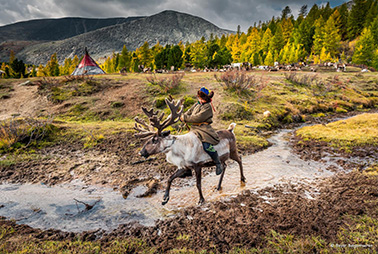
Who Are the Tsaatan Reindeer Herders of Mongolia? 2026 Travel Guide

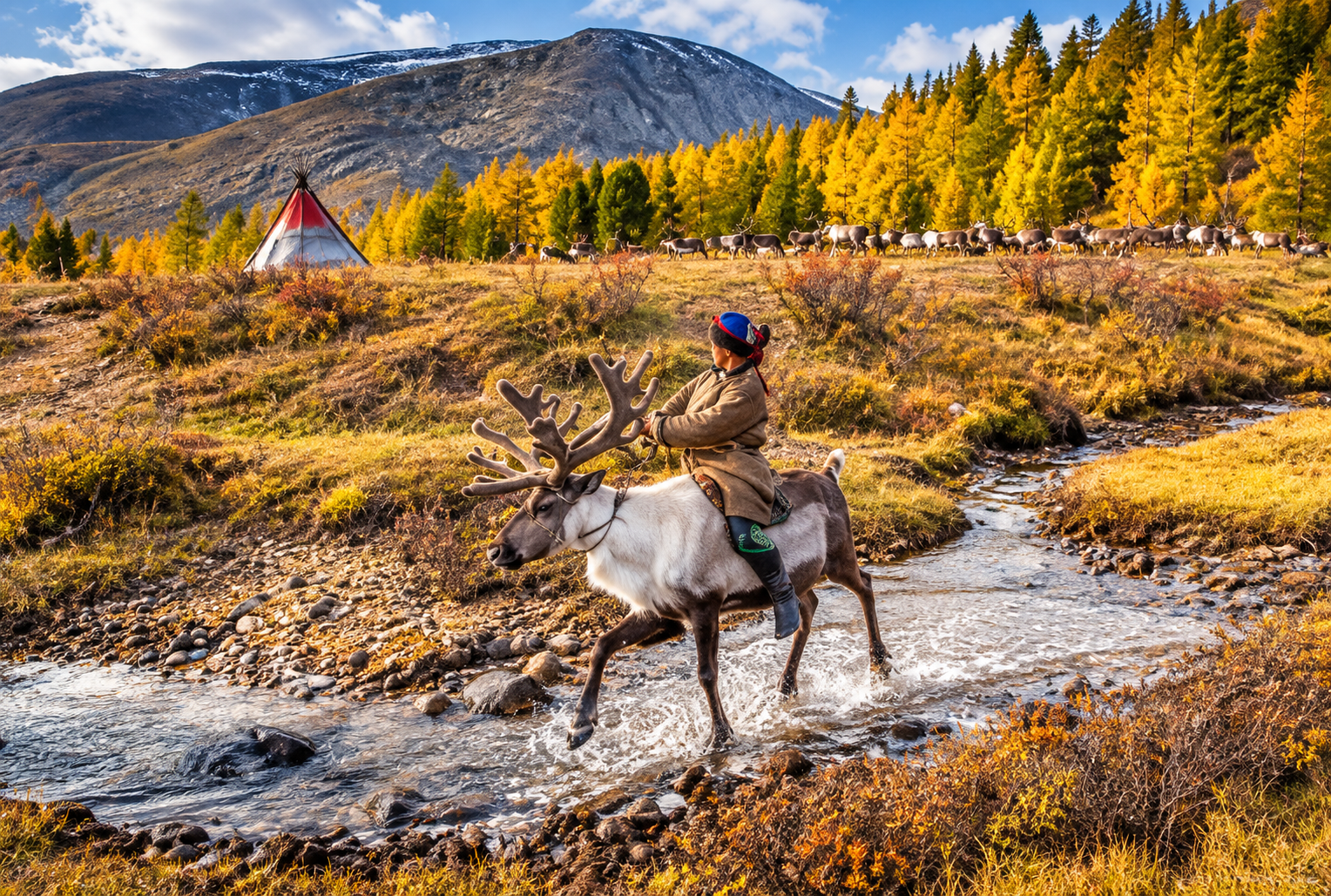
Deep in the taiga forests of northern Mongolia lives one of the country's smallest communities: the Dukha reindeer herders, widely known in Mongolia as the Tsaatan. Their lives are closely connected with reindeer, seasonal migration, the forests of the Sayan Mountains, and traditions that differ significantly from the livestock herding seen across Mongolia's open steppe. Visiting a Tsaatan family is possible, but it is not an ordinary sightseeing stop. Their camps move with the seasons, access can require days of travel and horseback trekking, and visitors enter a real family home rather than a cultural attraction.
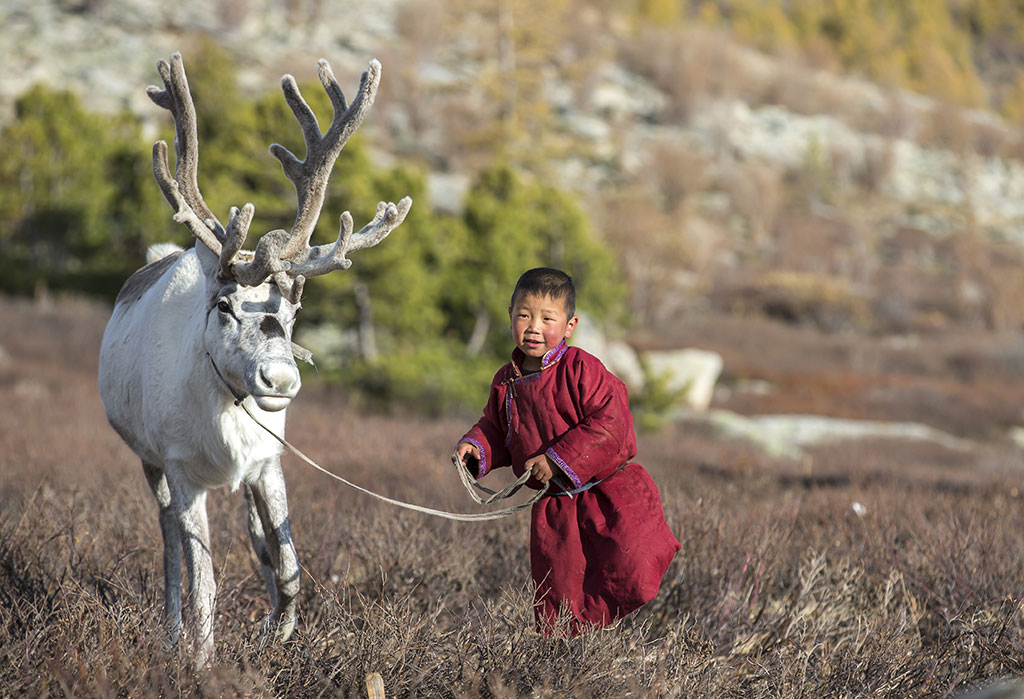
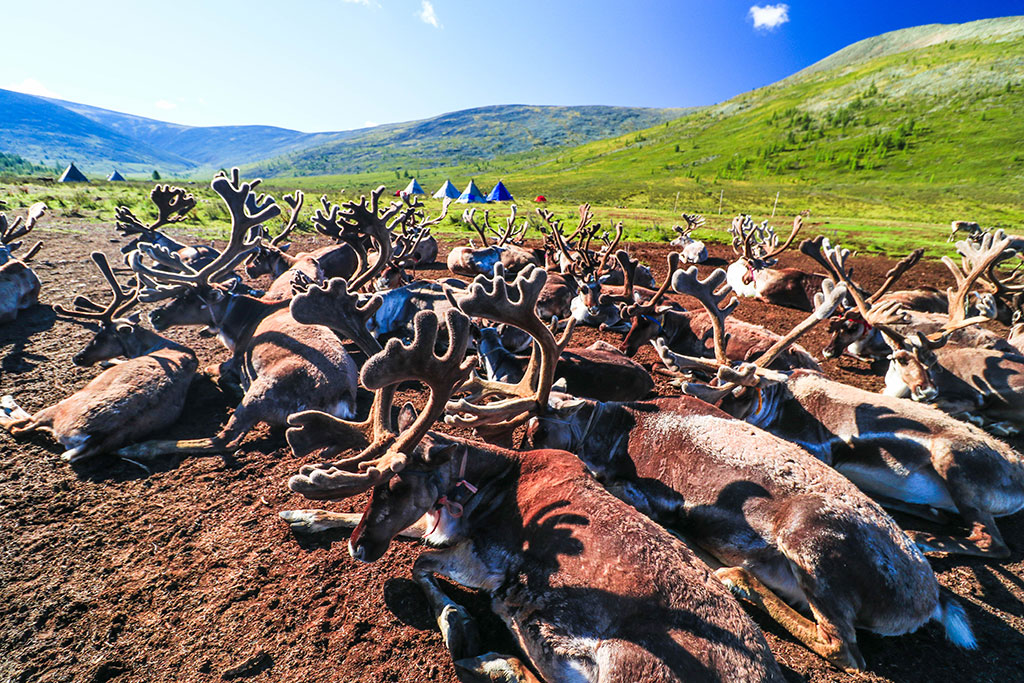
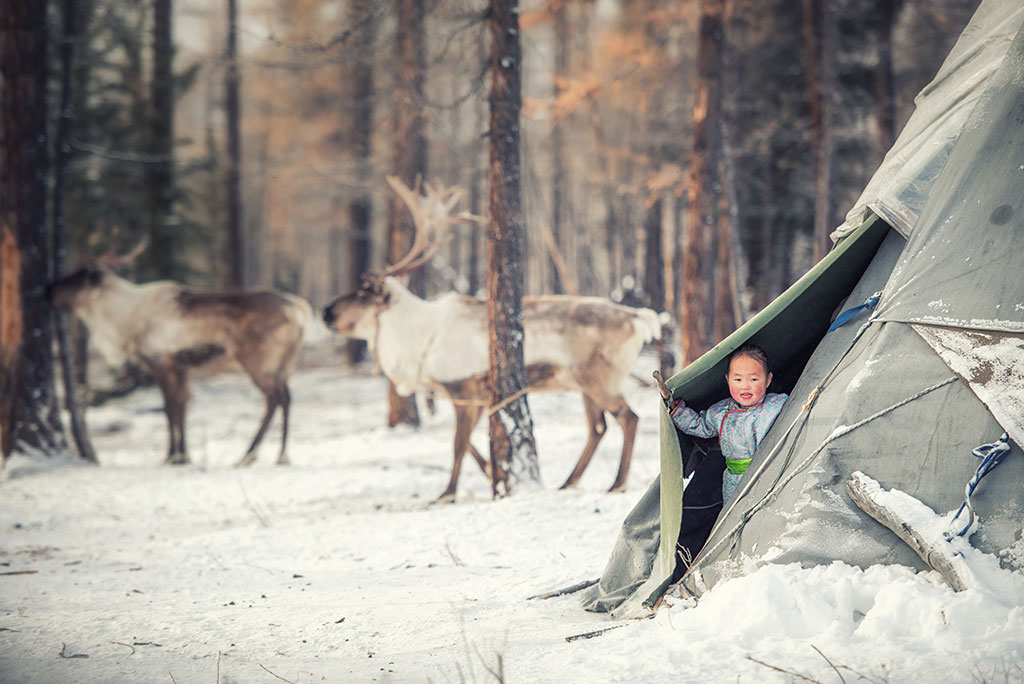
The Tsaatan, also known as the Dukha, are a small Tuvan-speaking reindeer-herding community living mainly in the East and West Taiga around Tsagaannuur soum in Khuvsgul Province. Reindeer provide milk, transportation, pack carrying, and an important connection to Dukha cultural and spiritual life.
Recent Mongolian reporting says more than 200 Tsaatan people living in the East and West Taiga herd approximately 2,800 reindeer. Because families and animals move and livestock numbers change, exact totals should always be treated as time-specific rather than permanent figures.
Travelers will see both names.
Tsaatan is the name commonly used in Mongolian and broadly means people associated with reindeer. Dukha is the name the community uses for itself and is common in academic and Indigenous-rights sources.
For travel writing, using Tsaatan (Dukha) makes the subject clear to readers while also acknowledging the community's own name.
The Dukha should not be described as a “lost tribe,” “primitive people,” or a community untouched by the modern world.
They are modern Mongolian citizens maintaining a distinctive reindeer-herding culture.
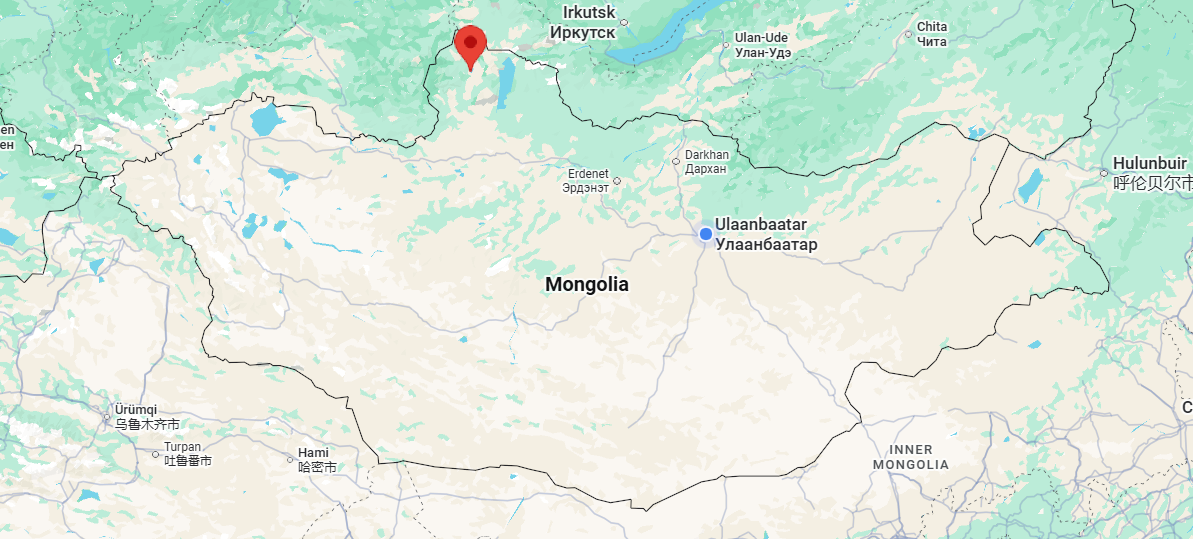
The main reindeer-herding communities live in the East Taiga and West Taiga around Tsagaannuur soum in Khuvsgul Province, close to Mongolia's northern border with Russia.
This is not the same environment travelers see around the grasslands of central Mongolia.
The taiga includes:
Reindeer are well suited to these colder environments.
Mongolian reporting describes the Tsaatan as living and moving through the East and West Taiga throughout the year with their herds.
Exact numbers depend on whether a source counts only people actively herding reindeer in the taiga or also people of Dukha heritage living in Tsagaannuur and other settlements.
Recent Mongolian reporting published in 2025 states that more than 200 Tsaatan people in the East and West Taiga were herding around 2,765 to 2,800 reindeer. Mongolia's 2023 livestock census recorded 2,928 reindeer nationally.
This makes the Dukha a very small community.
That is also why tourism should be handled carefully. A relatively small number of households may receive a large share of Mongolia's international visitors interested in reindeer culture.
The Dukha are culturally and historically connected with Tuvan peoples of the Sayan Mountain region.
For generations, families moved through areas that are now divided by the Mongolia-Russia border. Modern national borders and political changes during the 20th century restricted this movement and separated related communities between Mongolia and what is now the Russian Republic of Tuva.
Their history should therefore not be simplified into a story that they suddenly “came to Mongolia” at one exact moment.
Their traditional territory existed before today's border controlled movement across the region.
Reindeer are at the center of traditional Dukha life.
They have traditionally been used for:
FAO and United Nations sources describe Dukha reindeer husbandry as a small-herd pastoral system in which reindeer are particularly important for transport and milk.
Unlike sheep or goats in many other parts of Mongolia, reindeer are not primarily raised as everyday meat animals.
Families generally place great value on maintaining and increasing their herds.
Reindeer meat can be used, but it is misleading to imagine that Dukha families regularly slaughter large numbers of reindeer for food.
Historically, reindeer have been particularly valuable for milk and transport. When animals are culled, their meat, hide, and other parts can be used, but maintaining the herd has long been important to family livelihoods.
Modern households may eat mutton and other foods obtained through trade or from neighboring livestock-herding communities.
So visitors should not assume that every meal in a Tsaatan camp contains reindeer meat.
Reindeer milk is much richer than ordinary cow's milk.
Depending on the household and season, it may be used in tea or made into dairy products such as cheese.
Visitors staying with families may be offered reindeer-milk tea or dairy foods when milk is available.
Do not expect the same foods during every visit.
Milk production changes with season, animals, and household circumstances.
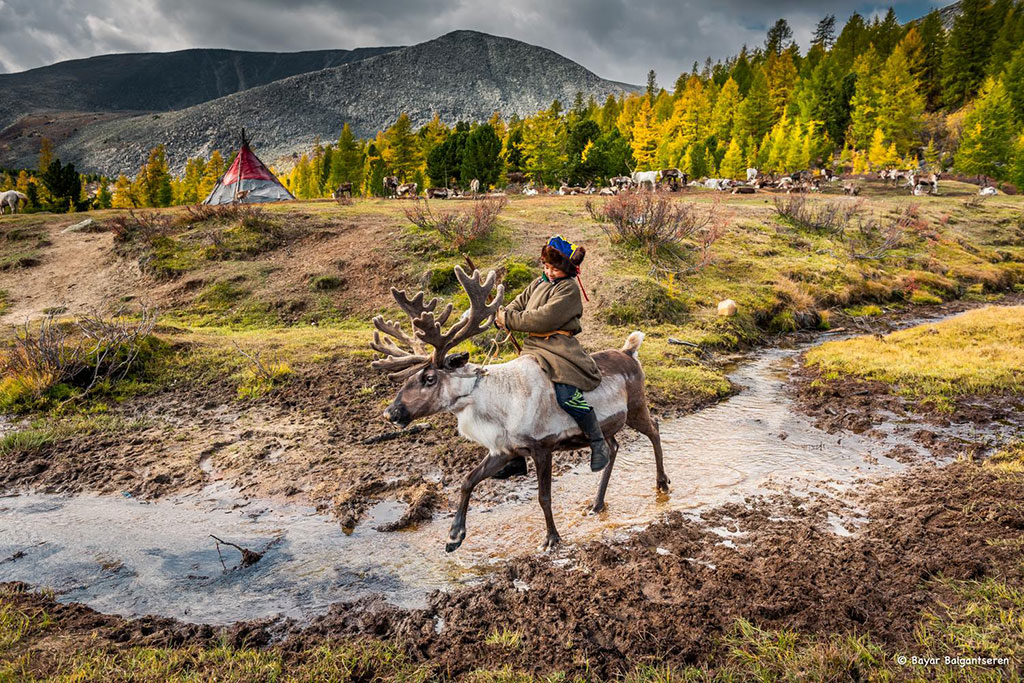
Yes, riding reindeer is part of traditional Dukha transport.
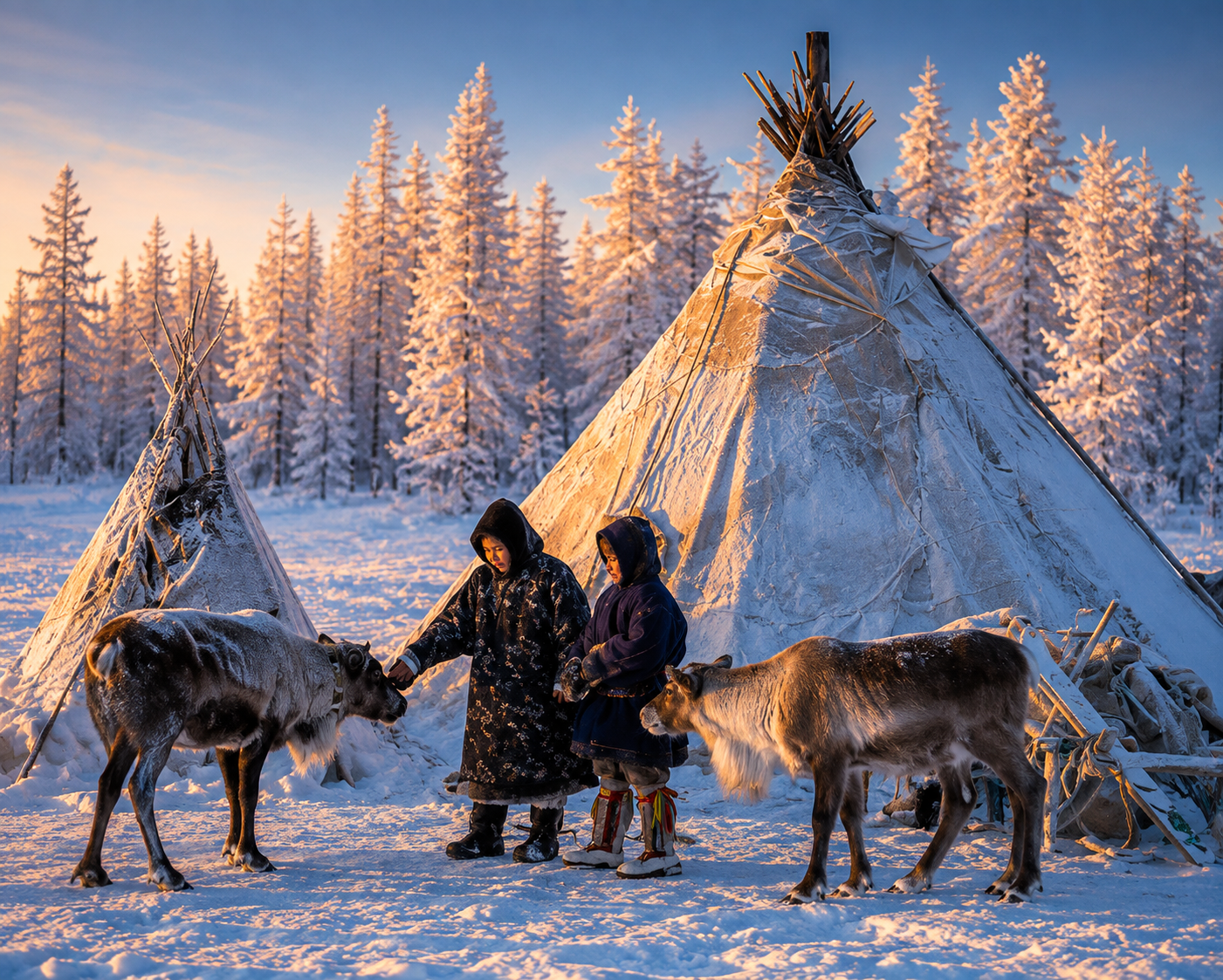
Recent archaeological research also notes that mounted reindeer riding remains an important form of transport within Tsaatan pastoral life in northern Mongolia.
Reindeer can also carry supplies through terrain where vehicles cannot travel.
Visitors may sometimes be offered the opportunity to ride, but this should never be treated as automatically included.
The herder should decide:
A reindeer is a working animal, not a photo prop.
Reindeer require access to appropriate grazing, including lichens and other vegetation found in the taiga.
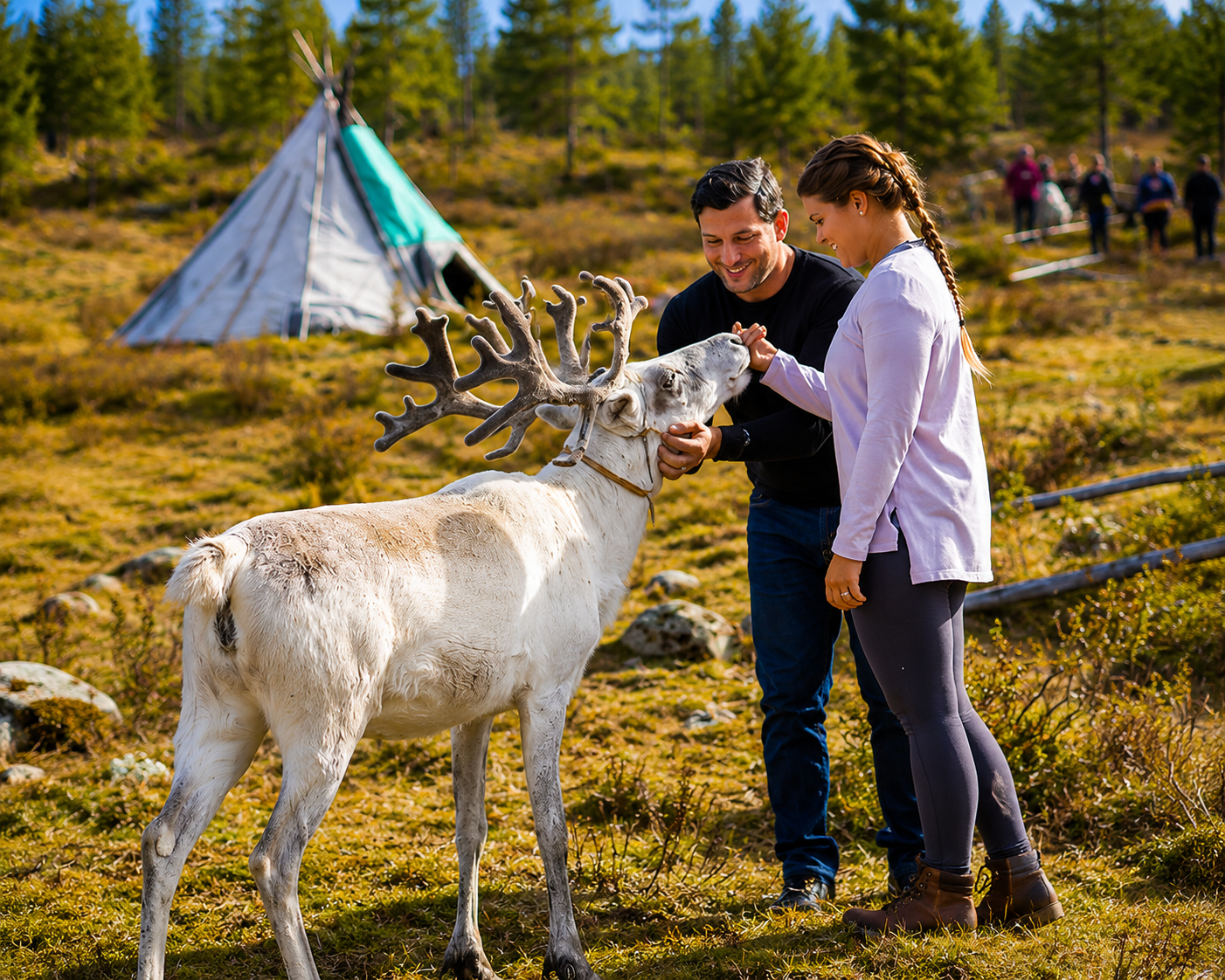
Families therefore move between seasonal areas according to weather, temperature, pasture, water, insects, and the condition of their animals.
This mobility is central to the herding system.
The number of moves and distance covered is not identical every year or for every family.
Weather, pasture and family needs can change the pattern.
That is why travelers should not expect a Tsaatan camp to remain in exactly the same GPS location from one year to the next.
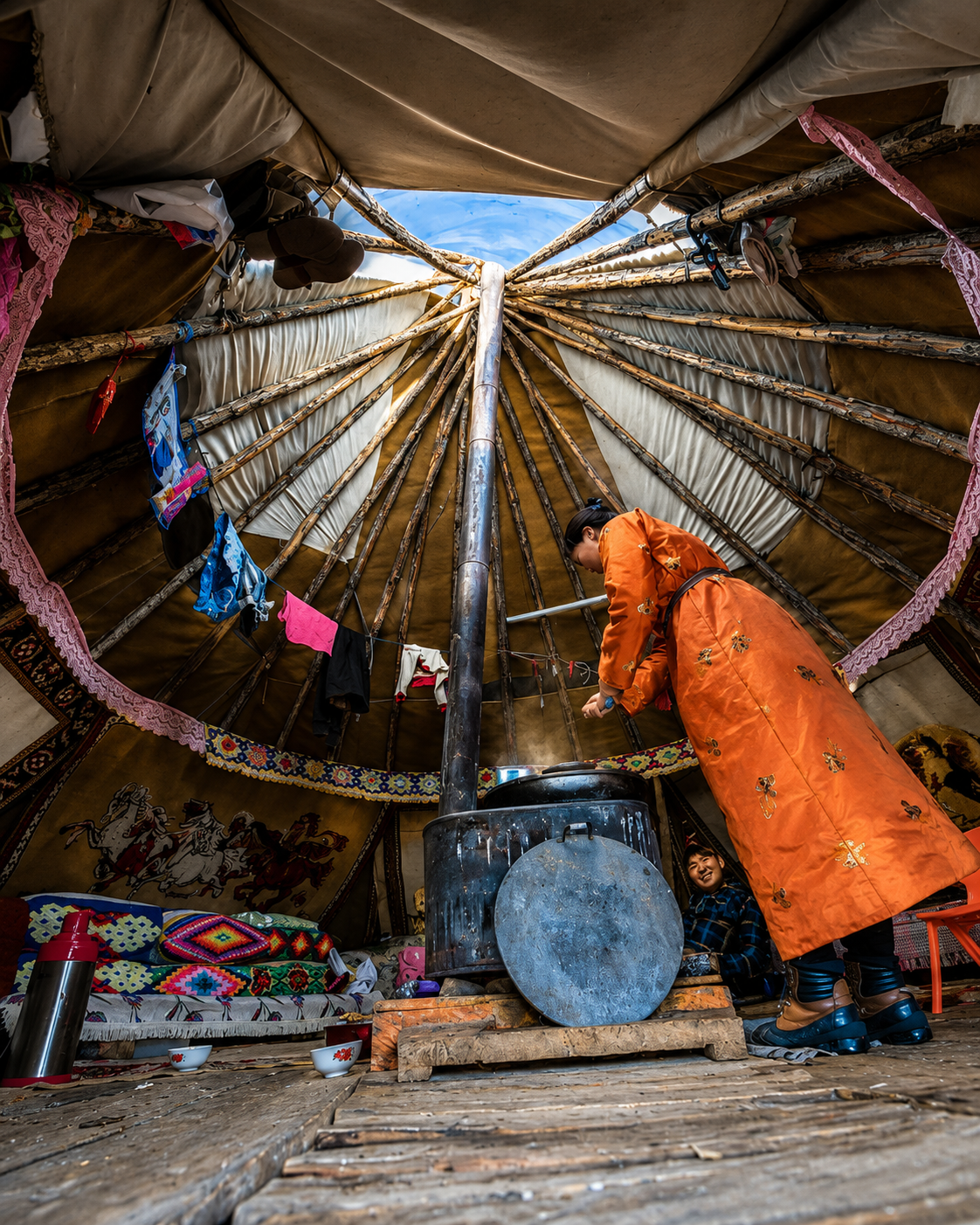
In the taiga, Dukha families traditionally use a conical dwelling commonly called an ortz, urts, or similar transliteration.
Its shape may remind international travelers of a tipi, but it belongs to the community's own cultural tradition and environment.
The dwelling is designed to be portable because families move with their reindeer.
Inside you may find:
It is a working family home.
Do not enter, move objects, or photograph the interior without permission.
They are part of Mongolia's wider mobile pastoral culture, but their herding system is different from the better-known steppe herders.
Both are living pastoral cultures, but they should not be presented as identical.
The East Taiga is one of the two main areas associated with Dukha reindeer herders near Tsagaannuur.
It has historically been more accessible to visitors than the West Taiga and has received more tourism. Research on tourism among the Dukha has noted this uneven distribution of visitors between the two areas.
Even the East Taiga remains remote.
Reaching a family camp normally requires local knowledge, suitable transport, and often horseback travel after leaving the main road.
The West Taiga is generally more remote and receives fewer international visitors.
Travel conditions depend strongly on:
The West Taiga should not automatically be described as “more authentic.”
Fewer tourists do not make one community more authentic than another.
Both areas are home to real families adapting their lives to changing economic, environmental, and social conditions.
For travelers deciding between them:
The best choice depends on current camp locations and travel conditions, not only on a map.
A true taiga visit is one of Mongolia's more demanding cultural journeys.
A typical route involves several stages.
Step 1: Travel From Ulaanbaatar to Murun
Murun is the capital of Khuvsgul Province and the main transport center for northern Mongolia.
Domestic flights can greatly reduce the journey from Ulaanbaatar.
Step 2: Travel Toward Tsagaannuur
From Murun, travelers continue by road toward Tsagaannuur soum.
Road conditions can be rough and travel times depend on weather.
Step 3: Meet Local Guides and Horses
The final section cannot always be completed by vehicle.
National Geographic's account of reaching the East Taiga describes traveling through mud, rivers and forest on horseback after leaving the road network.
Step 4: Ride or Trek to the Current Camp
Because the families move, your destination is a current camp, not a permanent tourist village.
Local guides must know where the household is staying.
This is one reason independent travel can be difficult.
No.
Lake Khuvsgul and the deeper Tsaatan taiga are both in northern Mongolia, but visiting the lake is not the same experience as traveling to a reindeer-herding family's seasonal camp.
Around Khuvsgul, visitors may encounter reindeer and local cultural experiences without making the much longer journey into the East or West Taiga.
A true taiga visit usually requires additional road travel and then horse or trekking access.
Travelers should therefore ask exactly what is included when a tour says “visit the reindeer people.”
Do not plan it as a quick side trip from Ulaanbaatar.
A genuine visit requires time for:
Academic research on Dukha tourism found that many visitors stayed with families for approximately two to four days, although total travel time to and from the region is much longer.
For most travelers, the whole northern Mongolia journey requires considerably more time than the family stay itself.
The journey is part of the experience.
A family stay is simple.
Do not expect:
Instead, you may experience:
The exact experience depends on what the family needs to do that day.
That unpredictability is part of visiting a working herding household.
Shamanic traditions have an important historical and spiritual place in Dukha culture.
They were restricted during Mongolia's socialist period but survived and were later practiced more openly.
Travelers should not expect a shamanic ceremony simply because they visit a Tsaatan family.
A ceremony can have personal, family, healing, or spiritual meaning.
If one occurs:
There is also no sound basis for saying female shamans are automatically more powerful than male shamans.
Spiritual authority cannot be reduced to a simple gender ranking.
No.
This is one of the most important misconceptions to avoid.
Dukha families may use:
National Geographic specifically described children using smartphones and families communicating by mobile phone even while living in extremely remote taiga camps.
Modern technology does not make reindeer herding less authentic.
Culture changes because people are alive, not because it has disappeared.
It is better to avoid dramatic phrases such as “the last disappearing tribe.”
The Dukha are a very small community, and they face real challenges involving language, education, access to healthcare, land use, reindeer health, climate, employment, and tourism. United Nations reporting has identified them as one of Mongolia's smallest ethnic communities.
But the community is also actively maintaining reindeer herding and cultural knowledge.
Recent numbers show that Mongolia's reindeer herd is much larger than it was during periods of serious decline in previous decades. In 2023, Mongolia counted 2,928 reindeer.
A better description is a small living culture facing modern challenges, not a culture frozen at the edge of extinction for tourists to observe.
Tourism can provide valuable income.
Visitors may pay for:
A study of tourism among Dukha families found that many herders involved with visitors viewed tourism positively. However, it also found concerns about uneven income, compensation, cultural representation, and disruption to normal camp life and migration.
The most responsible model is one where families have control over:
Your visit should fit around the family.
The family should not have to reorganize reindeer herding around your photographs.
A gift can be appreciated, but payment for hospitality should come first.
Do not treat gifts as a substitute for fair compensation.
If you would like to bring something, ask your guide what is genuinely useful.
Avoid handing random sweets, toys, or money directly to children without asking their parents.
A better approach is:
Research on Dukha tourism specifically identifies compensation and gift giving as issues that need to be handled carefully.
Never assume that traveling a long distance gives you permission to photograph someone.
Ask before taking:
Do not repeatedly direct people to move, pose, change clothes, or perform household work for your camera unless they clearly want to participate.
Reindeer also deserve space.
Do not chase animals, pull antlers, or move between a mother and calf for a photograph.
The best images normally come from observing quietly.
Reindeer riding is a genuine form of transport in Dukha culture.
That does not mean every visitor should automatically ride one.
If a family offers a ride:
The welfare of the reindeer comes before the travel experience.
The taiga can be cold and wet even during summer.
National Geographic's account describes snow on nearby mountains, swampy conditions and a genuine risk of hypothermia during an August journey.
Bring:
Pack for cold rain, not only for the temperature forecast in Murun.
Summer is the easiest season for most international travelers, but “summer” in the taiga does not mean consistently warm weather.
June through August brings long daylight and easier overall travel, but it can also bring:
Early autumn can be beautiful but temperatures fall quickly.
Winter offers an extraordinary landscape but requires serious cold-weather experience and much more preparation.
For a first visit, the warmer travel season is usually the practical choice.
Yes, and they often should.
A Tsaatan itinerary depends on:
Because the taiga lies close to Mongolia's international border, foreign travelers should also confirm current border-area and immigration requirements before departure. Mongolia maintains specific rules for travel in border areas, and requirements can change.
Build flexibility into the itinerary rather than demanding that a family stay in one location because your booking says Tuesday.
A good visit begins before you enter the taiga.
Choose an arrangement that:
Tourism research has specifically recommended greater Dukha ownership and control of tourism activity.
That principle is simple: the people you are visiting should benefit from and have control over the visit.
These are two very different Mongolia experiences.
If your main goal is simply to meet a Mongolian herding family, you do not need to travel all the way to the taiga.
Choose a Tsaatan journey because you are specifically interested in reindeer herding, northern Mongolia, and Dukha culture.
Yes, for travelers who understand what the journey involves.
This is not a comfortable excursion designed around checking attractions from a list.
You travel a long way to spend time in a remote environment where weather, animals and family routines determine what happens next.
That is precisely what makes the experience meaningful.
A good Tsaatan visit should leave you understanding more about the community rather than simply returning with a photograph on a reindeer.
Discover Mongolia has organized travel throughout Mongolia since 2004, and remote northern journeys are best planned around local guides, realistic travel time, current camp locations, and respectful arrangements with host families.
Are Tsaatan and Dukha the same people?
Yes, the two names generally refer to the same reindeer-herding community in northern Mongolia. Tsaatan is the commonly used Mongolian term, while Dukha is the community's own name and is widely used in research about the group.
Where do the Tsaatan live in Mongolia?
The main reindeer-herding communities live in the East and West Taiga around Tsagaannuur soum in Khuvsgul Province. Their seasonal camps move through the taiga rather than remaining at one permanent tourism site.
How many Tsaatan people are there?
Recent Mongolian reporting says more than 200 people were actively living and herding reindeer in the East and West Taiga. The broader population of people with Dukha heritage is larger, so totals differ depending on how they are counted.
How many reindeer are there in Mongolia?
Mongolia's 2023 livestock census recorded 2,928 reindeer, while more than 2,700 were being herded by Tsaatan families in the East and West Taiga. Reindeer numbers change each year.
Can tourists stay with Tsaatan families?
Yes, visits and overnight stays can be arranged with some families. They should be organized in advance and fairly compensated because the camps are working households rather than tourist accommodation.
Can tourists ride reindeer in Mongolia?
Yes, riding reindeer is part of traditional Dukha transportation, and visitors may sometimes be offered a ride. The herder should always decide which animal is suitable and whether riding is appropriate.
Do Tsaatan people practice shamanism?
Yes, shamanic traditions are part of Dukha cultural and spiritual history, although beliefs and practices vary between individuals and families. Ceremonies should be treated as private spiritual practices unless visitors are specifically invited to observe.
How difficult is it to visit the Tsaatan?
A true taiga visit is considerably more difficult than visiting Lake Khuvsgul. Reaching a seasonal camp can involve a domestic flight, long overland travel, rough roads, and several hours or more on horseback through wet or mountainous terrain.
Discover Mongolia has organized tailor-made tours since 2004.
We handle flights, accommodation, guides, vehicles — you focus on the journey.