Why the Gobi Desert Is Not Just a Desert (Discover Mongolia 2026)
The Gobi Desert in Mongolia spans approximately 800,000 km2 of the country's southern region. It contains the Khongoryn Els singing sand dunes (up to 300m high), Yolyn Am ice canyon, dinosaur fossil sites at Bayanzag (Flaming Cliffs), and habitat for wild Bactrian camels. The best time to visit is May to June or September to October to avoid peak summer heat.
The Mongolian Gobi is far more than a sea of sand—discover towering dunes, ice-filled canyons, dinosaur fossil sites, and rare wildlife in one extraordinary landscape.
The Gobi Desert is the most famous landscape in Mongolia and one of the most distinctive desert environments on earth. Few places match the combination of grandeur, scientific significance, and sheer visual drama that the Gobi delivers. Yet most visitors arrive with an image of endless rolling sand dunes and leave astonished by how wrong that picture was.
The Gobi is vast and varied -- a desert of extraordinary contrasts. In a single day of travel, you might cross grey gravel plains, descend into a narrow ice-filled canyon, climb to the top of a 300-metre sand dune that hums and sings in the wind, and scan a clifftop horizon stained orange and red where the bones of dinosaurs lie inches beneath the surface. This is a landscape that rewards curiosity, patience, and a willingness to look closely.
This guide covers everything you need to know before visiting the Mongolian Gobi: the top sites, best time to visit, how to get there, what to pack, and answers to the most common questions from travellers planning their first desert expedition.
The Gobi is one of Asia's largest desert regions, covering approximately 1.3 million km2 across southern Mongolia and northern China. Of that total, around 800,000 km2 lies within Mongolian territory
An area roughly equal to the combined size of France and Germany.
Contrary to popular image, the Gobi is not a sea of sand. Only approximately 5% of the Mongolian Gobi is covered by sand dunes. The remainder consists of gravel plains (gobi in Mongolian simply means "waterless place"), rocky outcrops, dry riverbeds, saxaul forests, and salt flats. The landscape is shaped by extreme temperature swings -- from -40C in January to +45C in the height of summer -- and by the rain shadow effect of the surrounding mountain ranges. Annual precipitation averages just 50 to 100 mm across most of the Gobi.
The Gobi contains five distinct ecological zones and the Gurvan Saikhan National Park (27,000 km2) in Omnogovi Province protects the main sites visited by tourists, supporting habitat for snow leopard, wild Bactrian camel, and the critically endangered Gobi bear (Mazaalai).
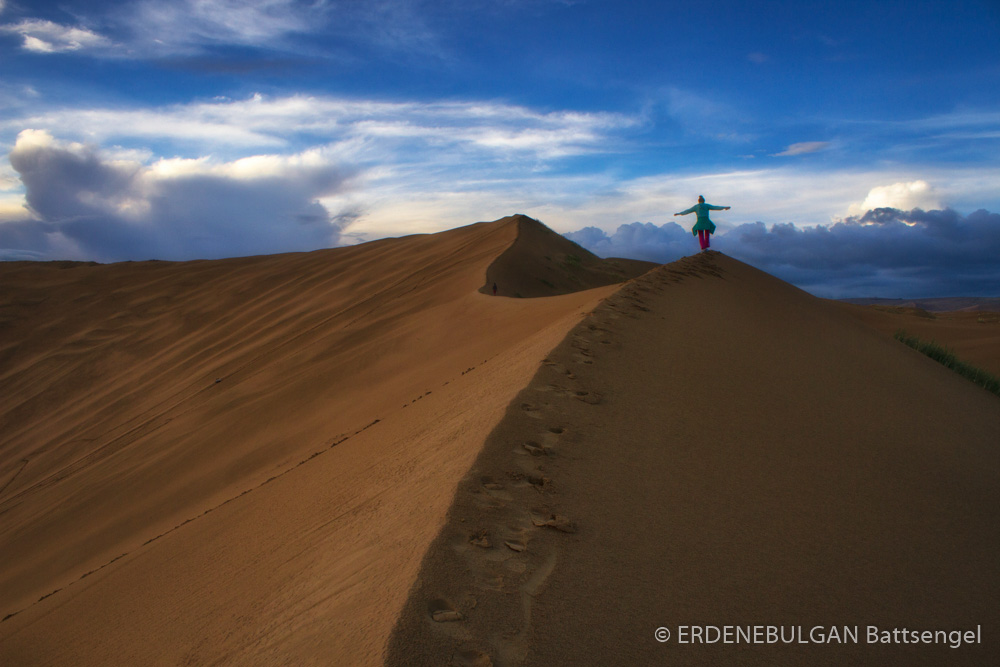
Khongoryn Els is one of the largest and most spectacular sand dune systems in all of Asia. The dunes extend for approximately 180 kilometres from west to east, reach up to 300 metres in height, and are up to 12 kilometres wide at their broadest point. They sit at the western edge of Gurvan Saikhan National Park, backed by the Gurvan Saikhan mountain range.
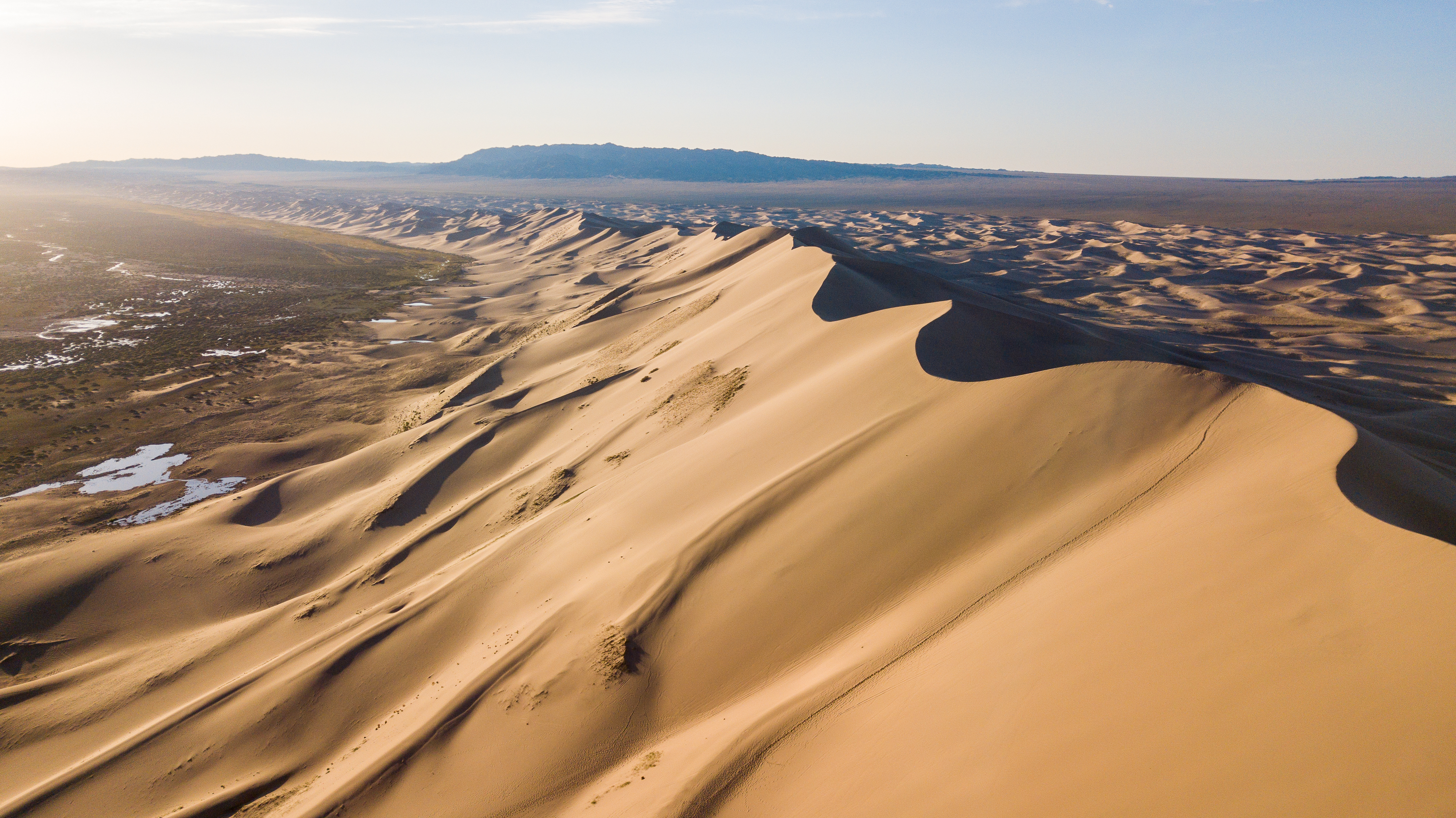
The dunes are nicknamed "singing sands" for the low, rumbling sound produced when the sand grains avalanche down the dune faces in strong wind. Climbing to the summit of the highest dune takes approximately 2 to 3 hours of effort through shifting sand and rewards you with one of the most extraordinary views in Central Asia. Bactrian camel rides along the base of the dunes are available from nearby ger camps, typically running 1 to 3 hours and costing $10 to $25 USD.
Yolyn Am translates as "Eagle's Mouth" and refers to a narrow gorge cutting into the Zuun Saikhan mountains in the heart of Gurvan Saikhan National Park. What makes it extraordinary is the ice that accumulates on the canyon floor from winter snowmelt: in most years, the canyon retains substantial ice formations well into June or July, and in cold years ice can persist almost year-round.
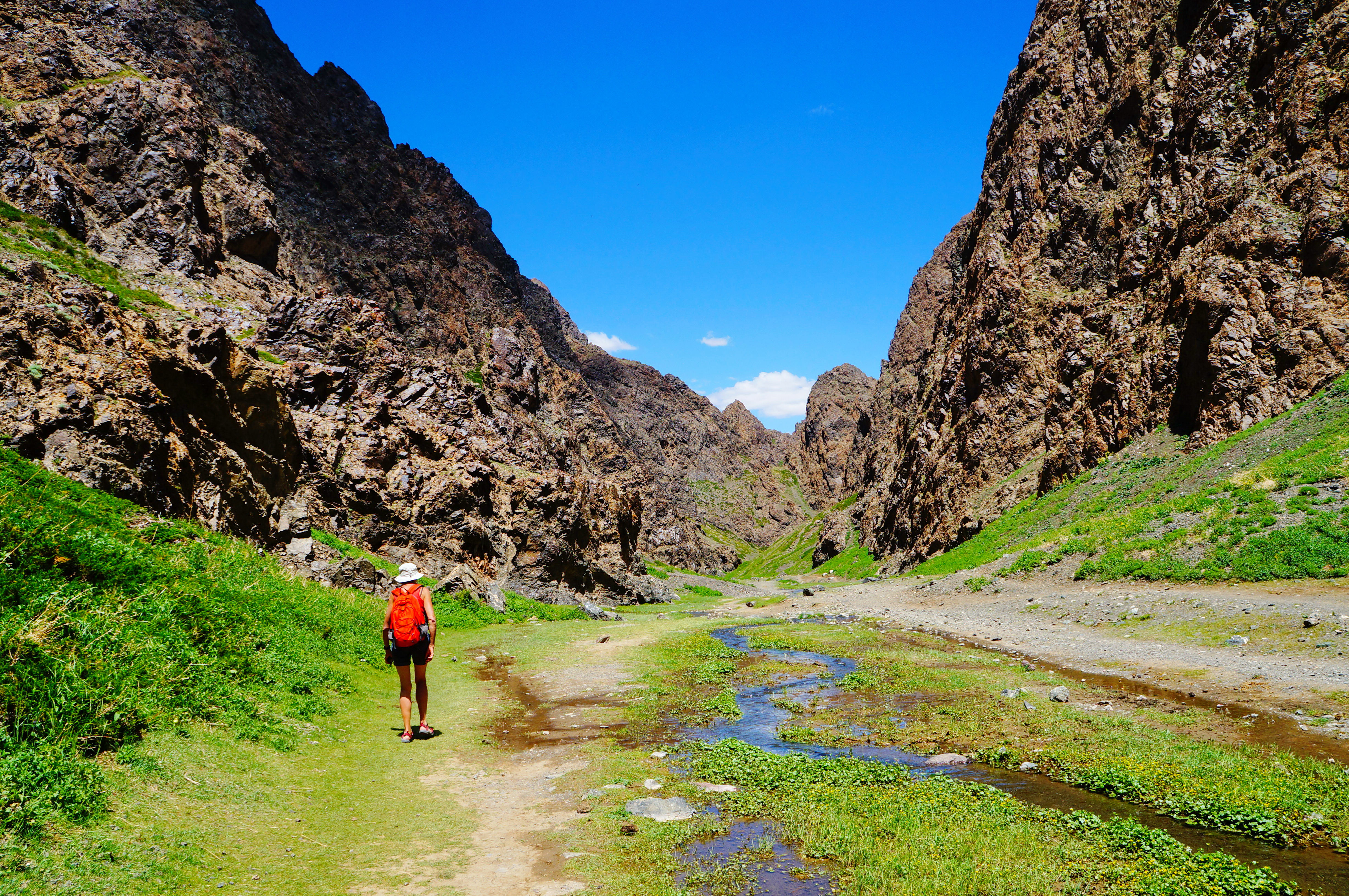
The canyon is 22 kilometres long and 65 kilometres from Dalanzadgad. The gorge supports a population of lammergeier vultures frequently visible soaring on updrafts.
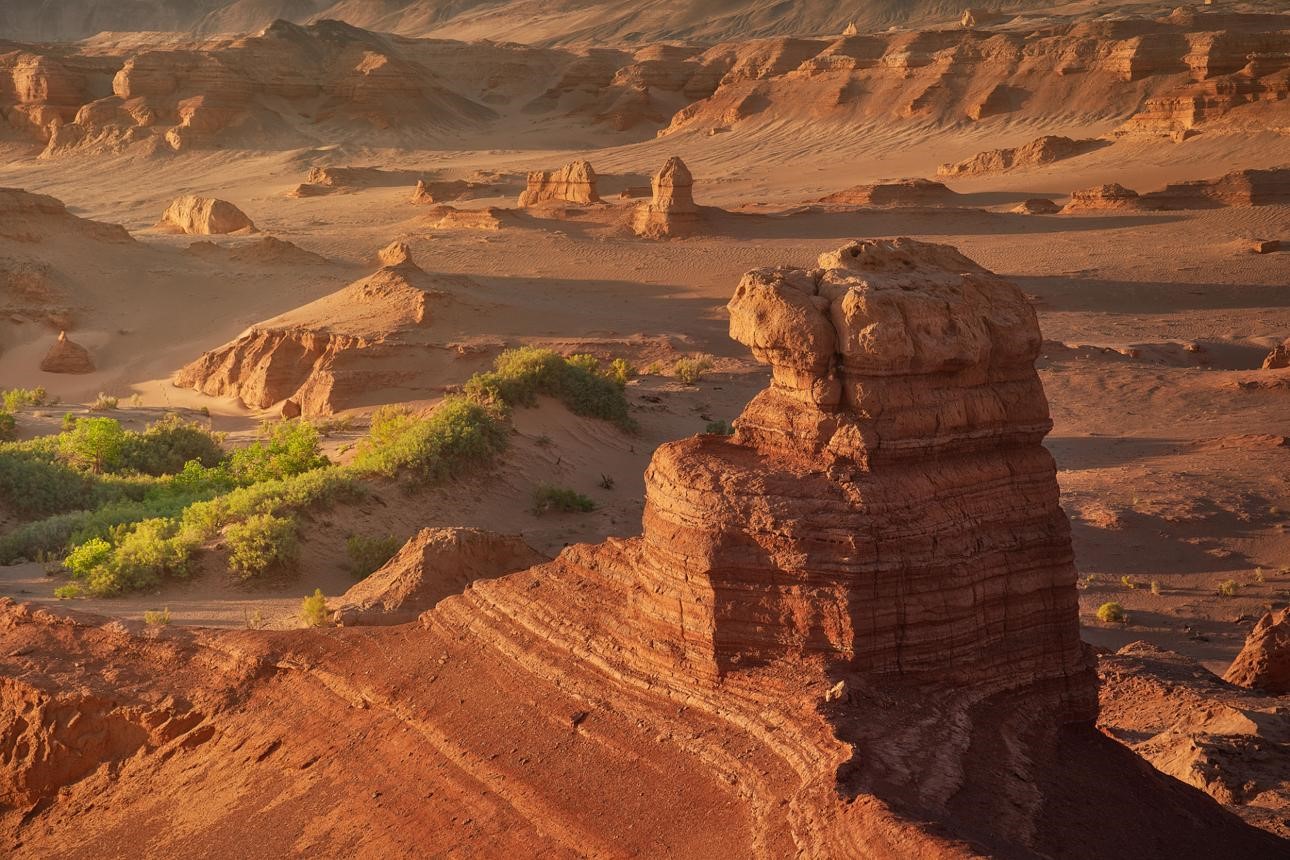
Bayanzag is where the modern science of palaeontology was transformed. In 1922, American explorer Roy Chapman Andrews, leading an expedition for the American Museum of Natural History, discovered the first dinosaur eggs ever found by science at this site. The discovery proved that dinosaurs hatched from eggs. Protoceratops and Velociraptor fossils were also found here in abundance.
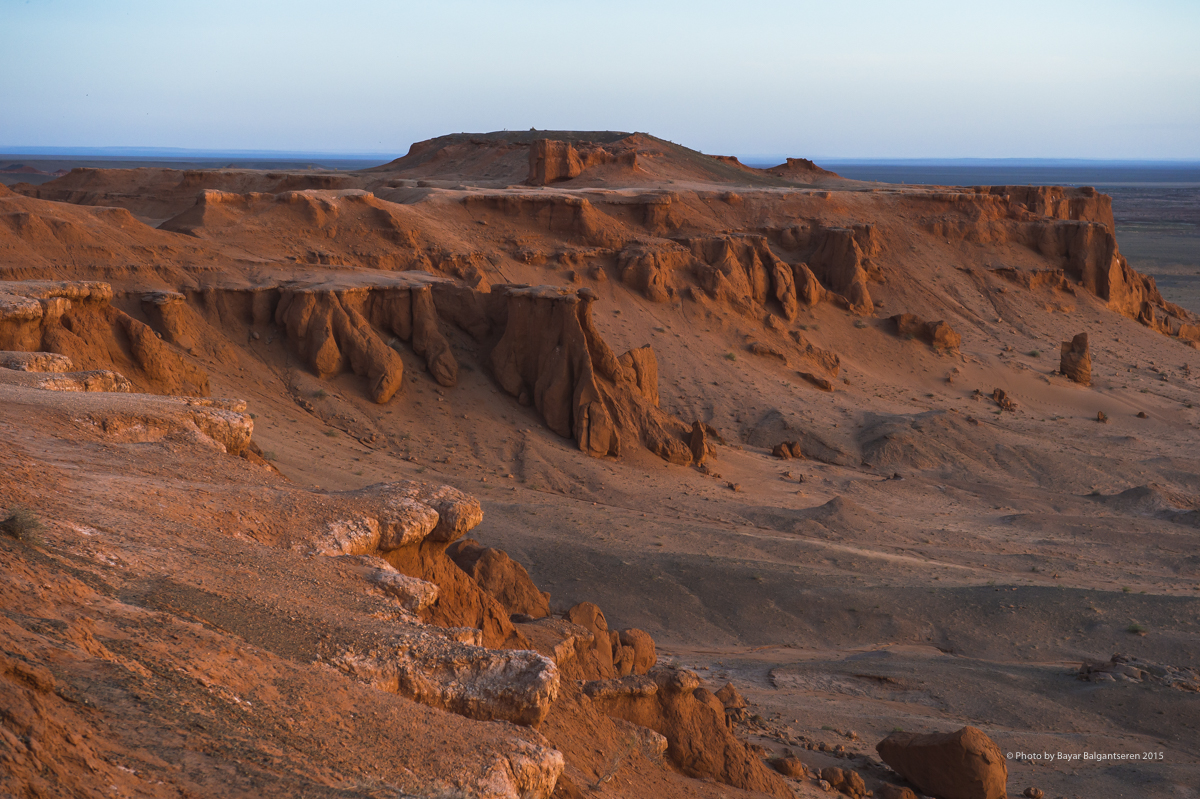
The site takes its popular English name from the intense orange-red colour of the sandstone formations, which glow like embers in the light of sunset and sunrise. The cliffs rise approximately 60 metres above the surrounding desert floor. Fossil fragments remain visible in the eroding cliff faces, though it is illegal to remove any material from the site.
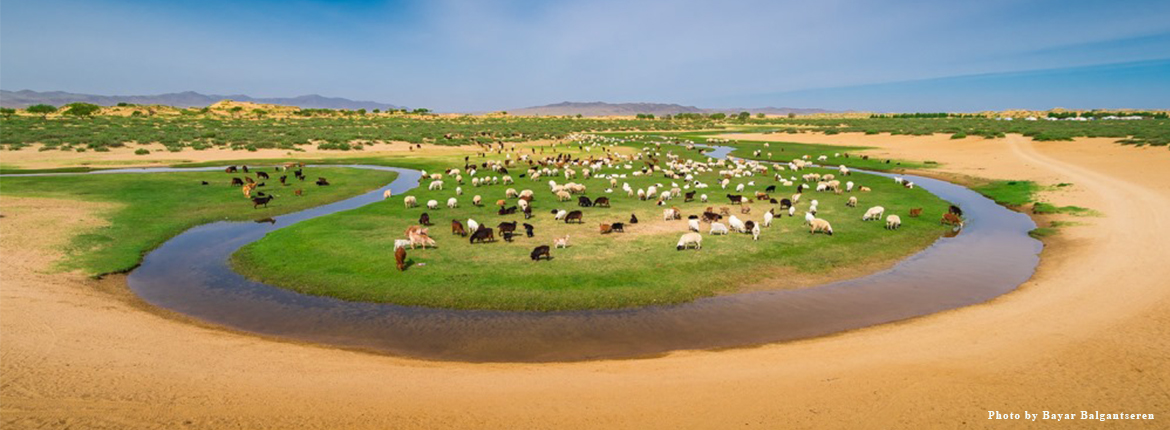
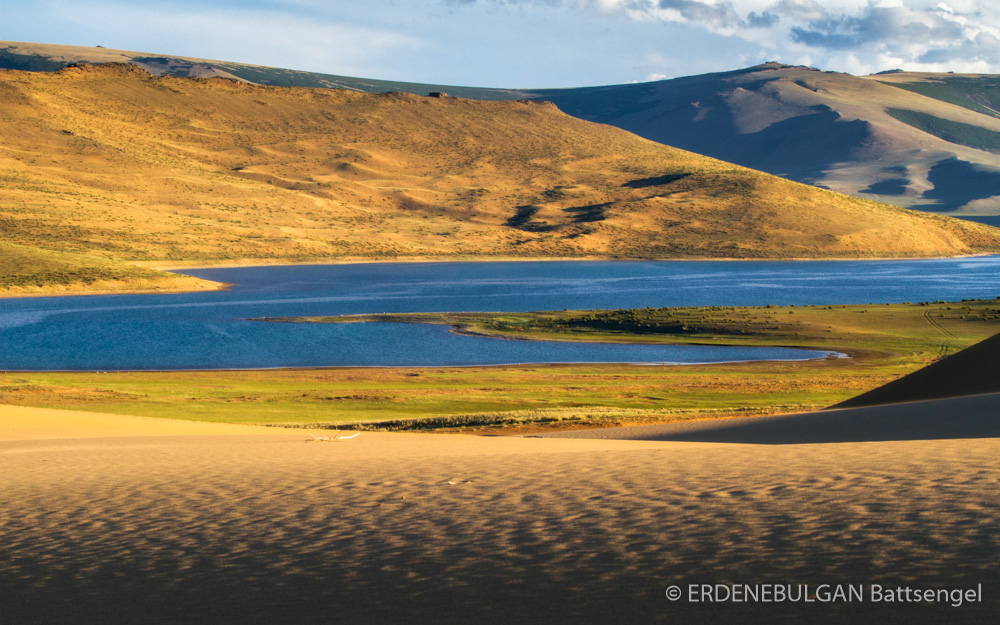
Running alongside the base of the Khongoryn Els dunes, the Khongor River creates a narrow strip of green vegetation -- reeds, willows, and grass -- that sustains nomadic families and their livestock through the driest months of the year. The contrast between the towering dunes and the bright green oasis strip below is visually striking. Several ger camps are located along this oasis, making it the main base for visiting the sand dunes.
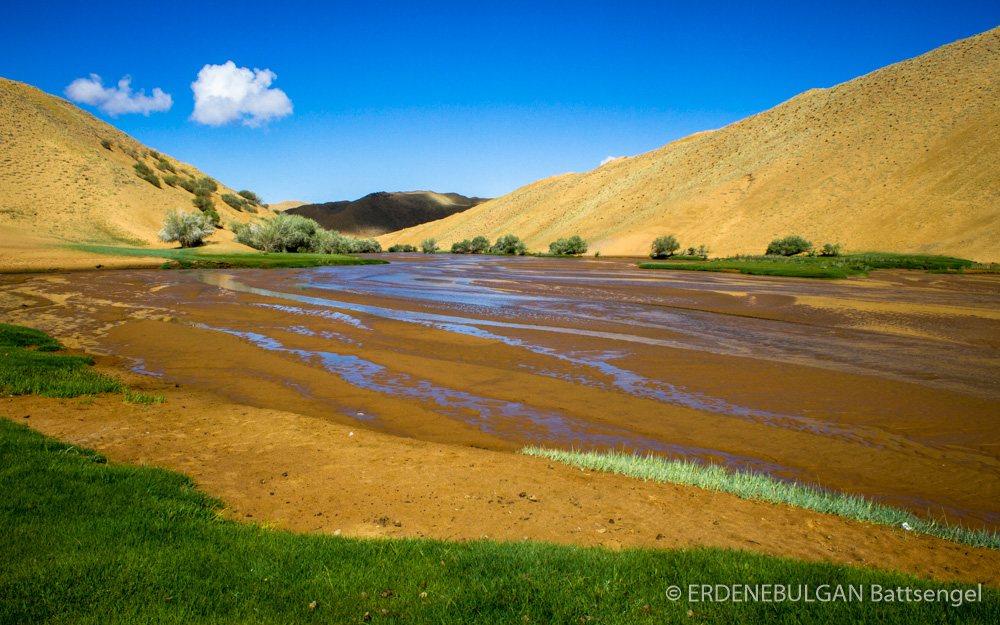
Moltsog Els is a smaller sand dune area to the northeast of the main Khongoryn Els dunes. It receives far fewer visitors and offers a more intimate experience of the sand landscape. The dunes are lower and less dramatic but equally photogenic, particularly in early morning light.
Ekhiin Gol is a remote spring-fed oasis deep in the Trans-Altai Gobi. It is one of the last strongholds of the wild Bactrian camel and the critically endangered Gobi bear. The area is within the Great Gobi Strictly Protected Area and access requires special permits and an experienced local guide.
The national park that encompasses most of the Gobi's main visitor sites covers 27,000 km2 of protected desert habitat. Entry to the park requires a fee of approximately $5 to $10 USD per person. The park administers access to Yolyn Am, Khongoryn Els, and Bayanzag, and is home to snow leopard, ibex, Argali sheep, and over 200 species of birds.
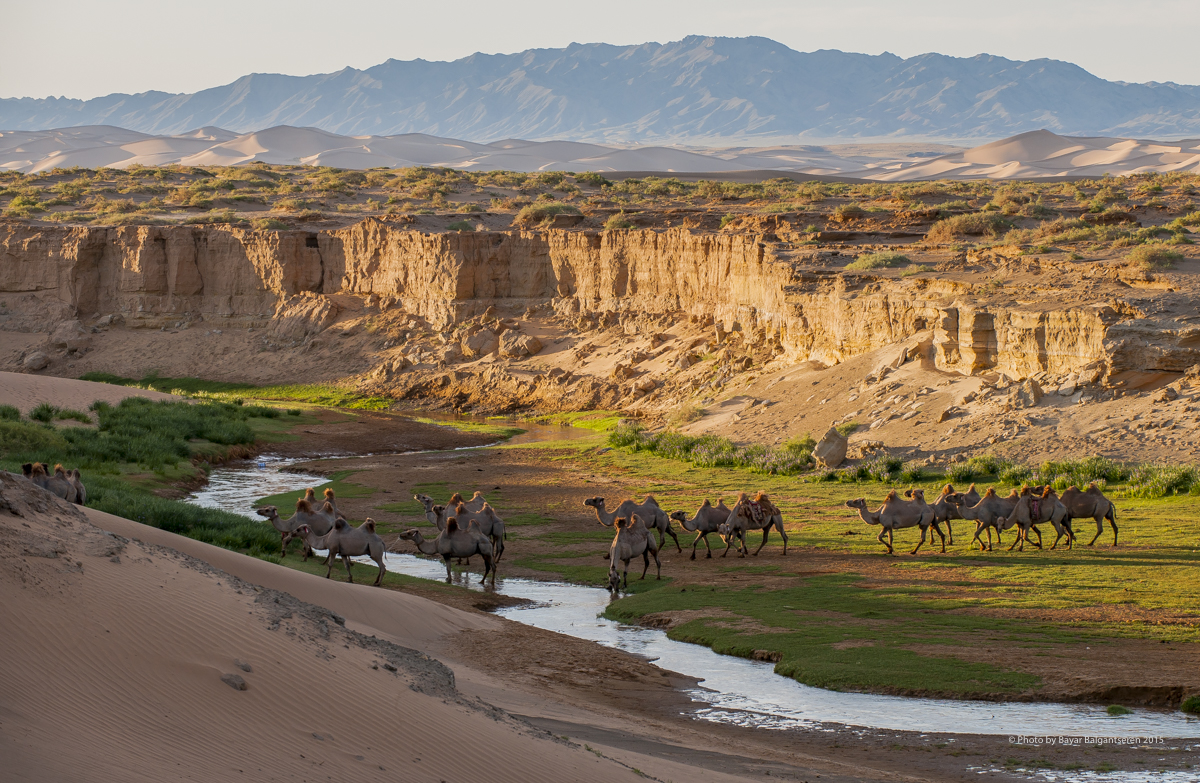
• Wild Bactrian Camel (Camelus ferus): Fewer than 950 individuals survive worldwide -- one of the most endangered large mammals on earth. The Mongolian Gobi is their primary habitat.
• Gobi Bear (Mazaalai): The world's rarest bear, with fewer than 45 individuals estimated to survive. Lives exclusively in the Great Gobi Strictly Protected Area. Listed as Critically Endangered.
• Snow Leopard: Present in the mountainous edges of the Gobi, particularly in Gurvan Saikhan. Estimated 1,000 to 2,000 individuals across Mongolia. Sightings are extremely rare.
• Gobi Ibex: Found in the rocky mountain zones within and around Gurvan Saikhan National Park.
• Black-Tailed Gazelle: Abundant across the eastern Gobi steppe. Large herds frequently visible from vehicles.
• Saxaul Sparrow and Mongolian Ground Jay: Two of the Gobi's most characteristic bird species for birdwatchers.
Visit between May–June or September for the best weather, fewer crowds, and ideal conditions to explore the Gobi's iconic attractions.
May to June and September are the optimal months: temperatures are comfortable, ger camps are fully operational, and crowd levels are lower than the July to August peak season.
By Air (Recommended): Aero Mongolia and Hunnu Air operate regular flights from Ulaanbaatar to Dalanzadgad, the main gateway to the Gobi's main sites. Flight time is approximately 1.5 hours. From Dalanzadgad, a 4WD vehicle takes you to the various sites: Yolyn Am is 65 km away, Bayanzag 90 km, and Khongoryn Els approximately 180 km from town. One-way flights cost $100 to $180 USD.
By Road: The overland route from UB to Dalanzadgad is approximately 550 km, taking 8 to 10 hours in a 4WD vehicle on partially paved and partially unpaved roads. Many tour operators drive one way and fly the other, allowing travellers to experience both the overland journey and the convenience of the flight.
• High-SPF sunscreen (SPF 50+) and a wide-brimmed hat: UV radiation is intense at the Gobi's altitude and latitude.
• Sunglasses with UV protection: Essential for both sun and sand protection.
• Warm layers for nights: Even in July, Gobi nights drop to 5 to 10C. Pack a fleece and a light down jacket.
• Dust mask or buff: Desert winds carry fine dust that quickly coats cameras and lungs.
• Sturdy closed-toe shoes: Rocky terrain and sharp saxaul branches make sandals impractical outside the sand dunes.
• Minimum 3 to 4 litres of water carrying capacity: Water sources in the desert are scarce.
• Cash in MNT and USD: There are no ATMs in the Gobi desert region outside Dalanzadgad town.
• Camera equipment protection: Use ziplock bags or sealed cases -- Gobi dust is extraordinarily fine and penetrating.
Yes -- the Gobi Desert is safe for travellers with proper preparation and planning. The main risks are not violence but environmental: dehydration and heatstroke in summer, getting lost in trackless terrain, and the significant distance from medical facilities.
• Always travel with a licensed local guide and an experienced driver in a well-maintained 4WD vehicle stocked with spare fuel, spare tyres, and emergency supplies.
• Drink at least 3 to 4 litres of water per day in hot weather, and more during strenuous activities like dune climbing.
• For remote areas beyond the main tourist circuit, a satellite phone or personal locator beacon is strongly recommended.
How many days do I need in the Gobi Desert?
5 to 7 days is the recommended length for seeing all the main Gobi highlights at a comfortable pace: 1 to 2 days for Bayanzag and surrounding desert, 1 to 2 days at Khongoryn Els (including a dune summit attempt), and 1 day for Yolyn Am. A minimum of 3 days is needed to visit just Khongoryn Els and Bayanzag without feeling rushed.
What type of accommodation is available in the Gobi?
Tourist ger camps are the standard accommodation in the Gobi, with clusters of traditional felt tents set up near the main sites. Electricity runs for a limited period from a generator or solar panels (usually 6pm to 10pm). Prices range from $50 to $120 per person per night, usually including three meals. Three Camel Lodge near Bayanzag is the Gobi's most celebrated luxury property and should be booked 6+ months in advance for peak season.
Can I ride camels in the Gobi Desert?
Yes, Bactrian camel riding is one of the Gobi's most popular activities, available at or near all ger camps close to Khongoryn Els. Rides range from a short 30-minute introduction to half-day treks along the dune base. Costs are typically $10 to $25 USD. Mongolian Bactrian camels are well-trained and generally calm.
Are there dinosaur fossils you can see in the Gobi?
Yes, Bayanzag (Flaming Cliffs) contains visible fossil fragments in the eroding cliff faces. These can be seen and photographed freely. However, it is illegal under Mongolian law to remove any fossil material from the site. The Natural History Museum in Ulaanbaatar houses the finest fossil collection, including specimens from Roy Chapman Andrews' 1922 expedition.
Does the Gobi Desert get cold?
Yes, dramatically so. The Gobi has one of the most extreme temperature ranges of any desert on earth. Summer daytime temperatures can exceed +45C; winter nights routinely reach -40C. Even in July, Gobi nights can drop to 5 to 10C. Always pack warm layers regardless of when you visit.
What is the Gobi Desert known for worldwide?
The Gobi is globally famous for three things: palaeontology (it is the most productive region on earth for dinosaur egg and fossil discoveries), Silk Road history (major Silk Road routes crossed the Gobi for centuries), and its unique wildlife -- particularly the wild Bactrian camel and the Gobi bear, both found almost exclusively here.
Is the Gobi Desert growing?
Yes, desertification is a significant environmental challenge. The Gobi expands by an estimated 3,600 km2 per year due to a combination of climate change, reduced precipitation, overgrazing of steppe grassland, and loss of protective vegetation cover. Mongolia's government has launched the "Great Green Wall" initiative -- a plan to plant 1 billion trees by 2030 along the desert's northern edge to halt and reverse this expansion.
Discover Mongolia has organized tailor-made tours since 2004.
We handle flights, accommodation, guides, vehicles — you focus on the journey.