
What Meat Do Mongolians Eat? Mongolian Meat Guide (2026)
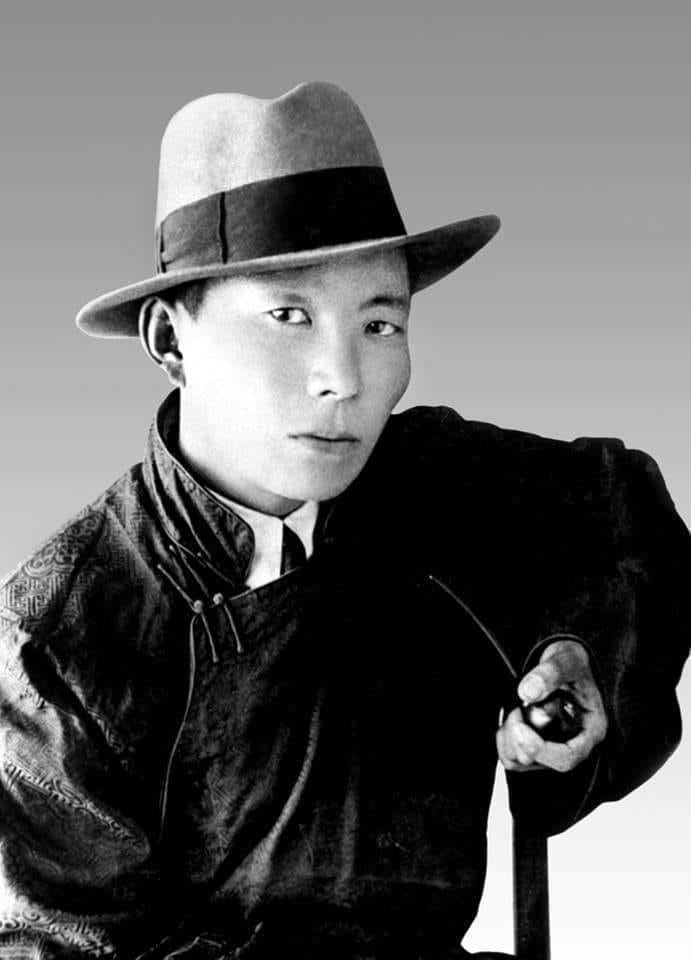
D. Natsagdorj (1906–1937) was a Mongolian writer, poet, and playwright regarded as the founder of modern Mongolian literature. Three of his notable short stories, "Son of the Old World," "A Swift-footed Horse," and "Bitter Tears on New Year's Eve," were translated into English and published by the Center for East Asian Studies at Western Washington University in 1974. Together they capture life in 1930s Mongolia during a period of major social and political change.
Natsagdorj was born on November 17, 1906, near Lake Gün Galuutai, in what is now Bayandelger, Töv Province, to a family of modest means. His mother died when he was seven, and he was taught to read and write largely by his father and a tutor, since formal schooling was limited in Mongolia at the time.
He began working as a scribe for the government while still young, and by his early twenties was deeply involved in Mongolia's revolutionary youth movement. Between 1926 and 1929, he studied in Germany and France, experiences that shaped his exposure to new literary styles. He later helped establish the Mongolian Writers' Union.
Natsagdorj's political relationship with the government was complicated. He grew skeptical of strict leftist ideology from around 1930, was briefly arrested in 1932, and died in 1937 at just 31 years old.
Before Natsagdorj, Mongolian writing was largely tied to religious and classical forms. Natsagdorj introduced new genres, including short fiction in a more modern narrative style, and wrote about ordinary Mongolian life, social inequality, and national identity in ways that hadn't been common before.
His best-known poem, "My Native Land" ("Minii Nutag"), celebrates Mongolia's landscapes and is still widely memorized by Mongolian students today. His opera "Three Fateful Hills" (1934), about the 1921 revolution, remains one of the defining works of early Mongolian theater.
These summaries describe the stories' settings and themes without reproducing their original text.
This story follows a poor, orphaned herder who has spent his entire life within a small radius of steppe, unaware of anything beyond his immediate surroundings. He works for wealthier neighbors in exchange for food and lives entirely by inherited custom and religious belief. The story uses his narrow, repetitive existence to symbolize pre-revolutionary Mongolian life, before ending with the arrival of new political ideas that, in the story's framing, "awaken" him to a wider world.
Themes: isolation, tradition versus change, the impact of the 1921 revolution on ordinary herders
This story centers on a young rider named Surenhuu and his prized horse, admired by everyone who sees it. When Surenhuu sets off on a long journey to see a woman named Sunjidma, the story follows the bond between horse and rider across the open steppe, capturing the pride, freedom, and emotional connection tied to horse culture in Mongolian life.
Themes: horse culture, personal freedom, romantic longing, movement across open landscape
This story follows Tserma, a servant girl working for a wealthy family, contrasted against Myadagma, the family's daughter, during Tsagaan Sar (Lunar New Year) celebrations. While the wealthy family celebrates, Tserma is overworked and mistreated, finding comfort only in her relationship with Tsultem, another hired hand next door. The story is a pointed commentary on class inequality set against the backdrop of Mongolia's most important traditional holiday.
Themes: class inequality, love across social barriers, contrast between celebration and hardship
Readers encountering these stories will come across several Mongolian terms still used today:
Travelers interested in Mongolian literary history can visit the Natsagdorj Museum in Ulaanbaatar, housed in the writer's former residence, which displays his manuscripts, personal items, and details of his life. A memorial monument also stands near his birthplace in the Gün-Galuut Nature Reserve, an area also known for its landscapes and wildlife.
Discover Mongolia Travel has operated since 2004 and can help travelers combine cultural sites like the Natsagdorj Museum with broader Ulaanbaatar itineraries.
The complete English translations of these stories, along with other works by Natsagdorj, were published by the Center for East Asian Studies at Western Washington University in 1974 and are available through the university's CEDAR repository. We encourage readers to seek out the full versions through that original source rather than relying on excerpts. Official Source: https://cedar.wwu.edu/easpress/11/
Who was Natsagdorj. D?
Natsagdorj (1906–1937) was a Mongolian writer, poet, and playwright widely regarded as the founder of modern Mongolian literature.
What is Natsagdorj's most famous work?
His poem "My Native Land" ("Minii Nutag") is his most widely known work and is still commonly taught in Mongolian schools.
What are the three short stories discussed in this guide?
"Son of the Old World" (1930), "A Swift-footed Horse" (1930), and "Bitter Tears on New Year's Eve" (1932).
What themes appear in Natsagdorj's short stories? Common themes include social and class inequality, the impact of Mongolia's 1921 revolution, horse culture, and traditional herding life.
Why did Natsagdorj only write for a short career?
He died in 1937 at age 31, after a life that included government work, political activism, and study abroad in Germany and France.
Can I visit places connected to Natsagdorj in Mongolia?
Yes. The Natsagdorj Museum in Ulaanbaatar, located in his former home, and a memorial near his birthplace in the Gün-Galuut Nature Reserve are both open to visitors.
Where can I read the full text of these stories?
The full English translations were published by Western Washington University's Center for East Asian Studies in 1974 and are available through the university's CEDAR repository.
Why is Natsagdorj considered important to Mongolian culture, not just literature?
His work captured a pivotal moment in Mongolian history, the shift from traditional feudal and religious life toward the modern era, making his stories a window into the country's social history as much as its literary history.
Discover Mongolia has organized tailor-made tours since 2004.
We handle flights, accommodation, guides, vehicles — you focus on the journey.